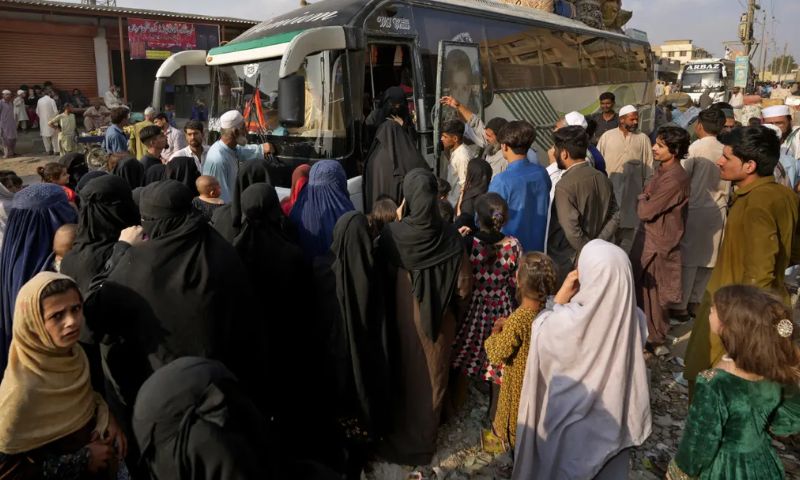
KABUL: The return of more than five million Afghans since late 2023 has stretched Afghanistan’s limited resources, leaving most returnees without permanent housing or stable work and highlighting the country’s inability to absorb large-scale population movements, according to humanitarian organisations.
After decades of hosting Afghans fleeing crises at home, Pakistan and Iran have recently intensified deportations, sending millions back to a country grappling with poverty, environmental challenges, and infrastructural strain.
Whether arriving at the frontier with family or alone, Afghan returnees must quickly rebuild their lives in a nation already struggling to provide basic services, according to AFP.
A look at the people arriving in Afghanistan and the challenges they face:
Five million returned
More than five million Afghans have returned from Iran and Pakistan since September 2023, according to the International Organization for Migration (IOM).
The figure amounts to around 10 percent of Afghanistan’s population, according to IOM’s deputy head in Afghanistan, Mutya Izora Maskun.
Three million returnees crossed the borders last year alone, some of whom had spent decades living abroad. Maskun noted that managing such a large influx would challenge even the most prepared countries.
Inadequate housing
Months after returning, 80 percent of people had no permanent homes, according to an IOM survey of 1,339 migrants who returned between September 2023 and December 2024. Most were forced to live in temporary shelters constructed from stone, mud, or other makeshift materials.
More recently, the UN refugee agency (UNHCR) surveyed Afghans who returned between January and August last year. Three-quarters of tenants reported being unable to afford rent, and most families shared rooms with up to four people.
Desperate search for work
Only 11 percent of adults pushed back from Pakistan and Iran were fully employed, the IOM survey revealed. For those who returned in the early months of last year, the average monthly income ranged between $22 and $147, according to UNHCR findings.
Water and electricity shortages
More than half of returnee households lack stable electricity, the IOM reported. Households headed by women face “significantly higher vulnerabilities,” with roughly half struggling to access safe drinking water.
In response, the Afghan government has accelerated land distribution, handing out over 3,000 plots to returnees nationwide, according to deputy government spokesman Hamdullah Fitrat. He noted that returnees usually receive initial support, including transport, a SIM card, and a small amount of cash upon arrival.