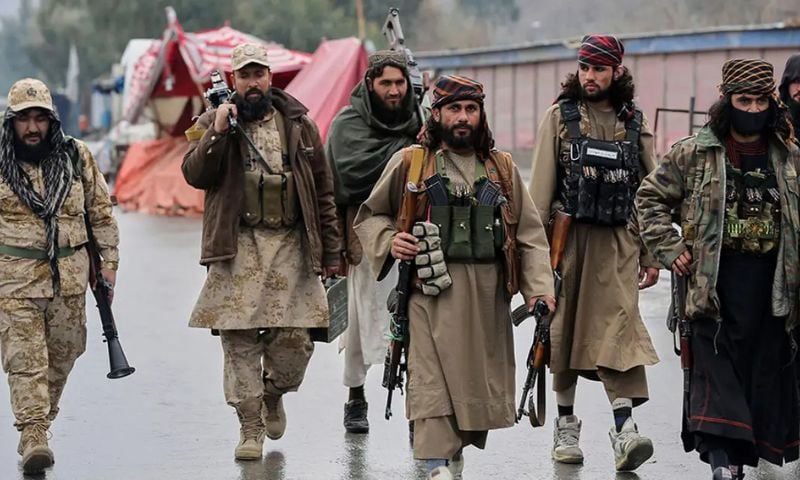
ISLAMABAD: Pakistan said coordinated attacks across Balochistan two days ago were planned and directed by terrorist groups operating from Afghan territory.
Defence Minister Khawaja Muhammad Asif told reporters in Sialkot that the assaults targeted nearly a dozen locations simultaneously over the weekend, underscoring what he described as a highly organised campaign intended to cause mass casualties and disrupt national stability.
He said the attacks were carried out by the outlawed Baloch Liberation Army (BLA) and affiliated groups, adding that intelligence reports and confessional statements from detained suspects pointed to foreign backing.
Asif alleged a direct link between India and the BLA, describing the group as a proxy force, and reiterated that it is designated as a terrorist organisation under both Pakistani law and international listings.
Authorities said the raids began early Saturday across multiple districts of Balochistan, killing 18 civilians — including five women and three children — as well as 15 members of the security forces.
Separately, Provincial Chief Minister Sarfraz Bugti told reporters in Quetta that troops and police responded swiftly, killing 145 militants belonging to what the government refers to as “Fitna al-Hindustan,” a term it uses for the allegedly Indian-backed BLA.
Bugti said the number of militants killed over the past two days was the highest in decades, adding that the bodies were in state custody and that some of those killed were Afghan nationals.
He said the attackers had attempted to seize hostages but were prevented from reaching the city centre. Bugti repeatedly accused India and Afghanistan of backing the assailants, alleging that senior BLA leaders responsible for the latest violence were operating from Afghan territory.
Defence Minister Khawaja Muhammad Asif said suicide attacks were also attempted on Frontier Corps installations in Noshki and Dalbandin, while other targets were hit elsewhere in the province.
The defence minister warned that Pakistan would show no leniency toward the BLA or the Tehreek-e-Taliban Pakistan (TTP), nor toward those facilitating their activities. “There will be no distinction between terrorists and their enablers,” he said.
Focusing on the regional dimension, Asif said Pakistan had repeatedly raised concerns about militant safe havens across the Afghan border and would take all necessary measures, in line with its constitutional and international obligations, to defend itself against threats originating inside or outside its territory.
He added that attacks in Khyber Pakhtunkhwa province had declined due to earlier counterterrorism efforts, but the province remained under threat.
Asif called for national unity against militancy, saying the sacrifices of security personnel reflected a collective struggle that transcended political divisions. “This is a fight for the state,” he said. “There can be no politics when it comes to defending the country.”