WASHINGTON: Come Thursday (Feb 5), barring a last-minute development, the final treaty in the world that restricts nuclear weapon deployment will officially expire.
New START, the last nuclear treaty between Washington and Moscow after decades of agreements dating back to the Cold War, is set to lapse, removing limits on the world’s two largest nuclear arsenals.
The expiration occurs as President Donald Trump, championing an “America First” agenda, continues to dismantle international agreements that constrain the United States. In the case of New START, however, the delay may reflect inertia more than ideology, according to AFP.
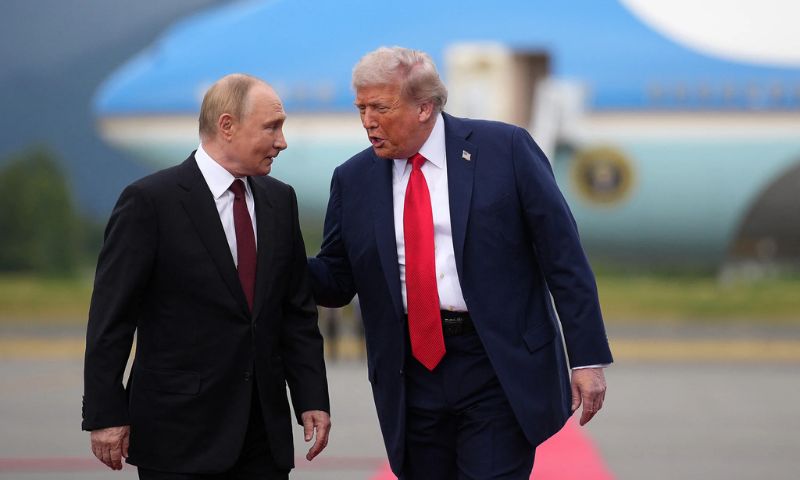
In September, Russian President Vladimir Putin suggested a one-year extension of New START. Trump, when asked by a reporter while boarding his helicopter, said an extension “sounds like a good idea to me,” but no further details have emerged since.
Dmitry Medvedev, a Putin ally and former Russian president who signed New START with Barack Obama in 2010, told the Kommersant newspaper that Russia had received no “substantive reaction” but was still allowing time for a U.S. response.
A White House official, speaking anonymously, indicated that Trump wants “limits on nuclear weapons and to involve China in arms control talks.” The official added that Trump “will clarify on his own timeline.”
Daryl Kimball, executive director of the Arms Control Association, which advocates for reducing nuclear risks, said Trump’s second administration—sidelining career diplomats and concentrating decision-making in a few hands—has not functioned in a manner conducive to complex negotiations.
“Trump seems to have the right instinct on this issue but has thus far failed to follow through with a coherent strategy,” Kimball said.
Jon Wolfsthal, director of global risk at the Federation of American Scientists, noted that Trump and Putin could immediately extend New START at a political level.
“This is a piece of low-hanging fruit that the Trump administration should have seized months ago,” he said. Wolfsthal is among the experts associated with the “Doomsday Clock,” which recently moved closer to midnight, partly due to New START’s demise.
Trump called in October for the United States to resume nuclear testing for the first time in more than 30 years, though it remains unclear if he will act on this.
Russia already suspended a key element of New START in 2023, allowing inspections to lapse, as relations with the Biden administration deteriorated over Moscow’s invasion of Ukraine.
Alexander Khramchikhin, a Russian military analyst, said both powers had indicated they would act independently. “It’s clear that the treaty has reached its end,” he said. “It’s just an empty formality that will disappear.”
Vassily Kashin, director of the Center for Comprehensive European and International Studies in Moscow, said Russia will monitor U.S. actions: if the United States expands its nuclear arsenal, Moscow may respond; if not, it will “simply wait, observe, and remain silent.”
New START limited both the United States and Russia to 1,550 deployed strategic nuclear warheads—about 30% lower than the previous limit set in 2002—and restricted launchers and heavy bombers to 800 each, still sufficient to devastate Earth.
During his first term, Trump insisted that any new treaty include China, whose nuclear arsenal is rapidly growing, though still far below the U.S. and Russia. A U.S. negotiator even provocatively placed an empty chair with a Chinese flag.
President Biden, upon taking office in 2021, extended New START by five years to 2026. Despite his past stance, Trump has resumed diplomatic engagement with Russia, inviting Putin to a summit in Alaska and attempting, unsuccessfully, to mediate in Ukraine.
Other nuclear powers include U.S. allies France and Britain, which maintain smaller arsenals, as well as Pakistan, India, Israel, and North Korea, none of which are bound by international nuclear agreements.