


WASHINGTON: The United States and Iran have signalled readiness to enter negotiations to ease rising tensions, but sharp differences over Tehran’s missile programme continue to block progress, as President Donald Trump warned of possible military action while Iranian officials ruled out any limits on their defence capabilities.
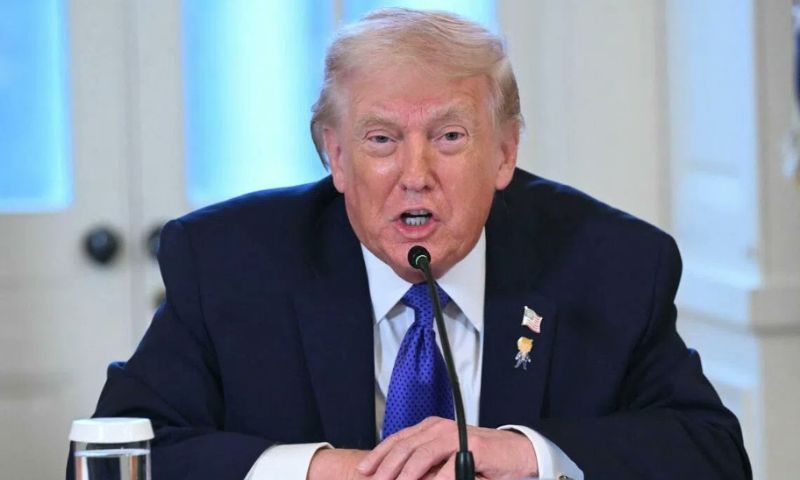
President Donald Trump said on Friday he believed Iran would seek to negotiate a deal rather than face American military action, despite Tehran’s warning that its missile arsenal would never be up for discussion.
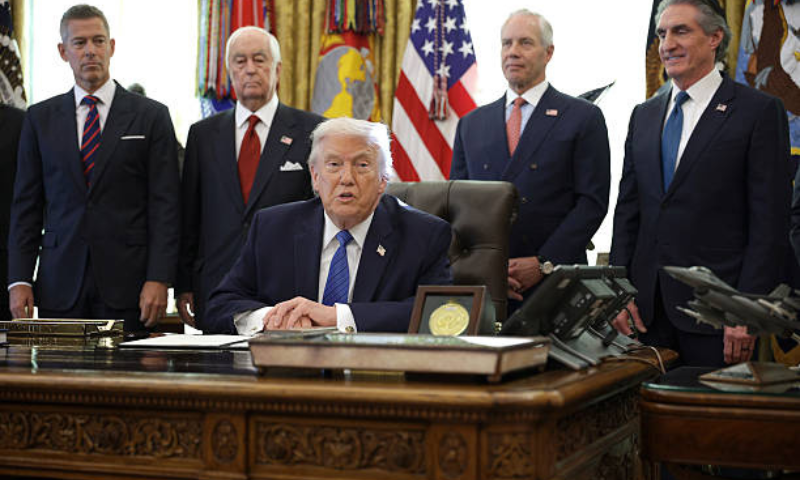
“I can say this, they do want to make a deal,” Trump told reporters in the Oval Office.
Asked whether he had set a deadline for Iran to enter talks on its nuclear and missile programmes, Trump said, “yeah, I have,” but declined to disclose details.
“We have a large armada, flotilla, call it whatever you want, heading toward Iran right now,” he said, referring to a US naval carrier group in waters off Iran.
“Hopefully, we’ll make a deal. If we do make a deal, that’s good. If we don’t make a deal, we’ll see what happens.”
Trump pointed to what he described as Iran’s decision to halt executions of protesters following a crackdown, calling it evidence that Tehran was ready to negotiate.
‘Doing the right thing.’
Washington’s regional allies have expressed concern that any US strike on Iran could trigger instability and economic turmoil.
A senior Gulf official in contact with the Trump administration said the United States was closely guarding its plans.
“We hope that whatever happens, it is going to lead to stability. That outcome could be reached by the Iranians doing the right thing, and we hope that happens,” the official said, speaking on condition of anonymity.
Meanwhile, the head of Iran’s top security body, Supreme National Security Council Secretary Ali Larijani, met Russian President Vladimir Putin in Moscow. No details of the talks were released, though Moscow has offered to mediate between Washington and Tehran.
Iran’s top diplomat reiterated that the country’s missile and defence capabilities would “never” be negotiated.
Foreign Minister Abbas Araghchi said Tehran was “ready to begin negotiations if they take place on an equal footing,” but stressed that “Iran’s defensive and missile capabilities will never be subject to negotiation,” adding there were no plans to meet US officials to resume talks.
US news site Axios reported this week that Washington officials say any agreement would have to include limits on Iran’s long-range missile arsenal, the removal of enriched uranium from the country, and a ban on independent enrichment.
Serhan Afacan, director of the Ankara-based Centre for Iranian Studies, said linking a nuclear deal to other issues would likely be “impossible”.
“For now, the ballistic missile programme remains a red line, as it sits at the core of Iran’s defence architecture,” he said.
‘Reducing’ tensions
Iran has warned it would respond immediately with missile strikes against US bases, ships, and allies, including Israel.
“We are not limiting the geography of confrontation to the sea alone and have prepared ourselves for broader and more advanced scenarios,” Defence Council head Ali Shamkhani said, according to the Tasnim news agency.
Speaking in Istanbul alongside Araghchi, Turkish Foreign Minister Hakan Fidan said Israel was pressing the United States to attack Iran and urged Washington to “not allow this to happen”.
Iran has accused the United States and Israel of fomenting protests that began in late December over economic grievances and peaked on January 8 and 9, alleging the unrest was part of a “terrorist operation” that turned peaceful demonstrations into riots.