KEY POINTS
- Book argues Shakespeare’s works were actually written by Emilia Bassano, England’s first published female poet.
- The author claims historical misogyny and racism erased Bassano, a Sephardic Jewish woman of colour, in favour of a white male icon.
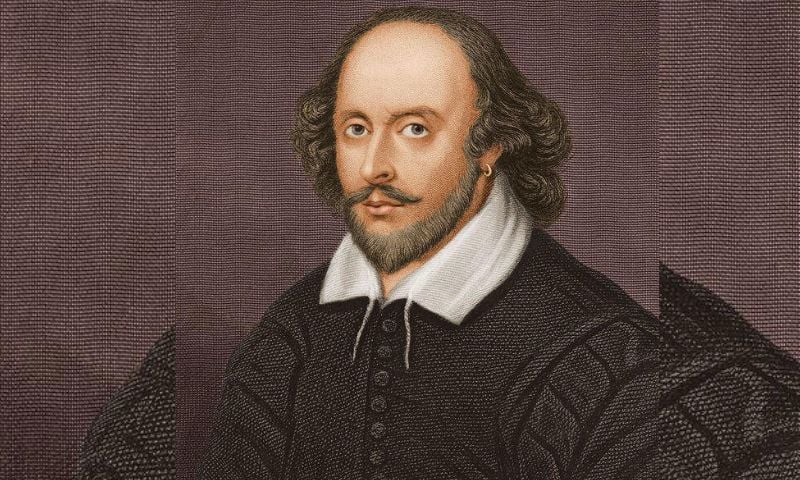
LONDON: A new book is challenging one of literature’s foundational truths, arguing that the works of William Shakespeare were not written by the glover’s son from Stratford-upon-Avon, but by a Sephardic Jewish woman, a claim that has ignited debate between revisionist theorists and traditional scholars.
In ‘The Real Shakespeare’, author Irene Coslet contends that the true author was Emilia Bassano, recognised as England’s first published female poet, also known by her married name, Emilia Lanier.
Coslet argues that the ‘Western-centric and Eurocentric ideology’ of historical record-keeping systematically overlooked Bassano in favour of creating the more “palatable” icon of a white male genius.
‘Historiographical misogyny and racism’
“In the case of Emilia Bassano, the problem is not only historiographical misogyny, but also historiographical racism,” Coslet writes.
“Emilia Bassano was a Moor. She was a Jew. Modern historians failed to give credit to these identities for their role and contribution in Western history.”
The scholar suggests that acknowledging a woman of colour as the creative force behind the canon would force a profound societal reckoning.
“What if women had a pivotal role and a civilising impact in history, but they have been silenced, belittled and erased from the dominant narrative?” Coslet posited in an interview.
Figure long linked to Bard
Bassano is not a new name in Shakespearean circles. Some scholars have long speculated she was the playwright’s lover and the mysterious “Dark Lady” of his sonnets.
Her life has seen a modern resurgence, inspiring an all-female production at Shakespeare’s Globe in 2019 and featuring in Jodi Picoult’s 2024 novel By Any Other Name.
Traditional scholars push back
The theory has been met with skepticism from established academia.
Dr. Sarah Dustagheer, a Shakespearean scholar at the University of Kent, cautioned against such claims, which surface periodically with new ‘secret’ authors.
“Shakespeare’s plays demonstrate a thorough and engaged knowledge of the realities of the early modern theatre industry, its actors, its dramatic techniques, stage technology, props and costume, as well as audiences,” Dustagheer stated.
“That could only come from someone immersed in that industry and Shakespeare, we know, was an actor and a shareholder. Many alternative candidates just don’t have those connections.”
She added a nuanced perspective on Bassano’s potential relationship to the texts, wondering “what she and others from her community made of characters such as Shakespeare’s Othello and Shylock,” and how the plays engaged with contemporary ideas of race and religion.