
KEY POINTS
- Pakistan mandated 100% health screening and travel history checks for all arrivals.
- Nipah virus has up to 75% fatality rate and has no approved vaccine.
- NIH issued high-alert to health departments to enhance national surveillance and readiness.
ISLAMABAD: Pakistan has imposed strict health screenings at all international entry points following confirmed Nipah virus cases in India’s West Bengal state, health authorities said Wednesday.
The measures aim to prevent the spread of the highly lethal virus, which has a fatality rate of up to 75% and can transmit from animals to humans and between people.
The Border Health Services-Pakistan (BHS-P), under the Ministry of National Health Services, issued a comprehensive advisory citing the regional threat.
“In view of the suspected cases, and considering the high case fatality rate, zoonotic nature, and potential for human-to-human transmission, it has become imperative to further strengthen preventive and surveillance measures,” the advisory stated.
Nipah virus triggers regional precaution
The Nipah virus, a WHO-classified priority pathogen carried by fruit bats and animals, causes deadly brain-swelling fever in humans with a fatality rate of 40 to 75 percent. It can spread directly between people, and no approved vaccine or cure exists.
Pakistan’s measures align with heightened surveillance in Singapore, Hong Kong, Thailand, and Malaysia.
Screening and travel history
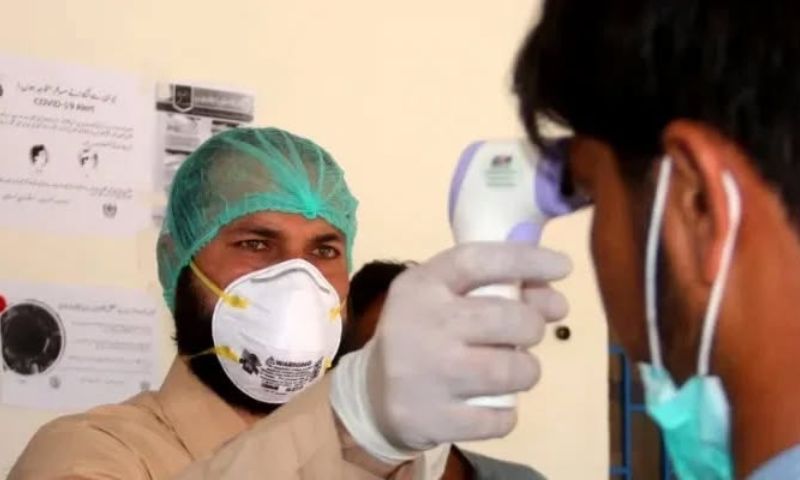
The new protocol mandates 100% health screening for all arriving passengers, crew, and staff at airports, seaports, and land crossings. “No individual shall be allowed entry into Pakistan without health clearance by BHS-P,” it declares.
Key instructions include mandatory verification of each traveller’s country of origin and a complete 21-day travel history, irrespective of nationality.
Authorities must exercise “special vigilance” for travellers from Nipah-affected regions, with false declarations to be reported for action.
All travellers will undergo thermal screening and clinical assessment. Staff are alerted to watch for symptoms like fever, headache, respiratory distress, and neurological signs such as confusion.
Any suspected case must be immediately isolated at the entry point, restricted from onward movement, and managed under strict infection control protocols before referral to a designated facility.
The concerned conveyance and area must be disinfected immediately.
NIH issues alert, experts explain risks
Separately, the National Institute of Health (NIH), Islamabad, issued an alert to health departments and providers, noting that while Pakistan has not reported a human case, a significant situation is emerging in South Asia.
The alert aims to enhance surveillance, ensure a unified response framework, mitigate public risk, and keep rapid response teams on high alert.
Speaking to WE News English, microbiologist Prof Dr. Ishtiaq Ahmad explained the Nipah virus spread through the droppings of fruit bats and pigs.
“The virus can spread through respiratory droplets, saliva, and the blood of a patient,” he said, noting major symptoms include fever and neurological disorders.
Dr. Mumtaz Ali Khan, Chief of the NIH’s Centre for Disease Control, stated this marks the 51st Nipah outbreak since 2001.
He acknowledged the challenge of detection, citing the virus’s 9 to 14-day incubation period, but emphasised the necessity of the alert and screening measures.
All entry point officials have been directed to ensure strict compliance with infection prevention controls, including PPE use, with daily reports to national authorities.
The measures will remain in force until further orders.
What is the Nipah virus?
Nipah virus is a rare but dangerous zoonotic infection, primarily transmitted to humans from infected animals, especially fruit bats.
While cases can be asymptomatic, the World Health Organisation (WHO) notes its high case fatality rate, ranging from 40% to 75%, largely dependent on local healthcare capacity.
Although human-to-human transmission is possible, it is not efficient, typically resulting in small, contained outbreaks.
Several candidate vaccines are in development, but none are currently approved for public use.
How common are Nipah outbreaks?
First identified during a 1999 outbreak in Malaysia, Nipah has since caused almost annual, limited outbreaks, predominantly in Bangladesh and sporadically in India.
Global tracking data indicates approximately 750 recorded cases and 415 deaths historically, underscoring its severity despite low case numbers.
How does the virus spread?
The primary transmission route is contact with the natural host, fruit bats. Infection often occurs through consuming fruit or raw date palm juice contaminated by bat saliva or urine.
The initial Malaysian outbreak was linked to direct contact with sick pigs.
Human-to-human spread is documented but usually requires close contact with an infected person’s bodily fluids, often in household or caregiving settings.
What are the symptoms?
Initial symptoms are non-specific, including fever, headache, and muscle pain, making early diagnosis difficult.
The infection can rapidly progress to severe acute encephalitis (brain inflammation), respiratory issues, seizures, and coma.
While many survivors recover fully, some experience long-term neurological conditions.
How worried should we be?
Scientists classify Nipah as a high-consequence pathogen due to its mortality rate and outbreak potential, particularly in South Asia.
However, it has not evolved to spread easily among humans, making large-scale global outbreaks unlikely.
A significant concern is its economic impact, leading to mass culling of susceptible livestock like pigs.
Experts also note that airport screening may be less effective due to the virus’s long incubation period (up to 45 days).
Vaccines or treatments
There are currently no WHO-approved vaccines or specific antiviral treatments for Nipah virus infection.
Supportive care is the standard treatment. Promising candidates are in trials, including a vaccine from Oxford University researchers (behind the AstraZeneca COVID-19 vaccine), which began Phase II testing in Bangladesh in December 2025.