
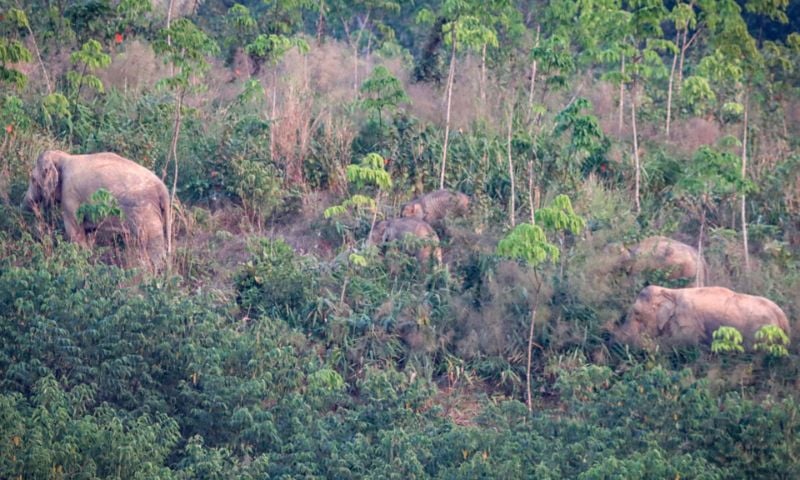
BANGKOK: In a pioneering move for wildlife conservation, Thailand has, for the first time, administered contraceptive vaccines to female wild elephants, aiming to manage the elephant population safely and foster sustainable coexistence between humans and elephants.
The Department of National Parks, Wildlife and Plant Conservation carried out the vaccination on three female wild elephants in Bo Rai district, Trat province, on January 25th.
This effort is a collaboration between the department’s Wildlife Conservation Office and Chiang Mai University, according to ‘Thai PBS World’.
Sukhee Boonsang, director of the office, explained that the project addresses the rapid growth of wild elephants in eastern forest areas. Their population rose from 334 in 2015 to 799 in 2025, an annual growth rate of approximately 8.2%. As forests become more crowded, elephants have increasingly ventured into community areas in search of food.
Since 2012, such encounters have resulted in 141 human fatalities, 170 injuries, and agricultural damage across more than 100 sub-districts in six provinces.
The contraceptive vaccine is specifically designed for female wild elephants and avoids sterilisation or surgery. Instead, it stimulates the immune system to prevent fertilisation of eggs.
The vaccine can prevent pregnancy for up to seven years, after which the elephant naturally regains its ability to breed if no booster is administered.
Sukhee highlighted that the vaccine has been successfully tested on African elephants and seven captive elephants in Thailand, proving to be 100% safe with no side effects. The vaccinated elephants continue to live healthy, normal lives.
During the operation, veterinarians and officials vaccinated three adult female wild elephants from a herd of twelve in the Khlong Kaew Waterfall National Park area.
The mission, conducted between 9 pm and 10 pm, involved delivering the vaccine via dart gun without anesthesia, ensuring maximum safety for both elephants and staff.
The team will monitor the elephants for 48 hours and collect blood and fecal samples every six to eight months over the next seven years to assess immune response levels.
This project reflects a deep concern for wild elephant welfare. Managing the population helps prevent food and water shortages, road accidents, electrocution, and conflicts with local communities.
By using a safe contraceptive vaccine, authorities are improving the elephants’ quality of life, ensuring sufficient natural resources, and reducing risks associated with human-elephant encounters—ultimately fostering truly sustainable coexistence.