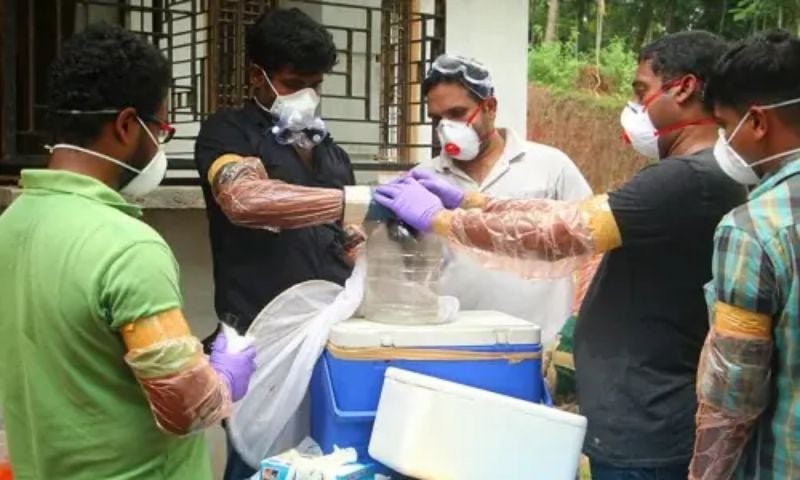
NEW DELHI: Indian authorities have confirmed two cases of the deadly Nipah virus in the eastern state of West Bengal, saying that swift public health measures helped ensure “timely containment” and prevented further spread.
Health officials said extensive contact tracing and testing were launched immediately after detection, with all identified contacts testing negative, as concerns persist over a virus that carries a fatality rate of up to 75 percent, according to the World Health Organization.
Nipah, a zoonotic virus that spreads from animals to humans, has no approved vaccine and carries a fatality rate ranging between 40 and 75 per cent, according to the World Health Organization (WHO).
Human-to-human transmission has also been documented in past outbreaks, making rapid detection and response critical.
In a statement issued late Tuesday, India’s health ministry said that enhanced surveillance, extensive laboratory testing, and detailed field investigations were immediately launched after the cases were identified.
“Enhanced surveillance, laboratory testing, and field investigations were undertaken… which ensured timely containment of the cases,” the ministry said.
The statement did not provide additional details about the two infected patients, including their condition or how they may have contracted the virus. However, officials stressed that the situation remains under close observation.
Authorities trace 196 contacts; all tested negative
“The situation is under constant monitoring, and all necessary public health measures are in place,” the ministry added. It said that 196 people who came into contact with the confirmed cases had been identified and traced, and all have tested negative so far.
Nipah virus was first identified in 1998 after an outbreak among pig farmers in Malaysia. Since then, it has caused sporadic outbreaks in parts of South and Southeast Asia.
In India, the first recorded Nipah outbreak occurred in West Bengal in 2001. More recently, the virus resurfaced in the southern state of Kerala, where at least 17 people died during an outbreak in 2018. In 2023, two more deaths linked to Nipah were reported in the same state.
Symptoms of Nipah infection typically include high fever, vomiting, and respiratory illness. In severe cases, the disease can progress to seizures and acute brain inflammation, potentially leading to coma and death.
Fruit bats are known to be the natural carriers of the virus and are believed to be the primary source of transmission in most outbreaks. Contaminated food, such as fruit or date palm sap exposed to bats, as well as close contact with infected individuals, have been identified as key risk factors.
Health officials said the latest response reflects improved preparedness and surveillance systems, aimed at detecting outbreaks early and preventing wider transmission of one of the world’s most dangerous viruses.