ISLAMABAD: The Taliban’s Criminal Procedure Code 2026, enforced across Afghanistan in January, has turned the country’s justice system into an instrument of authoritarian control rather than a framework for justice.
The Code abolishes equality before the law by institutionalising class-based punishments, criminalising dissent and religious plurality, and granting unchecked powers to Taliban authorities, while eroding fundamental legal safeguards central to both Islamic jurisprudence and modern governance.
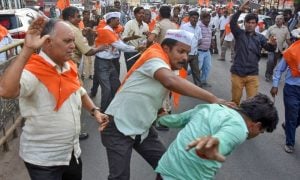
Over the past 10 days, the Taliban have publicly flogged at least 37 people across Afghanistan on various charges, according to official statements cited by Afghanistan International.
Despite repeated condemnation from international organisations regarding corporal punishment and the torture of detainees, the Afghan Taliban have continued to carry out public floggings, describing such practices as the implementation of “Islamic sharia”.
Suppression of political dissent
By suppressing political dissent as a religious crime, restricting social and cultural life, subordinating women, and even normalising slavery, the Code contradicts core Islamic principles of justice and modern governance norms.
The new criminal code reflects a fear-driven system designed to preserve power, deepen social injustice, and further isolate Afghanistan rather than deliver justice or moral legitimacy.
According to Human rights groups, the Afghan Taliban justice system lacks basic fair trial guarantees, including access to legal representation and independent courts.
The US State Department’s latest annual Trafficking in Persons report states that the recruitment of child soldiers and human trafficking continue in Afghanistan, with the Taliban and other armed groups persisting in the exploitation of children.
Signed by Afghan Taliban leader Mullah Haibatullah Akhundzada, a document was circulated to all provincial courts and declared a binding law in Taliban-controlled areas.
Structurally, this Code consists of multiple chapters and clauses governing criminal responsibility, punishments, judicial authority, social conduct, religious belief, political loyalty, and family life.
While framed as procedural law, its scope extends far beyond courts, reshaping nearly every aspect of public and private existence under Taliban rule.
Rigid social hierarchy
Rather than functioning as a neutral legal framework, this Code restructures Afghanistan’s justice system around ideological obedience and rigid social hierarchy.
It introduces a class-based legal order, restricts religious identity to a single school of thought, criminalises dissent and criticism, expands corporal punishment, and grants sweeping discretionary powers to Taliban authorities.
Safeguards essential to justice, including equality before law, legal clarity, presumption of innocence, and protection from arbitrary punishment, are either removed or ignored.
Courts under this system operate less as institutions of justice and more as enforcement mechanisms designed to maintain Taliban authority.
Code reveals expansion of control rather than administration of justice. Recognition of religious identity is limited, with religious disagreement, criticism of Taliban decisions, and support for alternate beliefs criminalised.
Lethal punishment for deviation
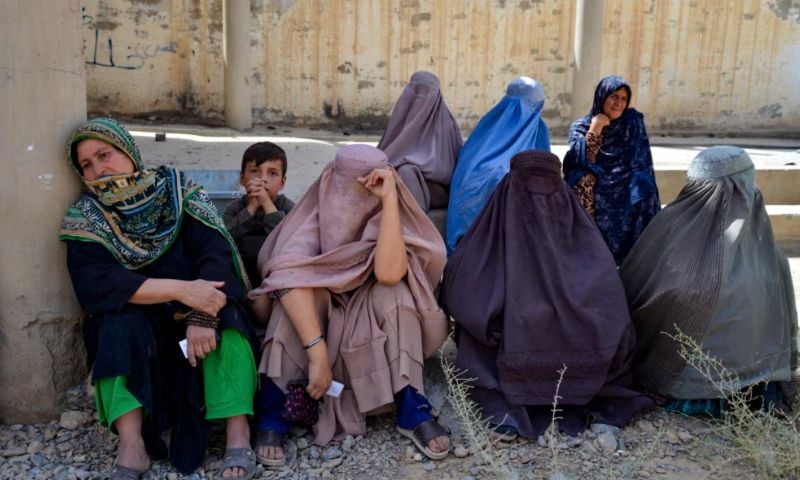
Under the pretext of public interest, the Code authorises lethal punishment for those accused of religious deviation, converting ideological obedience into a legal requirement.
Law becomes a tool not for resolving disputes but for enforcing conformity and silencing opposition.
One of the most defining features of this Code is the reorganisation of Afghan society into four explicit legal classes: scholars, elites, middle class, and lower class.
For identical crimes, scholars receive advice, elites face summons, the middle class are imprisoned, and the lower class are subjected to imprisonment combined with corporal punishment. This unequal structure institutionalises privilege and entrenches discrimination.
Insult or ridicule of Taliban leadership carries flogging and imprisonment, while failure to report opposition activity criminalises witnesses.
Cultural practices such as dance, viewing dance, or presence at certain gatherings are defined as crimes, further narrowing social and cultural space.
From an Islamic perspective, the most serious violation lies in the destruction of justice as equality. Islamic law is unequivocal that all individuals are equal before the law, regardless of status, lineage, or position.
The Holy Quran, Sunnah, and the practice of Rightly Guided Caliphs affirm that punishment is determined by actions, not by social rank.
Richard Bennett, the UN special rapporteur on the situation of human rights in Afghanistan, has condemned flogging as a violation of international law.
He warned that cases of corporal punishment had risen sharply in 2025 and urged the Taliban to end the practice immediately.
Sima Samar, the former chair of the Afghan Independent Human Rights Commission, has urged women and men to continue resisting Taliban oppression.
Speaking to Afghanistan International on Tuesday, Samar described 15 August 2021 as “the darkest day” for both the people of Afghanistan and for her personally.
She commended the resilience of Afghan women, observing that despite severe restrictions and sustained pressure, many continue to stand firm.
Contradiction with principles of Islam
The Afghan Taliban Code openly contradicts this principle by dividing society into legal classes and assigning unequal punishments.
This mirrors injustice condemned by the Prophet (SAW), who warned that nations perish when the powerful are spared, and the weak are punished.
Political dissent has been transformed into a religious crime. Opposition to Afghan Taliban rule is defined as corruption or rebellion, punishable by death.
Insult or criticism of the Afghan Taliban leadership carries flogging and imprisonment, while silence itself becomes criminal through mandatory reporting requirements.
Islamic governance historically emphasised accountability of rulers rather than sanctification.
Public questioning of authority was an accepted practice under early Islamic leadership. Taliban Code replaces this tradition with fear, silence, and absolute obedience.
The social impact of this law falls heaviest on the weakest segments of society. Ordinary citizens face the harshest penalties, while religious figures and elites remain protected.
This creates a system of privilege for the powerful and suffering for the poor. Islamic emphasis on social justice, welfare, and protection of the vulnerable stands in direct opposition to such a framework.
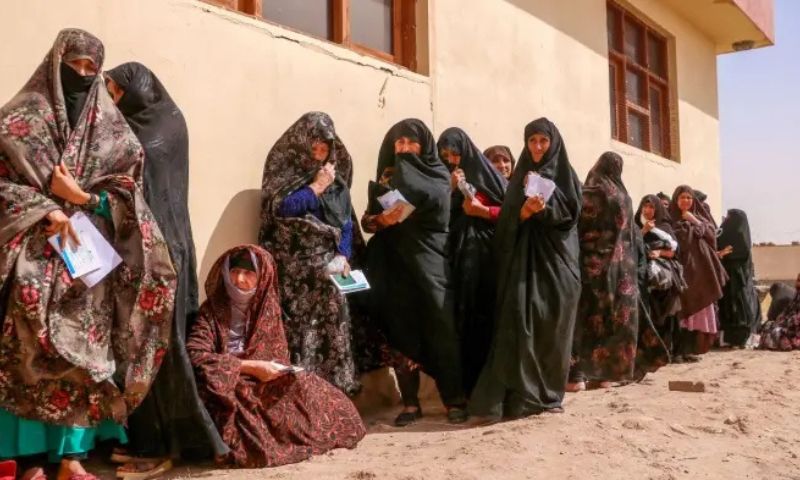
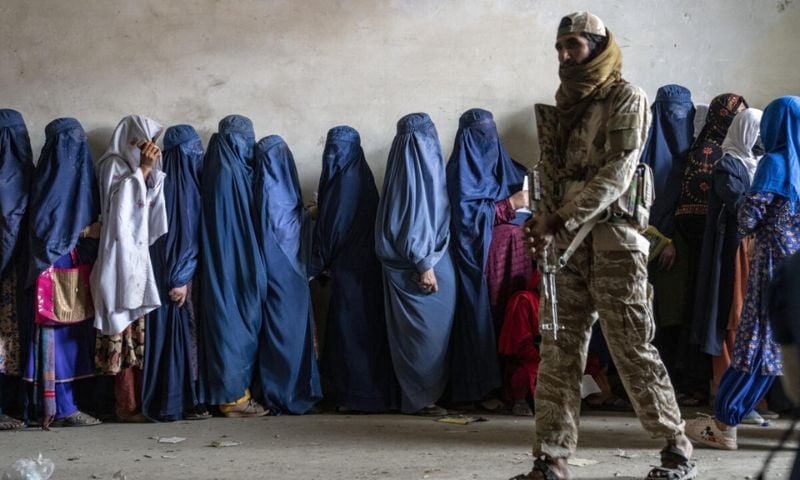
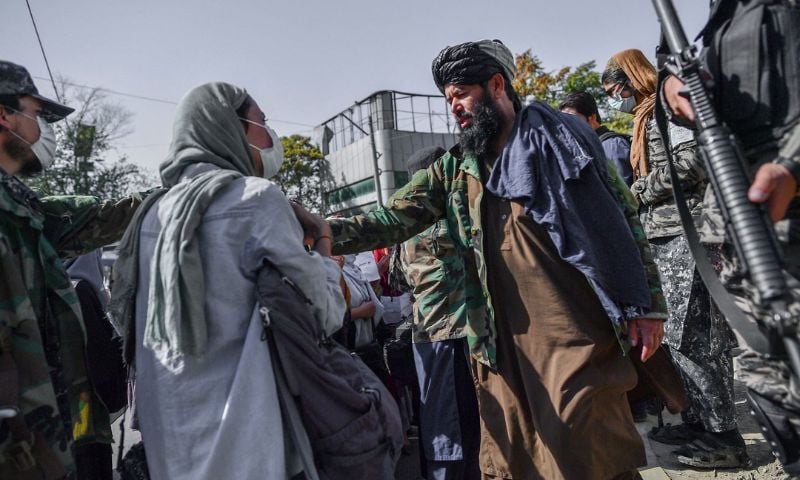
Provisions concerning women reveal a deeply distorted worldview. Women are criminalised for repeatedly visiting parental homes without their husband’s permission and face imprisonment if they refuse to return.
Husbands are authorised to administer punishment
Husbands and guardians are authorised to administer punishment. Violence against women is narrowly addressed only in cases of severe visible injury, leaving psychological and sexual abuse unaddressed.
Islam recognises women as independent moral and legal persons; reducing them to controlled dependents has no basis in Islamic teachings or Afghan tradition.
Repeated legal recognition of slavery is among the most alarming features. By maintaining legal categories of free and slave and authorising punishment regardless of this status, the Code revives the condition Islam sought to dismantle.
Islamic teachings encouraged emancipation and human dignity, not the normalisation of slavery.
From a modern governance perspective, the Code represents institutional failure. States depend on legal uniformity, accountability, clarity, and basic rights.
Afghan Taliban framework rejects these principles in favour of vague offences, unchecked authority, and ideological enforcement, deepening Afghanistan’s isolation and internal instability.
In reality, this Criminal Procedure Code is not the implementation of Shariah but a document of fearful rule. It reflects secluded leadership imposing a perverted interpretation of Islam to preserve power.
Islam came to challenge oppression; this Code sanctifies it. Such a system cannot deliver justice, stability, or moral legitimacy, nor can it represent Islam in any meaningful sense.