KEY POINTS
- Swiss report confirms India suffered tactical setbacks during May 2025 conflict.
- Pakistan’s air and missile defences shot down six Indian fighters, including Rafale.
- Contributing factors to India’s setbacks included intelligence gaps and flawed assumptions from past conflicts.
- Pakistan gained operational and strategic advantage, maintaining credible communications and controlling narrative.
- Swiss report highlights Pakistan’s resilience and continued diplomatic and military credibility.
ISLAMABAD: A Swiss report on Operation Sindoor, the India–Pakistan air war from May 7–10, 2025, challenges the Indian media narrative, highlighting early Indian tactical setbacks and Pakistan’s operational resilience.
During the May 2025 conflict, the most intense military confrontation between the South Asian neighbours in decades, Pakistan downed six Indian fighter jets, including French-made Rafale. India acknowledged losses but did not specify a number.
US President Donald Trump, who helped broker a ceasefire between Pakistan and India on May 10, had repeatedly said that seven jets were shot down during the Pakistan-India aerial combat in May.
“If you look at India and Pakistan, they were going at it, seven planes were shot down, seven brand new, beautiful planes were shot down,” Trump had said at a ceremony in Japan.
The Swiss report, authored by Swiss military historian Adrien Fontanellaz and published on November 2, 2025, was commissioned by a European strategic studies centre.
Tactical setbacks for India
The report confirms that India suffered a significant tactical defeat during the opening night of the operation Sindoor on May 7.
According to the Swiss military report, Pakistan’s air and missile defences effectively countered the initial Indian air strikes.
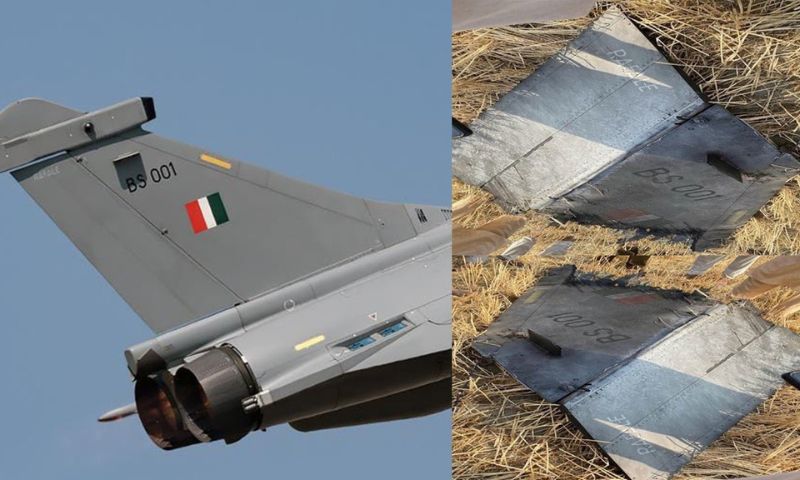
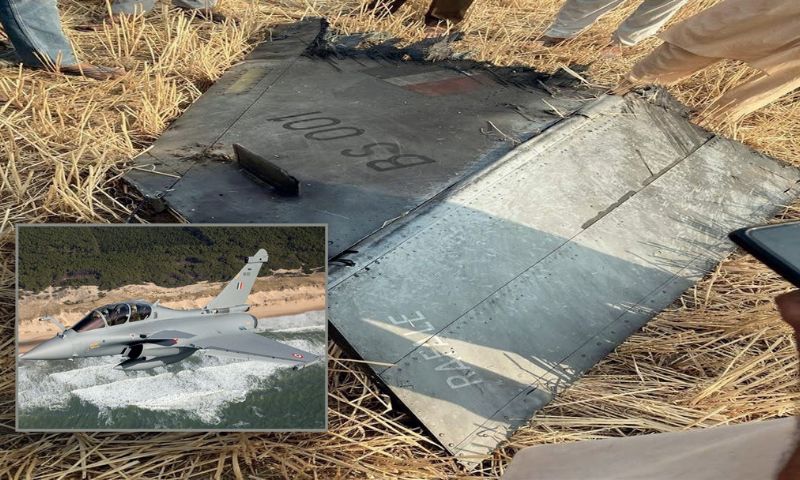
Pakistani forces, deploying J-10C and JF-17 aircraft armed with PL-15 missiles, and HQ-9/16 surface-to-air missiles, shot down several Indian fighters, including at least one Rafale (wreckage BS001), one Mirage 2000I, and either a MiG-29UPG or Su-30MKI.
The Swiss report noted that India’s strike aircraft exposed themselves through low-level penetration and pop-up attacks, making them vulnerable to Pakistani countermeasures.
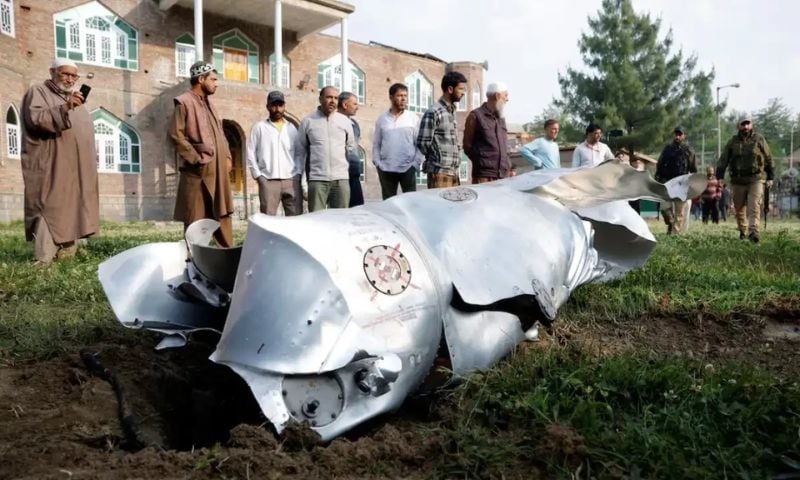
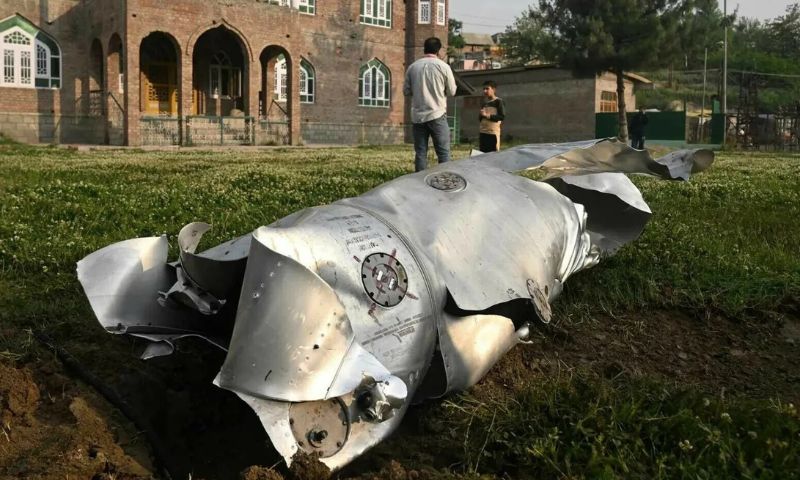
At least one Indian aircraft was forced to jettison a BrahMos missile, which was later found intact on the ground, marking a clear operational setback.
“The loss of even one Rafale carried symbolic weight, drawing significant Western media attention and overshadowing other aspects of the operation,” the report said.
Contributing factors to India’s setbacks
The Swiss military report attributes India’s early failures to multiple factors.
Pakistani forces were not caught off guard, having conducted recent air defence exercises similar to 2019’s Balakot scenario.
In February 2019, Pakistan shot down two Indian Air Force jets over Pakistani airspace in Azad Kashmir.
Indian planners underestimated the range and performance of the PL-15 missile, potentially misled by exported variant data.
According to the Swiss report, Pakistan also employed Link-17 data links and Erieye AEW&C aircraft to coordinate missile launches with minimal reaction time for Indian pilots.
Other factors included effective Pakistani electronic jamming, low-altitude tactics, and intelligence gaps regarding Pakistan’s defensive adaptations.
The report criticised India’s reliance on assumptions from previous conflicts and its lack of accurate battle damage assessment following strikes on Bahawalpur and Muridke.
Pakistan’s operational and strategic gains
Despite Indian media hype framing Operation Sindoor as an Indian escalation success, the Swiss report highlights Pakistan’s early operational and strategic gains.
Pakistan’s air defences inflicted multiple losses, maintained credible communications with international observers, and controlled the narrative during the initial phase of the conflict.
“The symbolic impact of India’s Rafale loss mirrored previous historical events, providing Pakistan with a public relations advantage,” Fontanellaz wrote.
After the war, Pakistan’s diplomatic standing was further strengthened, with Washington continuing high-level engagement with Islamabad. Both sides renewed security dialogues and financial consultations, contrary to Indian claims of Pakistani isolation.
Since the May ceasefire, Islamabad and Washington have expanded cooperation across multiple fronts, including counterterrorism, defence and mining and minerals.
The two sides have also deepened engagement on trade, technology and climate resilience, signaling a renewed effort to stabilize ties and promote long-term collaboration.
The Swiss report emphasised that India’s aggressive actions, though eventually followed by multiple escalation stages and long-range strikes, did not secure decisive deterrence or strategic dominance.
Pakistan maintained substantial military capability and credibility in regional and global affairs, according to the Swiss analysis.
Broader implications
Fontanellaz warned that India’s aggressive posture underscored the risks of escalation between nuclear-armed South Asian states.
India’s aggressive cross-border strikes, framed as tactical victories, did not translate into strategic leverage. Civilian casualties, economic repercussions, and diplomatic caution reflected the limits of India’s coercive military action in South Asia, according to the Swiss military report.
The Swiss study also noted that India struggled with information and communication during the early stages of the conflict.
Pakistani leaders effectively engaged the United States and other international stakeholders, portraying themselves as stabilisers amid heightened tensions, while India exercised caution in its external communications.
The report concludes that Operation Sindoor, while often celebrated in Indian media for “escalation dominance,” reveals India’s hubris and overreach, contrasted with Pakistan’s operational resilience and sustained diplomatic influence.
The Swiss report has been cited as a reference point for analysts assessing South Asian military balances, cautioning against oversimplified interpretations of battlefield success.