


Key points
- Universities turned from hope to fear
- Strict dress codes enforced through humiliation
- Higher education suspended indefinitely for women
KABUL: Since the Taliban returned to power in August 2021, millions of Afghan women and girls have been stripped of their right to education, a restriction that has reshaped the future of an entire generation.
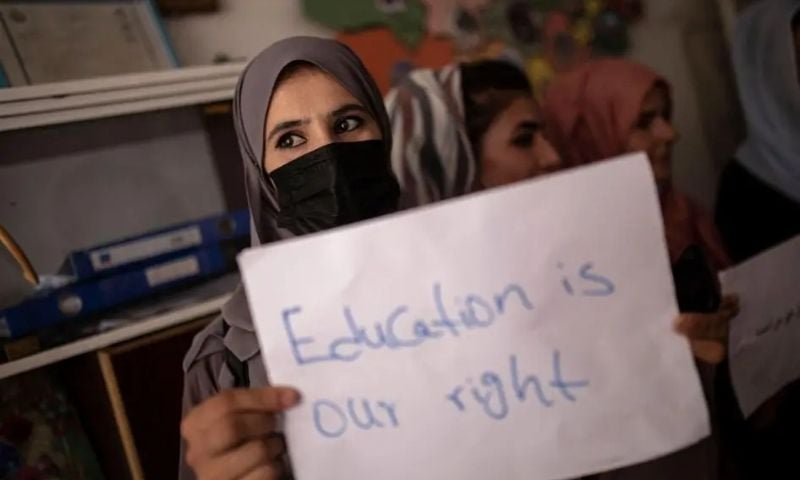
For many young women, the collapse of the previous government was followed by deep psychological shock as new rules were announced almost daily. Universities, once symbols of hope, became spaces of fear and uncertainty. Female students who had passed the national Kankor entrance exam were briefly admitted, only to face increasing limitations on clothing, movement and access to classrooms, reports Hasht e Subh, a prominent independent newspaper and media organization in Afghanistan.
At Kabul University, women were required to wear black clothing, full face coverings and attend segregated classes. Entry was often denied for minor infractions, such as wearing a coloured chador or lacking a face mask. Many students described being turned away without explanation, enduring humiliation through silent scrutiny rather than spoken words.
Female students
Despite the pressure, female students persisted for three semesters, believing the restrictions might ease. Instead, in late 2022, authorities announced the suspension of women’s higher education “until further notice”. That notice has yet to come.
Three years on, universities remain closed to women. The ban has not only halted academic progress but has also eliminated pathways to independence, employment and social participation. Potential doctors, researchers, writers and educators remain confined to their homes.
As international attention fades, Afghan women continue to wait in silence, documenting their experiences so history will remember what was taken from them.