Key Points
- Pakistan and Indonesia agree to strengthen trade relations with emphasis on rice exports and imports
- Talks highlight broader economic, agricultural, and investment cooperation
- Discussions include reviving G2G frameworks and trade facilitation measures
ISLAMABAD: Pakistan and Indonesia have agreed to deepen bilateral trade ties, with a special focus on rice, agriculture, and investment, officials said on Tuesday.
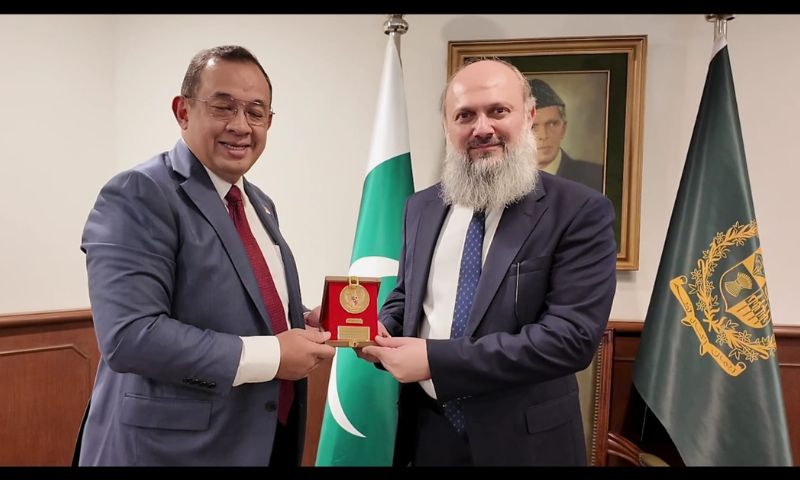
The announcement follows a detailed meeting between Federal Minister for Commerce Jam Kamal Khan and Indonesian Ambassador Chandra Warsenanto Sukotjo.
During the meeting, the Commerce Minister briefed the Indonesian side on Pakistan’s evolving trade strategy, highlighting rice exports as a key priority.
Pakistan remains among the world’s leading rice exporters and is working on financial and commercial mechanisms to enhance price competitiveness without compromising quality.
Officials emphasised reviving the Pakistan-Indonesia rice cooperation framework and initiating fresh dialogue to institutionalise long-term cooperation in the staple commodity, referencing a previous MoU signed in 2015, and a revised draft shared with Jakarta.
The discussions also addressed trade facilitation measures and agricultural issues, including kinnow (mandarin) market access, import quotas, and new testing requirements.
Pakistan’s Department of Plant Protection is actively engaging with Indonesian counterparts to resolve these matters.
Beyond agriculture, the meeting explored broader economic collaboration.
Jam Kamal Khan invited Indonesian investors to consider Pakistan for its palm oil storage and processing, energy, biodiesel, minerals, and infrastructure projects for partnership.
The minister also invited Indonesian investors to the development and subsequent operations of Special Economic Zones and CPEC-linked initiatives.
The Commerce Minister highlighted Pakistan’s expanding port and logistics infrastructure.
He also pointed out the country’s strategic location as a gateway to regional markets and other emerging markets in Africa, the Middle East, and Central Asia.
The Indonesian Ambassador welcomed the proposals and assured that issues on rice cooperation, agricultural market access, and trade facilitation would be communicated to Jakarta.
Both sides agreed to intensify institutional engagement, including convening the Joint Trade and Development Committee, trade forums, and virtual consultations to maintain momentum.
Bilateral trade between Pakistan and Indonesia stood at around $2.1 billion in 2025, with Pakistan’s exports accounting for nearly $950 million and imports from Indonesia at $1.15 billion.
The two countries have set a target to increase bilateral trade to $5 billion over the next five years, with particular emphasis on agriculture, food processing, and industrial goods.
Pakistan produces approximately 8 million metric tons of rice annually, including around 4 million metric tons of ‘Basmati’ and ‘non-Basmati’ rice, which are exported to global markets.
Indonesia is a key market, importing an estimated 120,000 metric tons of rice from Pakistan in the last year.
The government is working on financial and commercial mechanisms to enhance price competitiveness without compromising quality.
Officials emphasised reviving the Pakistan–Indonesia rice cooperation framework and initiating fresh dialogue to institutionalise long-term cooperation in the staple commodity, referencing a previous MoU signed in 2015 and a revised draft shared with Jakarta.
Pakistan imports palm oil, coffee, spices, and other food products from Indonesia.