
For decades, it has been widely assumed that Afghanistan is indispensable for Pakistan’s trade and transit access to Central Asian countries. The argument rests on geography: Afghanistan lies between South and Central Asia and offers a seemingly direct land bridge.
However, a closer examination of the common assertion shows that this assumption is overstated.
An objective analysis of distances, costs, infrastructure quality, security conditions and emerging alternative transport corridors suggests that Pakistan can access Central Asian markets without Afghanistan with limited or no economic and financial consequences.
China corridor: Pakistan’s most reliable route
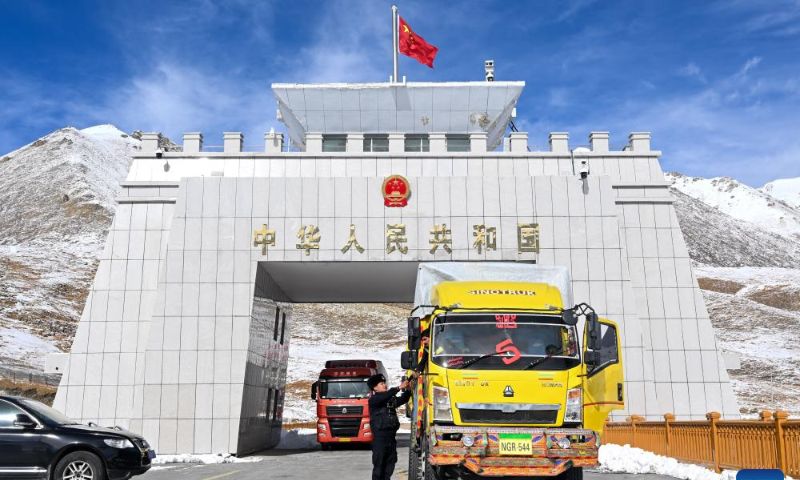
Contrary to common belief, the shortest and most efficient routes from Pakistan to three Central Asian countries bypass Afghanistan entirely and pass through China.
Under the Quadrilateral Traffic in Transit Agreement (QTTA), Pakistan has shorter and more preferred land routes to several Central Asian countries without transiting Afghanistan.
The distance from Pakistan to Kyrgyzstan’s capital Bishkek is about 2,535 kilometres, compared with more than 3,570 kilometres via Afghanistan.
The route to Almaty in Kazakhstan is approximately 2,916 kilometres, whereas travelling through Afghan territory exceeds 4,000 kilometres.
Similarly, the distance to Tajikistan’s capital and the country’s largest city, Dushanbe, is roughly 2,597 kilometres, only marginally longer than the Afghan route of over 2,400 kilometres, but benefiting from better infrastructure and greater reliability.
These routes to Central Asia, under the Quadrilateral Traffic in Transit Agreement, benefit from China’s advanced road infrastructure, stronger border management and a comparatively secure environment.
Seasonal closures at high-altitude mountain passes remain a challenge. However, ongoing upgrades to the Karakoram Highway, including tunnel construction and road widening projects worth more than $2 billion, are steadily reducing this constraint.
Once completed, the route is expected to operate largely year-round, making it an all-weather route in the future.
Iran Corridor: slightly longer, but more economical
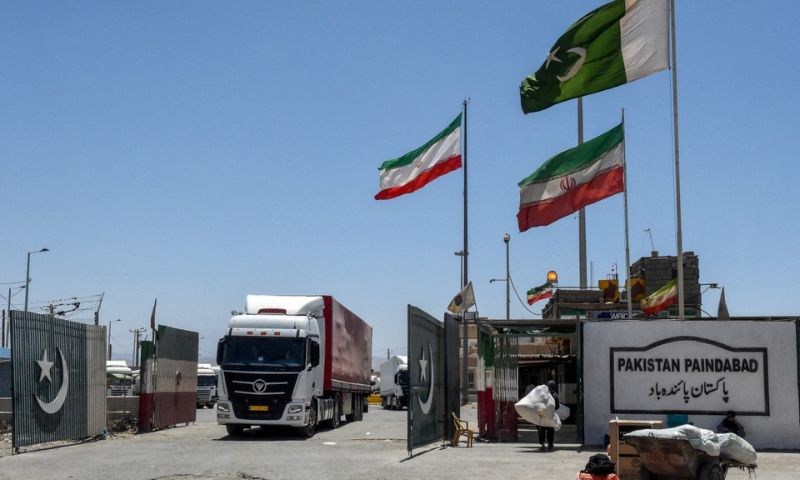
For the other two Central Asian countries i.e., Turkmenistan and Uzbekistan, the Iran corridor offers a superior alternative.
While distances to Uzbekistan are slightly longer, the route through Iran is a comparatively cheaper option for trade due to continuous rail connectivity, lower per-ton freight costs and more established customs and transit systems.
The trade route distance from Pakistan to Uzbekistan’s capital Tashkent is approximately 3,200 kilometres, compared with over 2,760 kilometres if routed through Afghanistan.
Similarly, the distance to Turkmenistan’s capital Ashgabat is around 2,410 kilometres, only slightly longer than the Afghan route, which measures just over 2,400 kilometres.
Despite being marginally longer, these routes offer advantages in terms of rail connectivity, cost-effectiveness, and logistical reliability.
For bulk cargo, rail economics matter more than distance. Lower fuel costs, higher volumes and reduced transit risks make Iran-based rail corridors more cost-effective than Afghan road transport.
This explains why Central Asian states themselves increasingly rely on Iran and the Caspian–Turkiye axis for westward trade.
Future infrastructure will reduce Afghan relevance
Pakistan’s planned infrastructure upgrades will further marginalise Afghan transit.
The ML-1 railway upgrade project aims to raise freight speeds from about 19 kilometres per hour to nearly 70 kilometres per hour. It will also increase axle loads and train lengths, dramatically reducing inland transport costs.
Once operational, the ML-1 railway project will strengthen both China-linked and Iran-linked corridors. This will make these trade corridors economically superior to Afghan road routes.
Meanwhile, the China-Pakistan Economic Corridor (CPEC) and Gwadar Port enhance Pakistan’s role as a maritime gateway for Central Asia, without requiring transit through Afghanistan.
Why geography alone is not enough
Trade corridors are shaped by more than maps and distances. Reliability, security, logistics quality and cost predictability often matter more than the shortest line between two points.
Afghanistan, despite providing a shorter trade route to only Uzbekistan, suffers from chronic structural weaknesses as a transit state.
These include persistent security risks that raise insurance and freight premiums, limited rail infrastructure of roughly 100 kilometres nationwide, weak customs automation, warehousing, cold chain, unpredictable transit regimes, and frequent border closures.
As a result, Afghan routes are used far less in practice, especially for high-value or time-sensitive cargo.
Despite its geographic position, Afghanistan does not offer the shortest or most efficient transit routes for Pakistan to the Central Asian republics.
Even for Uzbekistan and Tajikistan, alternatives through Iran and China are significantly more economical and reliable than routing through Afghanistan.
With uncertainty surrounding Iran’s Chabahar Port and Afghanistan’s deepening economic instability, regional trade patterns are shifting.
Pakistan’s access to Central Asia is no longer contingent on Afghan transit. Infrastructure, economics and security realities are steadily reshaping the region’s trade geography.
With Chabahar Port facing growing uncertainty, Iran’s prospects as an alternative trade corridor to bypass Pakistan are steadily fading.
As economic instability deepens with each passing day, Afghanistan faces consequences that extend far beyond initial expectations under the Taliban regime, with serious long-term implications.