Key Points
• French minister says the US would suffer from threatened tariffs on Europe
• European Union leaders warn of a “downward spiral” in trade relations
• Tariffs linked to US pressure over Greenland policy
• EU emergency talks underway to coordinate response
ISLAMABAD: France’s agriculture minister says US President Donald Trump stands to lose significantly if he presses ahead with threatened tariffs on European countries, as European leaders step up criticism of the proposed measures.
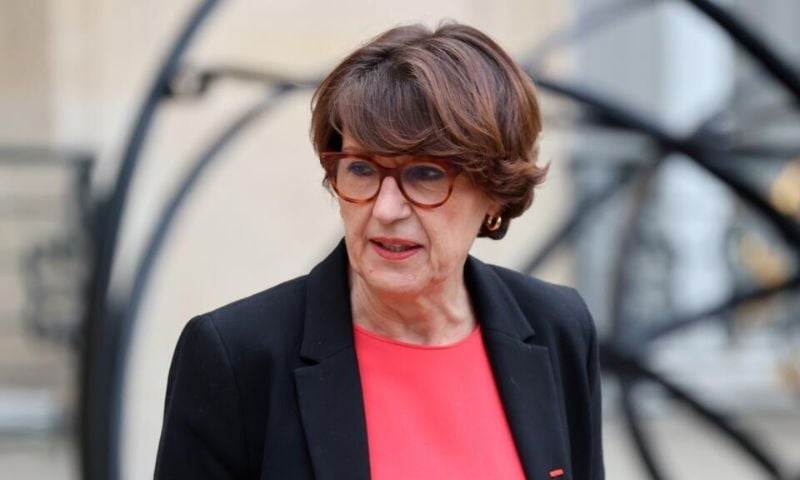
France’s Agriculture Minister Annie Genevard said on Sunday that the threatened tariffs, aimed at European countries opposing Washington’s Greenland strategy, would not only hurt Europe but also damage US farmers and manufacturers, underlining the mutual stakes in transatlantic trade. “In this escalation of tariffs, he has a lot to lose as well, as do his own farmers and industrialists,” Genevard told French broadcasters Europe 1 and CNews.
The remarks come amid a wider European backlash to the US threat to impose escalating duties on imports from key Western allies unless they support Washington’s controversial position on Greenland, a Danish territory of strategic importance in the Arctic. European nations, including France, Germany, the United Kingdom, the Netherlands, Finland, Norway and Sweden, have condemned the proposed tariffs as unacceptable and economically damaging.
European Commission President Ursula von der Leyen and EU Council President António Costa warned that U.S. tariff threats could trigger a “dangerous downward spiral” in economic relations between the United States and the European Union. They said such measures risk damaging the decades‑long transatlantic partnership and hurting cooperation on shared global priorities.
The dispute has also sparked public protests and political opposition across the region, especially in Denmark and Greenland, where citizens and officials have rallied under slogans such as “Hands Off Greenland” to defend sovereignty and express concern over economic coercion, according to The Guardian.
European leaders are now coordinating an emergency response, with ambassadors from EU member states due to meet to discuss unified measures and diplomatic strategies if the tariffs are implemented. Officials say they prefer negotiation and dialogue, but have indicated they may resort to reciprocal measures or delay trade deal approvals if necessary to protect European industries and markets, according to Reuters.
Analysts warn that while trade disputes between major economies can be contained, there is a risk they could ripple out to broader markets, affecting global supply chains and investor confidence. The United States and European Union remain each other’s largest trading partners, and any escalation into a full‑blown trade conflict could have wide‑ranging economic consequences.
Genevard’s comments reflect growing concern within Europe that Washington’s approach, including linking trade policy to security and geopolitical issues, could disrupt long‑standing economic cooperation. She argued that US producers and exporters would not be immune from the fallout of higher tariffs, noting that many American agricultural and industrial products depend on stable access to the European single market.
The US administration has so far defended the proposed tariffs as necessary leverage to achieve its strategic objectives. However, European officials maintain that trade should be governed by mutual respect and negotiated agreements rather than unilateral pressure tactics.