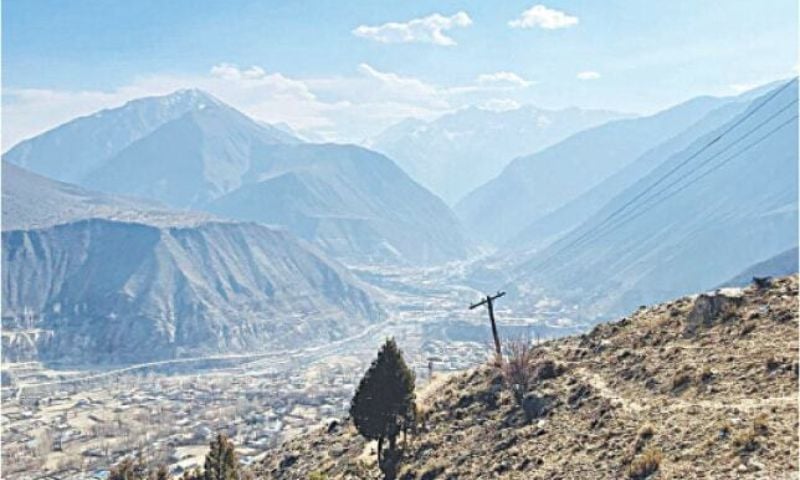
GILGIT-BALTISTAN: Climate change is increasingly reshaping winter patterns in Pakistan’s northern region of Gilgit-Baltistan, where unusually low snowfall has left vast stretches of mountains bare and dry, raising concerns over water security and flood risks downstream.
Light snowfall was recorded on Friday and Saturday in parts of Skardu, Kharmang, Shigar, Ghanche, Astore and Ghizer, according to officials. The Pakistan Meteorological Department (PMD) has forecast intermittent rain and snowfall in several areas until January 23, but residents and experts say the precipitation remains far below seasonal norms.
Officials reported that Skardu received only two to three inches of snow on Saturday, while parts of Ghizer experienced brief spells of snowfall over the past two days. Light snow was also observed last week in Hunza and Nagar. However, much of the region’s valleys remain dry, with mountain slopes appearing largely rocky instead of snow-covered.
Residents across the region say the delayed and reduced snowfall is unprecedented. Naeem Sheikh, a resident of Skardu, noted that heavy snowfall typically blankets the region by mid-January.
“The mountains should be fully snow-clad by now, but the first snow of the season only arrived this weekend,” he said, adding that snowfall has been noticeably declining over the past two winters.
Similar concerns were echoed in Upper Hunza’s Gojal valley. Ali Madad, a resident of Hussaini village, said snowfall usually begins in late November.
“It is alarming that we are facing a snow drought until January,” he said, warning that the light snow on surrounding peaks is likely to melt quickly due to continued sunshine and above-average temperatures.
In Astore district, residents reported comparable conditions. Ali Jabbar from the Tirashig area said the district is normally buried under thick snow by this time of year. “This year, January has passed with hardly any snowfall,” he said.
Environmental experts attribute the situation to a broader shift in winter weather patterns across Gilgit-Baltistan. Snowfall is starting later in the season, quantities are decreasing, and winter temperatures remain higher than usual, reducing the formation of stable snowpacks.
Khadim Hussain, Director of the Gilgit-Baltistan Environmental Protection Agency (GBEPA), warned that late snowfall poses serious risks.
“When snow falls late, it does not compact properly into ice,” he explained. “This means it melts rapidly at the onset of summer, increasing the likelihood of flash floods and glacial lake outburst floods downstream.”
He said climate change is the primary driver behind these changes, but local environmental degradation is compounding the problem. Deforestation, unplanned road construction, expanding tourism, and increased human activity near glaciers have all contributed to destabilising the region’s fragile ecosystem.
“Greenhouse gas emissions, vehicle pollution in narrow valleys, burning of tyres and animal dung, settlements near glaciers, and cutting forests for firewood are accelerating glacial melt,” Mr Hussain said.
According to data collected by GBEPA, the average temperature in Gilgit-Baltistan increased by approximately 0.6°C between 1987 and 2013, a trend linked to rising incidents of flash floods, accelerated glacial retreat and other climate-related hazards in recent years.
Gilgit-Baltistan is home to some of the world’s largest glaciers outside the polar regions and plays a crucial role in supplying freshwater to Pakistan’s major river systems, including the Indus. Reduced snowfall threatens not only local livelihoods but also agricultural and water security for millions downstream.
Climate scientists warn that “snow droughts” — winters with significantly reduced snowfall — can be as dangerous as heavy precipitation events. While less snow may appear beneficial in the short term, it disrupts natural water storage systems and leads to sudden surges of meltwater during warmer months.
Experts say urgent measures are needed, including improved climate monitoring, stricter environmental regulations, sustainable tourism practices, and reforestation efforts, to help the region adapt to rapidly changing climatic conditions.
Without intervention, they caution, Gilgit-Baltistan could face more frequent disasters — oscillating between water scarcity and destructive flooding — as climate volatility intensifies across the Himalayas.