


Key points:
- India effectively ends its decade-long involvement in Iran’s Chabahar Port development.
- New Delhi transferred $120 million to Iran before US sanctions returned.
- Advance payment ensures India has no remaining financial liability to Tehran.
- Iran now holds full discretion over fund usage and port operations.
- All government directors at India Ports Global Limited have resigned collectively.
- India currently holds no physical assets at the Iranian port site.
- US Treasury granted a six-month window to wind down all activities.
ISLAMABAD: India’s decade-long involvement in the development of Iran’s Chabahar Port has effectively come to an end, following the reimposition of United States sanctions and growing regional and geopolitical pressures, according to reports in Indian media and expert assessments.
Preparing for sanctions
A report by ETInfra — a part of India’s largest private media conglomerate Times Group — states that New Delhi had already transferred approximately $120 million to Iran to fully discharge its financial obligations related to the development of the port before US sanctions on Chabahar were reinstated in September 2025.
The payment was made in advance of anticipated sanctions, which were widely expected at the time India approved funds under a 10-year operational agreement signed in March 2014, a government source said.
Explaining the rationale, the source noted that transferring funds after sanctions were imposed would have been difficult. “When the sanctions are reimposed, transfer of funds would have become difficult.
So, before the sanctions came, all the funds were transferred to Iran. India now has no liability in its commitment given to Iran on Chabahar port,” the official said.
Iran hold discretion
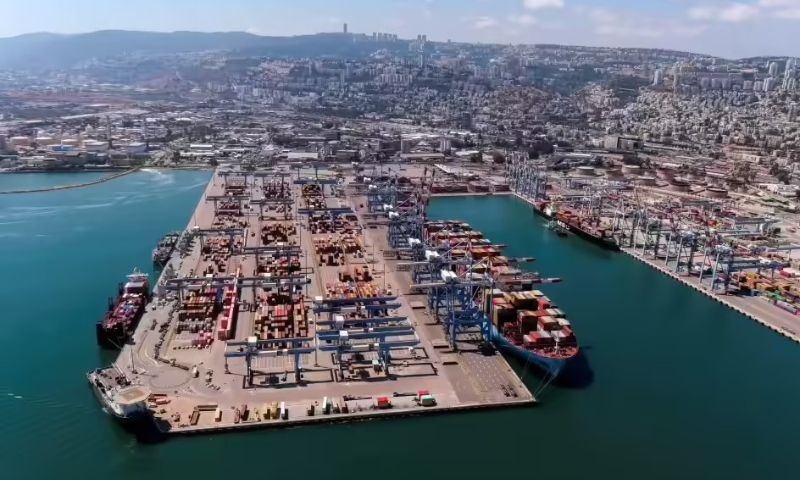
The source added that under the terms of the agreement, Iran now has full discretion over how the funds are used, including the procurement of cranes and other port equipment, and can operate the port independently without Indian involvement.
The India-funded portion of the project was implemented through India Ports Global Ltd (IPGL), a state-owned entity fully owned by Sagarmala Development Corporation Ltd, later converted into Sagarmala Finance Corporation Ltd, a maritime-focused non-banking finance company.
Board resigns, website down
Following the renewal of US sanctions, all government-nominated directors on IPGL’s board resigned, and the company’s website was taken offline. Officials said the move was aimed at shielding individuals and institutions linked to the port from potential sanctions exposure.
A second senior government source said India sees no viable option but to withdraw. “India has no choice but to exit the Chabahar port,” the official said, adding that India holds no physical assets at the port.
“We were only running the port with manpower from Iran; that was the main activity of IPGL. We have to exit unless the sanctions are eased by the US again.”
The US Treasury Department’s Office of Foreign Assets Control (OFAC) has granted India a six-month exemption, effective from October 29, 2025, to April 26, 2026, allowing New Delhi to wind down its activities at Chabahar.
The exemption is conditional on India’s plan to cease operations at the Shahid Beheshti terminal and any related facilities.
However, sanctions reimposed from September 29, 2025, have already constrained India’s ability to continue its strategic role at the port, effectively forcing a pullback.
The developments coincide with widespread anti-government protests in Iran, with reports of significant casualties in recent weeks, adding further uncertainty to the regional environment.
Analysts say India’s future engagement at Chabahar now depends on broader geopolitical shifts, including potential changes in Iran’s political leadership and its approach to the nuclear programme, which remains the central trigger for US sanctions.
Why Chabahar matters
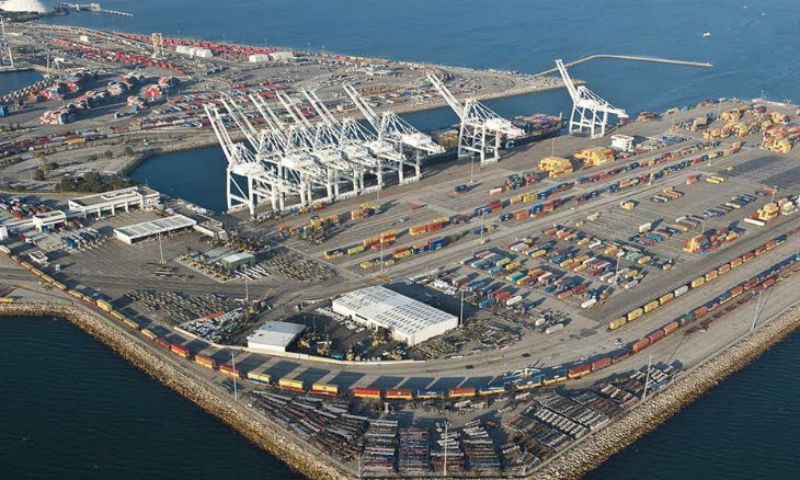
Located in Iran’s southeastern Sistan-Baluchistan Province on the Gulf of Oman, Chabahar Port has long been viewed as a strategic asset for India.
It was intended to provide New Delhi with a sea-land trade route to Afghanistan and Central Asia, bypassing Pakistan, and to serve as a key node in the International North-South Transport Corridor (INSTC) linking India with Iran, Afghanistan, Azerbaijan, Russia, Central Asia, and Europe.
Meanwhile, some economic and security experts cited in regional media have raised concerns over India’s broader intentions at Chabahar, suggesting that the port may have held strategic or intelligence significance beyond commercial investment.
Analysts argue that IPGL was created specifically for Chabahar, and that sustained scrutiny under US sanctions risked exposing activities that could have damaged India’s international standing.
Heightened Iranian vigilance
Experts have also pointed to heightened Iranian vigilance following recent Iran–Israel tensions, saying Tehran had become more alert to security-related activities at sensitive infrastructure sites, including ports.
According to these analysts, India’s decision to withdraw reflects a calculation that exiting the port under sanctions pressure is preferable to sustaining reputational and diplomatic risks.
They say the move underscores how strategic partnerships can be subordinated to external geopolitical pressures, calling into question India’s claims of a balanced and principle-driven foreign policy.
Experts say India abandoned its long-term pact with Iran under US pressure, exposing a double standard in its foreign policy and raising questions about hidden strategic motives, including potential intelligence operations.
Betrayal of Strategic trust
India’s decision to abandon its strategic agreement with Iran under mounting American pressure has drawn sharp criticism, with observers labeling it a definitive proof of New Delhi’s “double-standard” foreign policy.
Despite entering the pact to secure its own interests, India appears to have retreated at the first sign of diplomatic heat.
Financial and geopolitical experts suggest that India’s involvement in the Chabahar Port may have served motives beyond simple trade and investment.
They say that there are growing concerns that while India ostensibly acquired the port for investment, it was being utilised for more nefarious strategic objectives.
Experts and diplomats believe that India chose to exit the project to save face, ultimately abandoning its narrative of “principled relations” with Iran in favour of self-preservation.
The move is being viewed as a betrayal of long-term partnership promises. Critics argue that this withdrawal effectively strips away the facade of India’s “balanced” foreign policy, exposing a willingness to sacrifice regional allies to align with Western pressure.