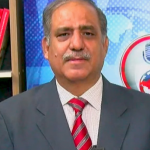
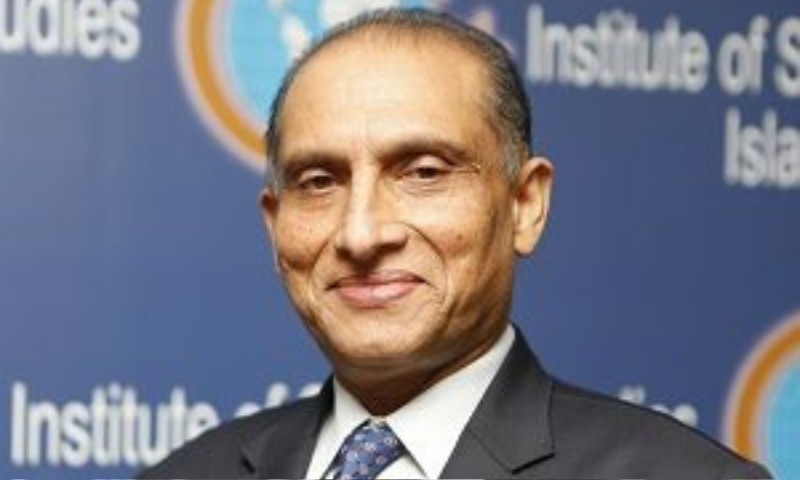



ISLAMABAD: The risk of a US military strike on Iran could destabilize the wider Middle East, former Pakistani Foreign Secretary Aizaz Ahmad Chaudhry has warned, citing the ongoing unrest in Tehran and other Iranian cities as a potential trigger for wider regional chaos.
Speaking to WE News, Chaudhry said the recent protests in Iran, initially peaceful, escalated due to worsening economic conditions caused by US sanctions, steep currency depreciation, and rising inflation.
“On December 28, even traders who had traditionally supported the revolution came out on the streets, closing their shops. This is unprecedented and reflects widespread discontent,” he noted.
Chaudhry stressed that while Iran accuses foreign elements of fueling violence, including attacks on mosques and authorities, the situation remains “foggy” due to restricted internet access. He warned that US and Israeli involvement could exploit unrest as a pretext to target Iran’s missile capabilities and nuclear facilities.
“This time, however, the scale (of protest) broadened much larger than in the past and we also saw infusion of certain elements which made it violent,” he said.
Drawing parallels with Venezuela, Chaudhry said while US actions in both countries involve sovereignty violations, Iran’s situation is far more complex given its strategic position in the Middle East and its ties with China.
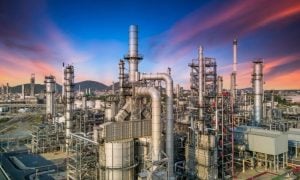
“The US may aim to block Iran’s oil exports to China, but any military action could have far-reaching implications for regional security and global oil markets,” he said.
On Pakistan’s role, Chaudhry highlighted that Islamabad continues to oppose externally imposed regime change. “Pakistan believes the people of every country should have the right to decide their leadership internally, without foreign interference,” he said, noting Pakistan’s diplomatic weight in the region has grown following its 2025 strategic victories.
He also commented on global security trends, warning that 2026 could see increased turmoil across multiple hot spots including Iran, Venezuela, Greenland, Israel, Ukraine, and the South China Sea. Chaudhry criticized unilateral actions by major powers, including the US, Russia, and India, and urged adherence to international law, citing China as one of the few countries advocating for its respect.
“The world cannot address these crises solely through the use of force. Without international law, countries are left to fend for themselves, forming informal alliances to protect their interests,” he said.
Chaudhry warned that the ongoing protests in Iran could provide a pretext for the United States and Israel to target Iran’s missile program, further destabilizing the region.
Chaudhry said that while Iranian nuclear facilities have already suffered damage in past attacks, the focus now could shift to the country’s missile capabilities, which have effectively responded to prior Israeli strikes. “In the garb of helping the people of Iran, external powers may act to damage Iran’s missile program for their own strategic interests,” he said.
Chaudhry outlined two potential scenarios. In the first, Iran successfully manages the protests and only faces limited external strikes, prompting global sympathy for Tehran as it resists foreign pressure. “If Iran overcomes internal unrest, the world may stand with it against outside violations,” he said.
The second scenario is far more alarming: if protests continue and a US or Israeli military action occurs simultaneously, the result could be widespread chaos, affecting Iran’s neighbors, destabilizing the region, and disrupting global oil markets. Chaudhry emphasized that such a situation “is not one the world should push toward.”
He urged Tehran to address protesters’ grievances peacefully, warning that excessive force could erode the government’s moral standing internationally. “It would be better if the Iranian government responds constructively to the people rather than curbing dissent unnecessarily,” he said.
Chaudhry also noted the broader geopolitical context, highlighting ongoing US and Israeli strategic calculations, including attempts to weaken Iran while monitoring Chinese influence in global energy markets. “The protests could be exploited as a justification for targeted strikes,” he said, “but the consequences would extend far beyond Iran’s borders, affecting the entire Middle East and the global economy.”
Chaudhry’s remarks underscore the growing tension in Iran, where protests sparked by economic hardship have drawn global attention, and highlight Pakistan’s continued advocacy for stability and regional diplomacy amid escalating international interventions.