KEY POINTS
- Moscow condemns US for seizing a Russian-flagged oil tanker in the North Atlantic
- Russia demands safety, dignity, and swift return of the tanker crew
- US officials said the operation enforced sanctions against Venezuelan oil exports
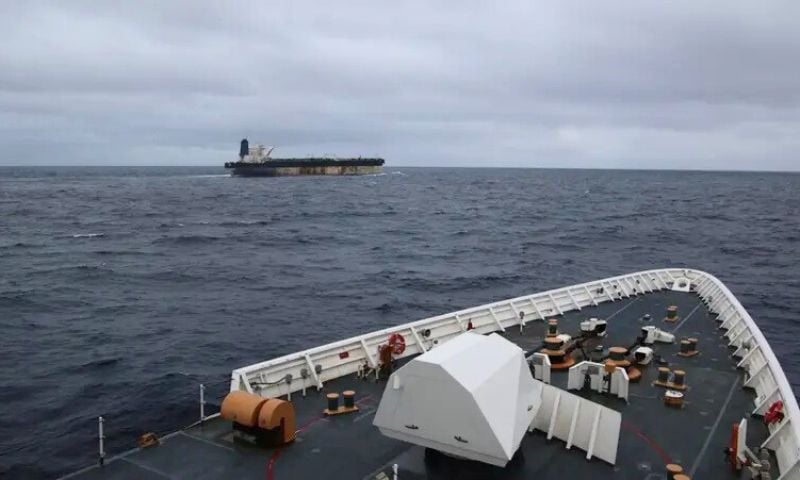
ISLAMABAD: Russia accused the United States of escalating “military-political tensions” after US forces seized the Russian-flagged oil tanker Marinera in the North Atlantic Ocean, describing the action as unlawful and a threat to international maritime norms.
According to Russia’s Transport Ministry, “Communication with the vessel was lost around 3 pm local time (1200 GMT) when U.S. naval forces boarded the ship in the open sea outside the territorial waters of any states.”
“In accordance with the norms of the 1982 U.N. Convention on the Law of the Sea, the regime of freedom of navigation operates in the waters, on the high seas, and no state has the right to use force against vessels duly registered in the jurisdictions of other states,” it added.
The Russian Foreign Ministry echoed the condemnation, saying, “Russia demands that the U.S. ensure humane and dignified treatment of Russian citizens on the ship Marinera, and respect their rights and interests,” and called for “their immediate return home,” according to TASS.
The Marinera, previously named Bella-1, had been temporarily permitted to sail under the Russian flag on December 24, 2025, in compliance with Russian and international law, the Transport Ministry noted. The tanker had previously evaded a U.S. maritime blockade targeting sanctioned vessels in the Caribbean.
US authorities said the boarding was carried out by the Coast Guard and US military under a federal court warrant, part of efforts to enforce sanctions on Venezuelan oil exports.
Two US officials, speaking on condition of anonymity, confirmed that Russian naval vessels, including a submarine, were present in the general vicinity, though there was no confrontation, according to Al Jazeera.
The operation follows heightened US pressure on Venezuela, including a recent mission on January 3 to capture President Nicolás Maduro, who faces drug trafficking charges in the United States, which he denies.
Russian officials have reaffirmed support for Venezuela’s interim president Delcy Rodríguez and criticised US actions as “blatant neocolonial threats and foreign armed aggression.”
Relations between Moscow and Washington, though slightly warmer since President Trump’s second term began, remain fragile, and military incidents between the two nuclear-armed powers are rare.
Analysts note that the tanker seizure underscores risks around sanctions enforcement, freedom of navigation, and the growing involvement of global powers in strategic shipping lanes.