
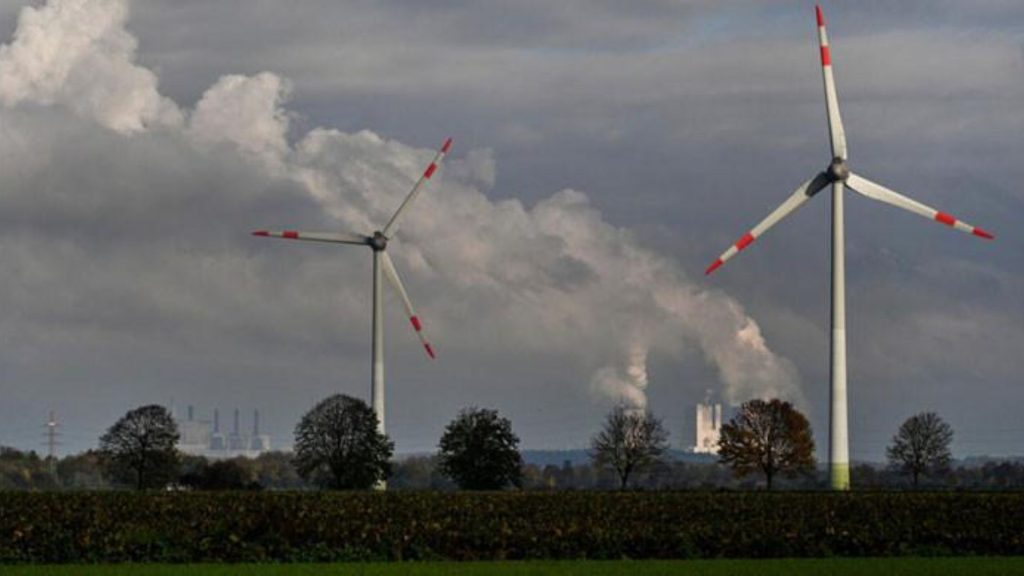
FRANKFURT: Germany continued to reduce its greenhouse gas emissions in 2025, reinforcing its long-term commitment to climate action, even as the pace of reductions moderated in Europe’s largest economy, a new study showed on Wednesday.
According to research by think tank Agora Energiewende, emissions fell by 1.5 percent in 2025 compared with the previous year. While this marked a slower decline than the three-percent drop recorded in 2024 and the 10-percent reduction achieved the year before, the study highlighted that Germany remains firmly on a downward emissions trajectory.
By 2030, Germany aims to cut emissions by 65 percent compared to 1990 levels. Agora said further acceleration will be needed in the coming years to fully meet that target, but emphasised that strong foundations are already in place.
Overall, Germany’s emissions totalled 640 million tonnes in 2025, a reduction of nine million tonnes from the previous year. National emissions are now down 49 percent from 1990 levels, underscoring decades of sustained progress.
According to AFP, recent emissions reductions were supported by record solar power generation and structural shifts in energy-intensive industries. While some sectors experienced temporary increases due to economic and weather-related factors, the broader trend toward cleaner energy remains intact.
“When burned, fossil fuels emit greenhouse gases such as carbon dioxide that trap heat near the Earth’s surface,” the study noted, reaffirming the importance of Germany’s continued transition away from fossil fuels.
“Wind and solar energy will remain the backbone of Germany’s energy transition,” said Julia Blaesius, director of Agora Energiewende Germany. She added that while the power sector has been the main driver of emissions reductions so far, expanding climate-friendly technologies across transport and buildings will further strengthen progress.
Clean technology momentum builds
The study highlighted encouraging developments in clean technologies. Sales of heat pumps reached around 300,000 units in 2025, surpassing gas boilers for the first time — a key milestone in decarbonising home heating.
Electric vehicles also gained momentum, with EVs accounting for about one-fifth of all new vehicle registrations. This marked a strong recovery after a challenging year for the sector in 2024 and signalled growing consumer confidence in electric mobility.
While emissions from transport and buildings rose modestly in 2025 — partly due to higher fuel use and a colder-than-usual start to the year — analysts noted that these increases reflect short-term conditions rather than long-term trends.
In the energy sector, fewer emissions cuts were recorded compared to previous years due to lower wind availability earlier in the year. Even so, renewables continued to play a central role in stabilising emissions overall.
Policy debate continues amid transition
The findings come as Germany’s government, led by Chancellor Friedrich Merz since last year, seeks to balance climate ambitions with economic competitiveness. His coalition has argued that easing certain regulatory burdens could support households and businesses during the transition.
At the same time, Germany continues to invest heavily in renewables and clean infrastructure, with discussions ongoing around the optimal mix of incentives, market mechanisms and new energy capacity.
Agora noted that high upfront investment costs remain a challenge for scaling up electric technologies across industry, transport and buildings. However, the steady rise in adoption suggests that momentum is building.
Taken together, the study paints a picture of a country that continues to move forward on climate action, supported by strong renewable energy growth, rising clean technology adoption and nearly halved emissions since 1990 — positioning Germany to further strengthen its leadership in Europe’s green transition.