
KEY POINTS
- Experts warn eradication is impossible as the species has already widely proliferated in natural water bodies.
- The fish adds to at least 26 other non-native species introduced over decades.
- WWF Pakistan confirms alien species have negatively impacted the nation’s aquatic biodiversity.
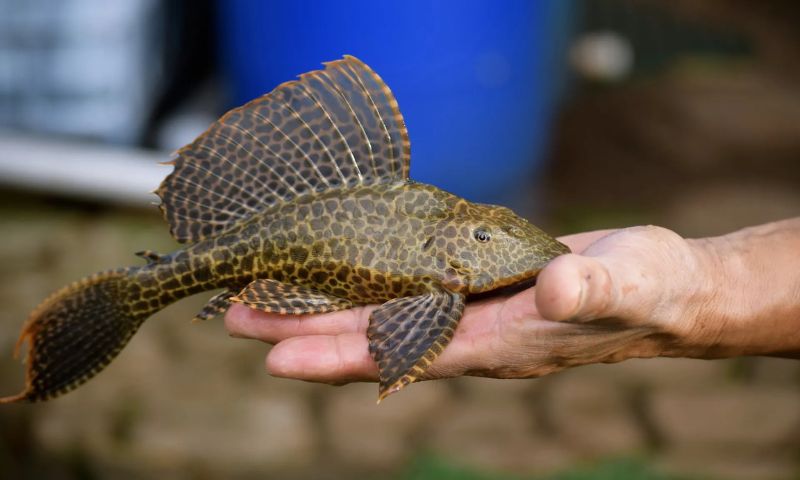
KARACHI: The Amazon sailfin catfish, a non-native species famous for its invasive spread, has been confirmed in Pakistan’s natural waterways after a specimen was transported from a pond near Sukkur to Karachi Fish Harbour, officials and experts said on January 4.
The discovery, confirmed by officials and experts on January 4, 2026, highlights a growing threat to the nation’s aquatic biodiversity.
Alien species takes hold
The fish, initially described by handlers as an “unidentified alien species,” is native to Latin America and is characterized by a body covered in bony plates and a thick, armoured structure.
While popular in the global aquarium trade, it is also notorious as a highly successful invasive species.
Experts believe it entered Pakistan’s natural water bodies accidentally and has now proliferated across Sindh and parts of lower Punjab.
Dr. Ali Hassan, a marine biologist, consulted on the case, stated, “The fish has spread so widely that complete eradication or even effective control is no longer a feasible option. Our focus must shift to managing its impact.”
Growing list of invaders
The Amazon sailfin catfish joins a concerning list of at least 26 non-native fish species introduced into Pakistan, either deliberately for aquaculture or accidentally, which have since become invasive.
These species are disrupting fragile ecosystems, outcompeting native fish, and altering habitats.
Pakistan’s history with introduced species began in 1928 with brown and rainbow trout in the regions now part of Khyber Pakhtunkhwa.
Over subsequent decades, species like Mozambique tilapia, common carp, and various Chinese carps were introduced to boost fish production or control aquatic weeds.
Short-term gain, long-term pain
Experts point out that the introductions were primarily driven by short-term economic goals to enhance aquaculture output, with little consideration for long-term ecological consequences.
“The environmental impacts were largely overlooked in the pursuit of increased production,” said Dr. Sana Farooq, an ecologist.
“Many of these species have firmly established themselves, often at the expense of native plants and animals.”
The World Wide Fund for Nature (WWF) Pakistan has underscored the severity of the issue.
In a statement, the organization noted, “There is a broad consensus that alien fish species have negatively affected the country’s aquatic biodiversity and ecosystems. The arrival of the Amazon sailfin catfish is a new chapter in this ongoing environmental challenge.”