LAHORE, Pakistan: Pakistan’s most populous province, Punjab, is set to take a significant leap in public healthcare by introducing advanced intravascular heart surgery, a minimally invasive technique widely used in leading medical centers across North America and Europe.
The initiative aims to modernize the treatment of cardiovascular diseases by shifting away from traditional open-heart surgery toward safer, less invasive procedures such as angioplasty, stent placement, and cardiac ablation.
These procedures are performed through small incisions in blood vessels, reducing surgical trauma, shortening recovery times, and lowering overall risks for patients.
A key component of the initiative is an international medical collaboration under which experienced American cardiac specialists will train Pakistani doctors in the latest intravascular techniques.
A formal agreement has been finalized to provide specialized training for medical professionals from Children’s Hospital Lahore, Nishtar Hospital Multan, and Jinnah Hospital Lahore, strengthening local capacity in advanced cardiac care.
Health experts view the move as a major step toward improving access to modern heart treatment within Pakistan’s public-sector hospitals, where demand for advanced cardiac services continues to rise due to increasing rates of cardiovascular disease.
Punjab Chief Minister Maryam Nawaz Sharif, who announced the initiative on Saturday, directed health authorities to roll out intravascular cardiac treatment facilities at two of the province’s leading institutions—the Jinnah Institute of Cardiology and Nawaz Sharif Medical City.
She also instructed relevant departments to fast-track the procurement of state-of-the-art medical equipment essential for performing intravascular procedures.
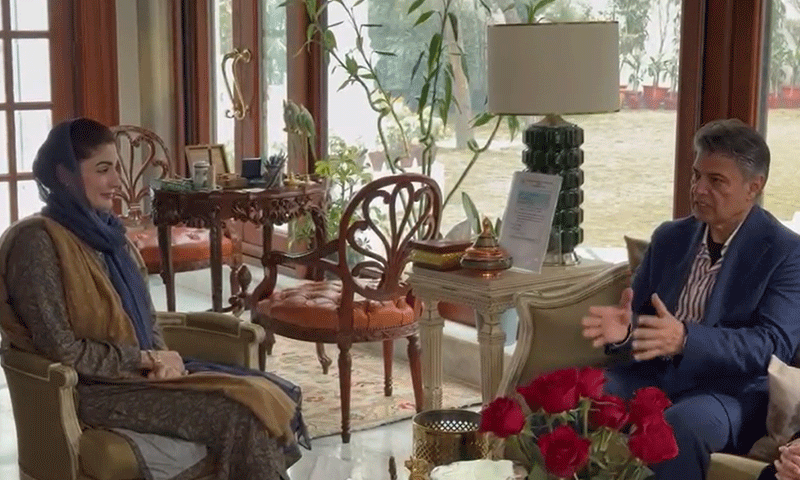
The Chief Minister met a delegation led by Dr. Naeem Tahirkheli, Chairman of the Board of Directors of Oklahoma Heart Hospital, who briefed her on international best practices in cardiac care and physician training. During the meeting, she emphasized the need to align Punjab’s healthcare system with global standards.
In addition, CM Maryam Nawaz Sharif was briefed on the healthcare and educational initiatives of the Rukhsana Foundation, an organization involved in medical training and service delivery. Appreciating its work, she agreed in principle to engage the foundation in training doctors in Punjab, further reinforcing the province’s focus on skills development and institutional capacity-building.
The initiative is expected to strengthen Punjab’s public healthcare infrastructure, improve long-term patient outcomes, and position the province as a regional center for modern cardiac treatment.
Punjab’s adoption of intravascular surgery reflects Pakistan’s broader push toward healthcare modernization, medical diplomacy, and international knowledge transfer, particularly in public hospitals where access to advanced treatment has historically been limited.