
Key Points
- It will appear larger and brighter due to the moon being at its closest point to Earth (perigee) during its full phase.
- The Supermoon will rise at 5:51 PM on January 3 with 99.8% illumination and remain visible over two nights.
- This event concludes a series of Supermoons that began in late 2025, with the next one not due until November 2026.
ISLAMABAD: Pakistan will witness the first Supermoon of the year 2026 this Saturday, January 3, as the full moon rises unusually large and bright in the evening sky, according to announcements from the Space and Upper Atmosphere Research Commission (Suparco).
A ‘Wolf Moon’ to end a celestial series
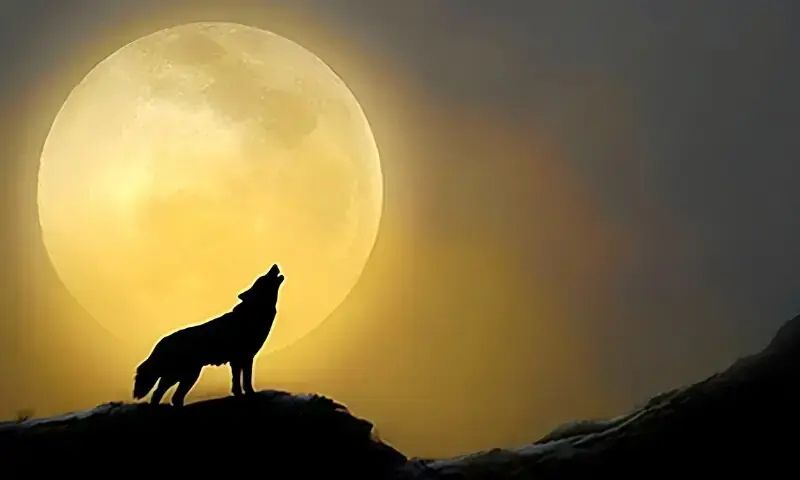
The astronomical event, traditionally known as the “Wolf Moon,” will mark the grand finale of a series of Supermoons that began in October 2025.
Experts explain that a Supermoon occurs when the moon reaches its full phase while at or near its closest point to Earth in its elliptical orbit, known as perigee. This proximity makes the lunar disc appear significantly larger and brighter than a typical full moon.
Prime viewing details for observers
Suparco has provided detailed timings for the celestial show. The Supermoon will rise over Pakistan at 5:51 pm on January 3. At that time, the moon’s illumination will be at a striking 99.8%.
The phenomenon will offer an extended viewing opportunity, remaining prominently visible throughout the nights of both Saturday, January 3, and Sunday, January 4.
Scientists state that during this event, the distance between Earth and its natural satellite will shrink to approximately 362,312 kilometres. Due to this close approach, the moon is expected to appear about 6 to 7% larger and noticeably brighter compared to an average full moon. Under ideal conditions, a Supermoon can appear up to 14% larger and 30% brighter.
Concluding chapter, with a wait for the next
Astronomers note that Supermoons typically occur in sequences of three to four events. The January 3rd “Wolf Moon” will be the concluding chapter of the current series. Suparco confirmed that the next Supermoon will not occur until November 2026, which will be classified as the second Supermoon of the year. Notably, 2026 will only host these two Supermoon events, with no third occurrence.
The spectacle offers a prime opportunity for astronomy enthusiasts and the general public alike to observe one of the night sky’s most captivating phenomena without the need for any special equipment, weather permitting.