Key points
- Outcome-based model reduces public spending burden
- Programme targets youth upskilling, digital skills
- Gender inclusion central, 40 percent women
KARACHI: Pakistan on Tuesday launched its first Pakistan Skills Impact Bond (PSIB), a privately financed instrument designed to support technical training by tying investor returns to measurable employment outcomes, as the government looks to develop skills among its fast-growing workforce without relying solely on public funds.
The Rs1 billion ($3.57 million) pilot tranche, backed by a government guarantee, forms part of a three-year programme aimed at financing skills development through an outcome-based model. Under this approach, investors will be repaid only if trainees meet specific benchmarks, including certification, job placement and retention in employment for at least six months, reports Arab News.
Social impact bonds are a form of results-based financing in which private investors provide upfront funding for social initiatives, while governments or donors reimburse them only if agreed performance targets are achieved. Pakistan’s skills bond seeks to move training finance away from traditional input-based budgeting towards a market-driven model that rewards verified outcomes and attracts private investment.
Gender inclusion
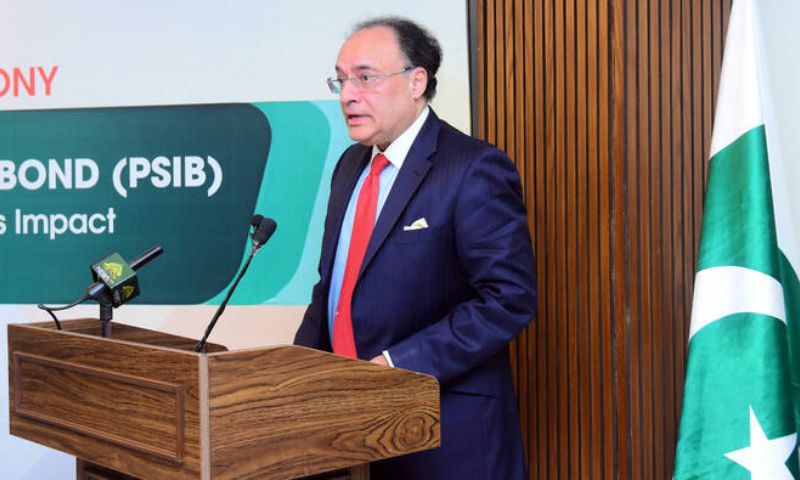
“Speaking at the event, Senator Muhammad Aurangzeb, Federal Minister for Finance and Revenue, underscored the transformational importance of the PSIB in Pakistan’s broader economic reform agenda and human capital strategy,” the finance division said in a statement. “He described the day as ‘an important moment focused on education and training,’ reiterating that Pakistan’s demographic dividend can only be realized if the country succeeds in upskilling and reskilling its youth at scale.”
The bond forms part of a broader government push to adopt social impact financing across priority areas, including education, gender equality, health, climate resilience and poverty reduction, the statement said.
“Highlighting gender inclusion as central to the program design, the Finance Minister welcomed the recommendation led by the British Asian Trust that 40 percent of trainees under the PSIB be women, acknowledging that women’s participation and leadership in the workforce will play a decisive role in shaping Pakistan’s economic trajectory,” it added.
The government has noted that the model is intended to support Pakistan’s large youth population by aligning training with labor market demand, including high-value digital skills, while reducing long-term pressure on public finances.
The launch ceremony was attended by senior government officials, development partners, private sector representatives, and international organizations involved in structuring and financing the bond.