


Key points
- Internal divisions persist, especially over women’s education policies
- Education system ideologically controlled, girls largely excluded
- Economic stress, insecurity, and repression undermine governance effectiveness
ISLAMABAD: The United Nations Security Council’s sixteenth Analytical Support and Sanctions Monitoring Team report provides the most comprehensive international assessment to date of governance in Afghanistan under the Taliban.
It paints a picture of a political order defined by extreme centralisation, rigid ideological control, limited institutional capacity, and persistent internal contradictions. Together, these factors raise serious doubts about the regime’s long-term ability to deliver effective governance and sustainable security.
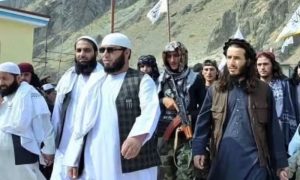
At the top of the Taliban hierarchy sits Hibatullah Akhundzada, exercising undisputed authority as Amir al-Mu’minin. Far from a symbolic figurehead, Akhundzada is the ultimate decision-maker, ruling primarily through religious edicts rather than formal institutions.
From his isolated base in Kandahar, he shapes policy without conventional debate or consultation. Loyalty is paramount: provincial Councils of Ulama report directly to Kandahar, functioning as instruments of ideological oversight rather than representative governance, while dissent is punished through dismissal, detention, or exile.
Deep internal divisions
Yet beneath the façade of unity lie deep internal divisions. Tensions persist between Kandahar hardliners and Kabul pragmatists, particularly between Akhundzada’s clerical inner circle and the Haqqani Network, led by Interior Minister Sirajuddin Haqqani.
Disagreements over governance failures and the rigid stance on women’s education underscore structural vulnerabilities. The absence of any clear succession plan compounds the regime’s fragility, leaving leadership continuity uncertain.
Taliban governance is opaque, coercive, and top-down. Popular consent is neither sought nor deemed necessary. Decisions such as the sudden nationwide internet shutdown in October 2025, later partially reversed, reveal the arbitrary nature of power and hint at internal friction.
While urban centres are tightly controlled, rural areas experience uneven authority, with powerful factions granted operational autonomy so long as regime unity is maintained. Selective tolerance of local deviations further underscores the absence of a uniform rule of law.
Instrument of ideological control
Education has become a central instrument of ideological control. Akhundzada exerts direct authority over curricula, which have been purged of references to civic values, democracy, human rights, gender equality, law, and ethics. Over 200 subjects have been rewritten to conform to Taliban ideology, while at least 18 academic disciplines have been banned outright.
The continued exclusion of girls from education remains the most contentious issue, carrying severe economic and social consequences. Religious infrastructure, particularly mosques and madrassas based on Hanafi Deobandi doctrine, has been prioritised, marginalising other Islamic traditions.
On security, violence has declined compared to pre-2021 levels, but ISIL-K and over 20 other terrorist groups remain active, often cooperating with the regime. Attempts to absorb former militants into local security forces increase manpower but also heighten risks of ideological infiltration. Corruption, ethnic imbalances, weak accountability, and fiscal constraints further undermine security and governance.
Severe strain
Economically, Afghanistan is under severe strain. GDP contracted sharply in early 2025, unemployment hovers around 75 per cent, and over 70 per cent of the population depends on humanitarian assistance. Restrictions on female aid workers and forced returns of Afghans exacerbate the crisis.
The Taliban have consolidated power and imposed a form of order, but it is brittle. Stability rests on coercion, ideological conformity, and repression rather than legitimacy or inclusive governance. For Pakistan and the wider region, Afghanistan’s internal rigidity, external destabilising potential, and resistance to reform carry profound implications. A regime that rules through fear, not consent, remains a source of uncertainty for its people and neighbours alike.