KEY POINTS
- Calls the move an open and flagrant violation of the Indus Waters Treaty (IWT)
- Says the IWT cannot be unilaterally revoked, citing confirmation by UN rapporteurs
- Under the 1960 treaty, Indus, Jhelum and Chenab rivers are allocated to Pakistan
- Sherry Rehman warns against the weaponisation of water in a volatile region
- India’s move follows its unilateral decision to keep the Indus Waters Treaty in abeyance
- Pakistan reiterates its commitment to the IWT and participation in Neutral Expert proceedings
- Permanent Court of Arbitration ruled India must “let flow” western rivers for Pakistan
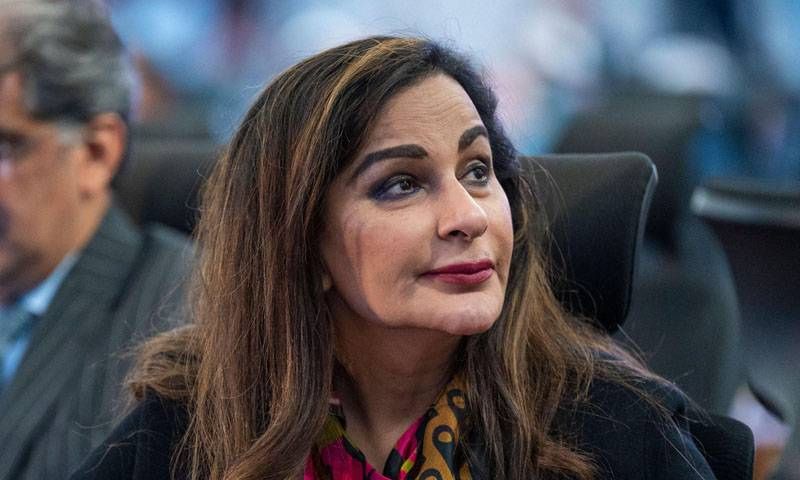
ISLAMABAD: Pakistan’s Senator Sherry Rehman on Monday warned that India’s approval of a new hydropower project on the Chenab River amounted to the “weaponisation of water” and would inflame regional tensions, calling the move an open violation of the Indus Waters Treaty (IWT).
The Indian government recently approved a controversial hydropower project on the Chenab River in Indian Illegally Occupied Jammu and Kashmir (IIOJ&K) in violation of the Indus Waters Treaty.
Sherry Rehman, who chairs the Climate and Environment Committee of Pakistan’s Senate, said the waters treaty could not be unilaterally suspended. She maintained that Pakistan had exclusive rights over the Indus, Jhelum and Chenab rivers under the 1960 agreement, while India controlled the Ravi, Beas and Sutlej.
“As per the IWT, which cannot be unilaterally revoked, as recent UN rapporteurs have confirmed, Pakistan has control over the waters of the Indus, Jhelum, and Chenab rivers, while the Ravi, Beas, and Sutlej rivers fall under India’s control,” she said in a statement on X on Monday.
In flagrant violation of the #IndusWatersTreaty (IWT), India has just given approval to the Dulhasti Stage-II hydropower project on Chenab River in the Indian Illegally Occupied Jammu and Kashmir (IIOJ&K). As per the IWT, which cannot be unilaterally revoked, as recent UN… pic.twitter.com/PK1wDw8g2g
— SenatorSherryRehman (@sherryrehman) December 29, 2025
Serious concerns in Pakistan
The decision by New Delhi has triggered serious concerns in Pakistan, as the Chenab is one of the rivers allocated to Pakistan under the 1960 water-sharing agreement.
The project, which will be developed by India’s state-owned company NHPC Limited, is expected to generate up to 260 megawatts of electricity.
With an estimated cost of INR 327.745 billion, construction work is likely to commence early next year in the occupied territory.
“Following the illegal suspension of the treaty, India has decided to fast-track several disputed hydroelectric projects in the Indus Basin. These projects include Sawalkot, Ratle, Bursar, Pakal Dul, Kwar, Kiru, and Kirthai-1 and 2. Dulhasti Stage-II is considered part of this strategy,” Senator Sherry Rehman said.
Weaponisation of water
“This weaponisation of water is neither sane nor acceptable in a region on the frontlines of climate change and environmental stress. It will inflame tensions in a bilateral relationship already bristling with hostility and distrust,” she said.
Experts warn that the Dulhasti Stage-II project could have adverse strategic and security implications for Pakistan, particularly in light of India’s recent unilateral announcement to keep the Indus Waters Treaty in abeyance.
Under the new phase, the project will utilise the existing infrastructure of Dulhasti Stage-I, a 390-megawatt run-of-the-river project that was commissioned in 2007.
India’s approval of the project comes amid heightened tensions following New Delhi’s unilateral move to keep the Indus Waters Treaty in abeyance after the Pahalgam incident, which escalated into cross-border clashes.
Pakistan reiterates its commitment to IWT
Pakistan, however, has reiterated its commitment to the treaty and announced that it will continue to participate in the Neutral Expert proceedings in good faith.
In August, the Permanent Court of Arbitration ruled that India must “let flow” the waters of the western rivers for Pakistan’s unrestricted use.
Despite this, Pakistan maintains that the Dulhasti Stage-II project violates the provisions of the 1960 treaty.
Earlier this month, Pakistan expressed serious concern over abrupt variations in the flow of the Chenab River and had formally sought clarification from India, warning that any unilateral manipulation of shared rivers could undermine regional stability and violate international law.