KEY POINTS
- The project violates the Indus Waters Treaty (IWT) of 1960
- The Chenab is one of the western rivers allocated to Pakistan under the treaty
- Experts warn of strategic, security and downstream flow risks for Pakistan
- Pakistan has reaffirmed commitment to the treaty and participation in Neutral Expert proceedings
- The Permanent Court of Arbitration has ruled India must allow free flow of western rivers
- Pakistan has warned that unilateral suspension of water rights could be considered an act of war
ISLAMABAD: India has approved the Dulhasti Stage-II hydropower project on the Chenab River in Indian-Illegally Occupied Jammu and Kashmir, a move being described as a clear violation of the Indus Waters Treaty (IWT) and threatens downstream water flows allocated to Pakistan under the 1960 agreement.
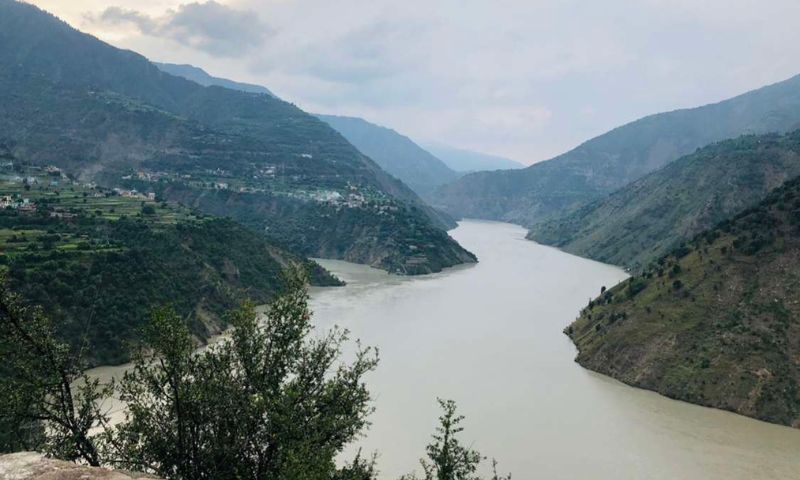
The decision by New Delhi has triggered serious concerns in Pakistan, as the Chenab is one of the rivers allocated to Pakistan under the 1960 water-sharing agreement.
Under the treaty, the western rivers — the Indus, Chenab and Jhelum — were allocated to Pakistan, while India was granted control over the eastern rivers of the Indus basin.
The project, which will be developed by India’s state-owned company NHPC Limited, is expected to generate up to 260 megawatts of electricity.
With an estimated cost of INR 327.745 billion, construction work is likely to commence early next year in the occupied territory.
Experts warn that the Dulhasti Stage-II project could have adverse strategic and security implications for Pakistan, particularly in light of India’s recent unilateral announcement to keep the Indus Waters Treaty in abeyance.
They argue that the project undermines both the letter and spirit of the treaty.
Under the new phase, the project will utilise the existing infrastructure of Dulhasti Stage-I, a 390-megawatt run-of-the-river project that was commissioned in 2007.
The same dam, reservoir and power intake will be used to enhance power generation, a development Pakistan fears could affect downstream water flows.
India’s approval of the project comes amid heightened tensions following New Delhi’s unilateral move to keep the Indus Waters Treaty in abeyance after the Pahalgam incident, which escalated into cross-border clashes.
Pakistan, however, has reiterated its commitment to the treaty and announced that it will continue to participate in the Neutral Expert proceedings in good faith.
In August, the Permanent Court of Arbitration ruled that India must “let flow” the waters of the western rivers for Pakistan’s unrestricted use.
Despite this, Pakistan maintains that the Dulhasti Stage-II project violates the provisions of the 1960 treaty.
Pakistan warned that any move to suspend its share of water under the treaty would constitute an “act of war,” stressing that the agreement contains no provision for unilateral suspension.
Earlier this month, Pakistan expressed serious concern over abrupt variations in the flow of the Chenab River and had formally sought clarification from India, warning that any unilateral manipulation of shared rivers could undermine regional stability and violate international law.