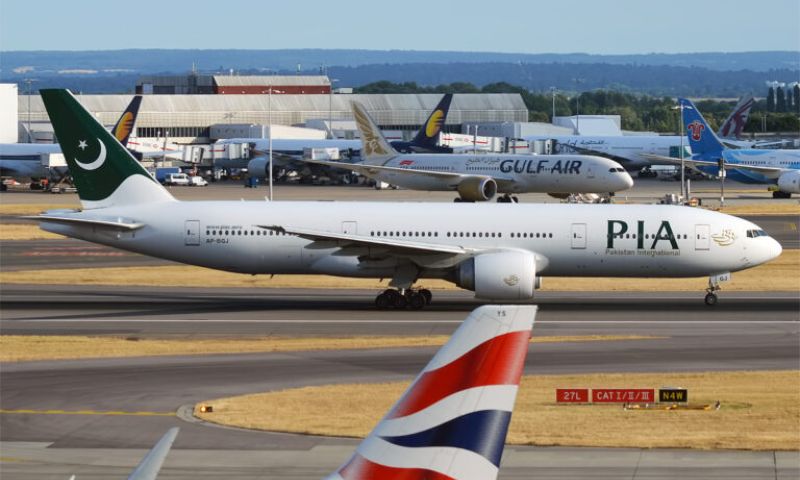
ISLAMABAD: Fauji Fertilizer Company has joined the Arif Habib-led consortium that won the bid for a 75% stake in Pakistan International Airlines (PIA), the national carrier, in a privatisation deal valued at Rs135 billion.
In a statement issued on Thursday, the consortium said the partnership will provide financial support and corporate expertise to PIA. Fauji Fertilizer will also participate in the airline’s management structure alongside the Arif Habib Consortium. The consortium plans to invest Rs125 billion in the first year to upgrade ground operations and improve overall services.
The consortium also aims to expand PIA’s operational fleet from 18 aircraft to 62, significantly boosting the airline’s capacity and network.
PIA, Pakistan’s national flag carrier, has a net worth of Rs 150 billion (USD 535 million). Its assets include 30+ aircraft, extensive ground handling infrastructure, and cargo facilities, with liabilities of approximately Rs 120 billion (USD 428 million).
According to Pakistan’s Privatisation Commission, the victory marks a historic milestone in Pakistan’s state-owned enterprise reform programme.
The participants who took part in bidding process yesterday included Airblue, the largest private sector airline in Pakistan; the Lucky Cement-led Consortium; and the winning Arif Habib-led Consortium. The fourth contender, Fauji Foundation, had withdrawn from the race a day earlier.
According to the Privatisation Commission, the Foundation can join the successful bidder after getting out of the race.
Phased expansion of PIA
The Arif Habib Corporation Limited-led consortium announced a phased expansion of PIA’s fleet, with plans to increase the number of aircraft to 38 in the first phase, followed by an expansion to 65 aircraft in the next phase, as part of its post-privatisation strategy.
In an interview with Aaj News on Tuesday, Arif Habib, the head of the Arif Habib Group, pledged that reviving PIA will be the consortium’s top priority, expressing hope that Fauji Fertilizer will join them in this effort.
Arif Habib said his consortium has emerged as the successful bidder for PIA and includes a “very strong” team of partners.
He added that the group has a track record of acquiring and successfully turning around several companies and intends to apply the same strategy to PIA.
Relief for taxpayers
The privatisation of PIA to the Arif Habib-led consortium marks a landmark moment in Pakistan’s ongoing privatisation drive.
The transaction is poised to provide relief to taxpayers who have been underwriting decades of PIA losses, while also creating space for healthy competition in the domestic aviation sector.
For years, PIA’s recurring deficits weighed heavily on public finances. According to the Finance Division, PIA’s liabilities stood at approximately Rs 120 billion (~USD 428 million) even as the airline held assets valued at around Rs 150 billion (~USD 535 million).
Economist Dr Farrukh Saleem said that PIA had caused a heavy fiscal burden for the country over the past two decades, causing cumulative losses of around Rs800 billion.
He said the national flag carrier continues to cost taxpayers nearly Rs100 billion every year, making its privatisation a fiscal necessity rather than a revenue-driven exercise.
“The government’s objective in privatising PIA is not to earn money but to stop the annual losses borne by taxpayers,” Dr Farrukh said, adding that the move would help save approximately Rs100 billion a year in public funds.
Fiscal compulsion
He said PIA’s privatisation was both a fiscal compulsion and part of Pakistan’s commitments under the International Monetary Fund (IMF) programme. “There is no policy choice left at this stage,” he said. “The losses are public losses — they are borne by you and me.”
Dr Farrukh noted that state-owned enterprises had collectively incurred losses of between Rs5,000 billion and Rs6,000 billion over the past 15 to 20 years, a level he said the government and taxpayers could no longer afford.
He added that taxpayers would no longer bear any financial burden related to the airline. “For the past 20 years, the public has been paying for these losses. With privatisation, that chapter has effectively closed,” he said.
Political economist and Pakistan’s former finance minister Miftah Ismail welcomed the privatisation of PIA, calling it a positive and long-overdue decision for the country.
Ismail said that although the winning bid stood at Rs135 billion, only Rs10 billion would go directly to the government, as the primary objective was not revenue generation but the elimination of accumulated losses estimated at around Rs670 billion.
“This is not the fault of the current government,” Ismail said. “These losses have been borne by the nation over the past 30 to 40 years. What matters is that the losses have now stopped.”
The former finance minister described the transaction as transparent and well-structured, noting that successive governments had previously been willing to offload the airline even without financial consideration due to its mounting liabilities.
He said the airline carries significant liabilities alongside valuable assets, but expressed confidence in the incoming investors, describing them as experienced business groups with strong track records in sectors such as fertilizers, steel and education.