


KEY POINTS
- Construction work on St. Paul’s Frontier Church started in 1936; first service held in 1939.
- Located in Mardan, second-largest city of Khyber Pakhtunkhwa.
- Church witnessed transition from British India to independent Pakistan.
- Named Frontier Church reflecting historical North-West Frontier Province identity.
- Modern architectural style, blending European design with local influences.
- Suffered fire damage in 2012, later restored with community support.
- Services in Pashto; first Pashto Bible and hymnal published here.
- Draws over 600 families from Mardan and surrounding regions.
MARDAN, Pakistan: Located in the historic city of Mardan — the second-largest urban centre of Khyber Pakhtunkhwa approximately 55 kilometres northeast of Peshawar — St. Paul’s Frontier Church, popularly known as the Danish Pathan Church, stands as a significant religious and cultural heritage site.
The church has remained a prominent presence in the city over decades, reflecting the long-standing coexistence of diverse religious communities.
Legacy through decades
The construction of the church began in 1936, and the first regular worship service was held on April 1, 1939. Since then, it has remained a central place of worship for the Christian community. The church witnessed the transition from British India to independent Pakistan and continued uninterrupted though political and social changes.
Rameez Masih, 51, a Mardan-based pastor, tells WE News English that the church is called the Frontier Church because Khyber Pakhtunkhwa was formerly known as the North-West Frontier Province. The name reflects its historical identity.
Built in a modern architectural style for its time, the church was considered a unique structure, reflecting architectural innovation during that period.
Although it suffered fire damage in 2012, it was later renovated and restored. The renovation, carried out with community support, ensured that the church retained its original character while meeting contemporary safety needs.
Towering symbol of faith
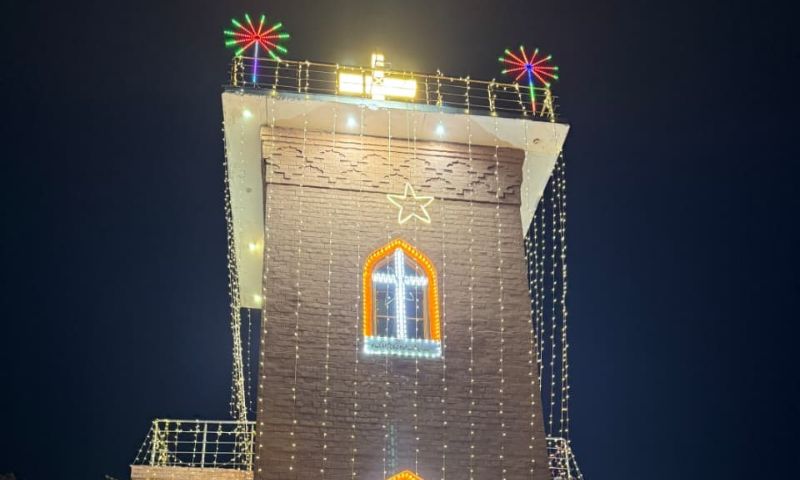
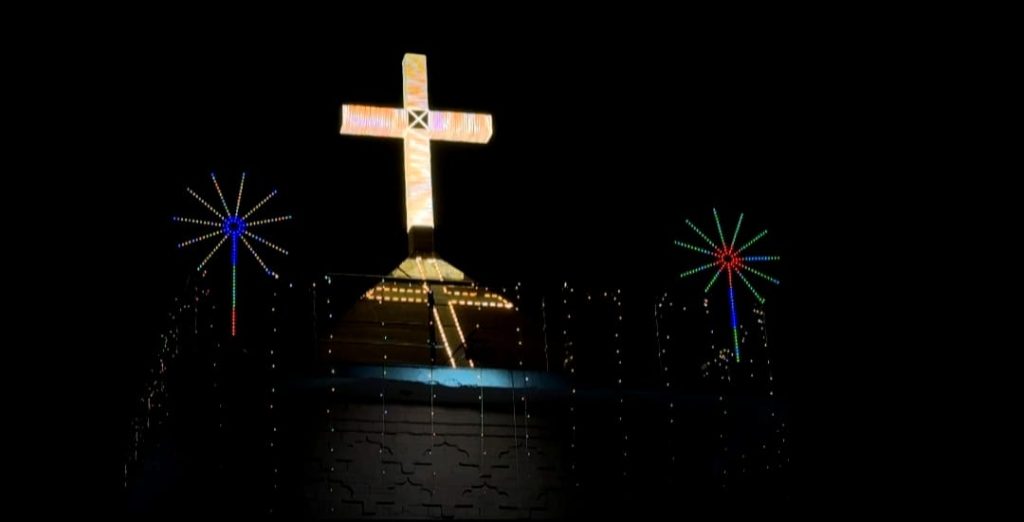
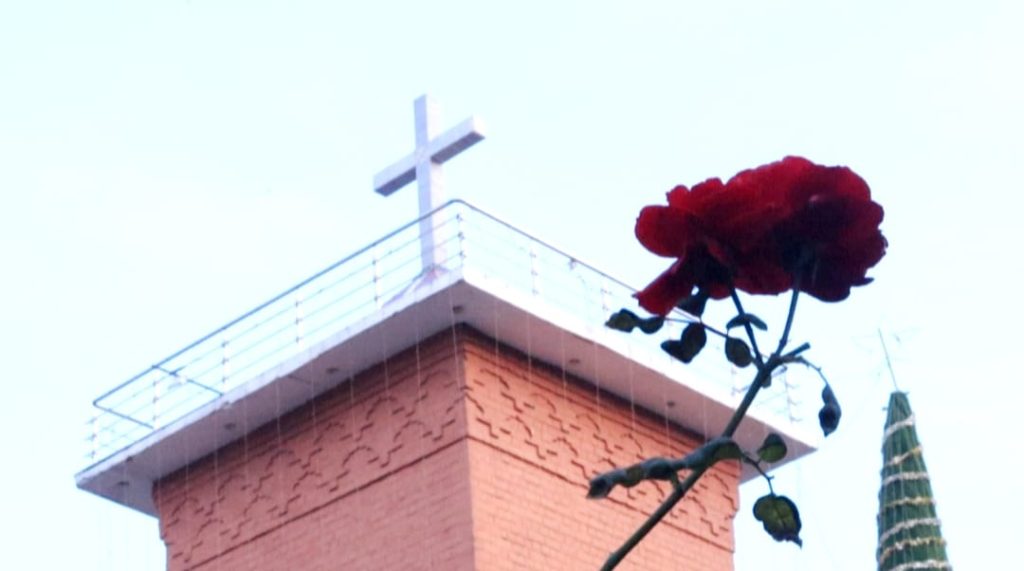
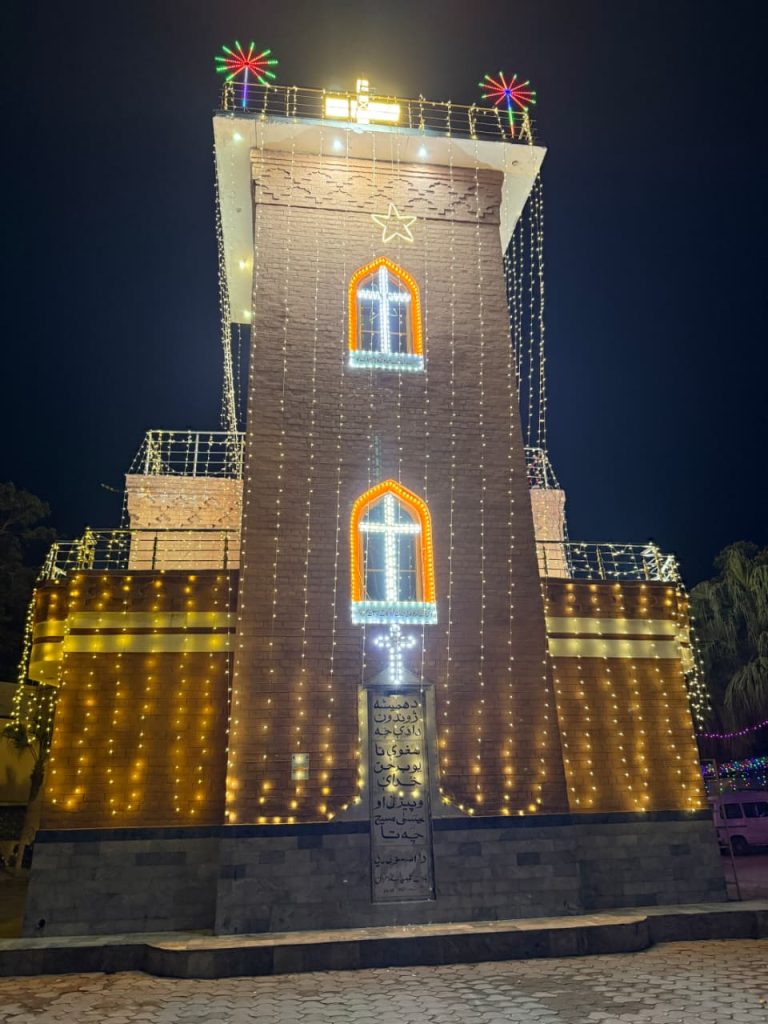
A beautiful tower stands at the front of the church, decorated with arches and elegant windows, topped by a huge cross. The structure blends European ecclesiastical design with subtle local influences, making it distinct among churches in the region.
Even today, the church is regarded as a symbol of peace, tolerance, and interfaith harmony, offering a safe and sacred space for worship. Residents from different faiths often acknowledge it as a landmark of the city rather than a site reserved for one community alone.
Surrounded by regions such as Malakand, Swat, and other hilly areas, the church serves as a spiritual centre for Christians from across the region. More than 600 families regularly visit for worship, maintaining strong bonds of unity and mutual respect. Many of these families belong to small towns and remote villages, travelling long distances to remain connected with their faith and community.
Heart of Pashto worship
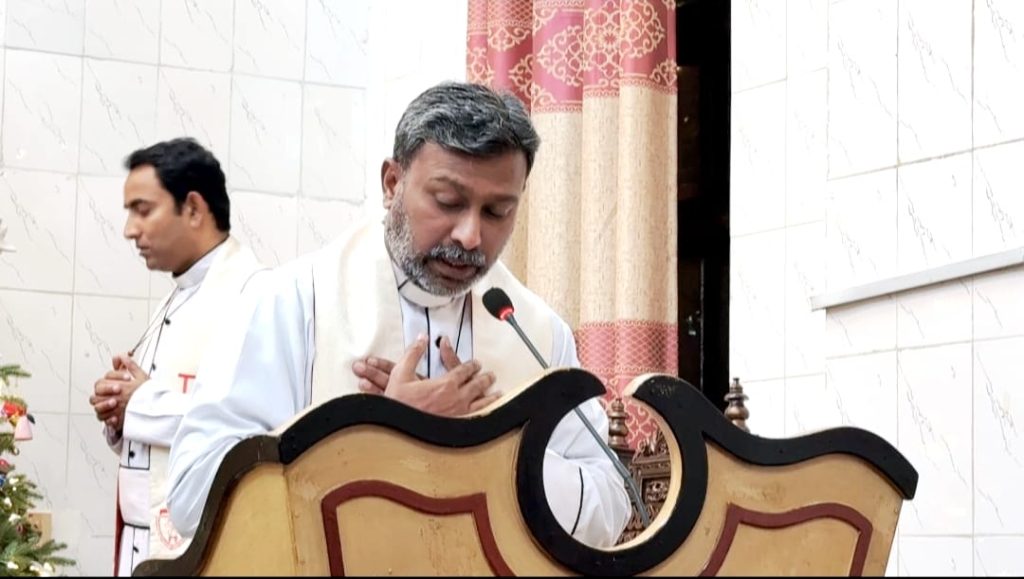
Fifty-five-year-old Assistant Pastor Emanuel Ghulam, who is a Punjabi by origin, says, “People from Swat, Swabi, Takht Bhai, Charsadda, and nearby areas travel to attend services here. Because roads from different directions meet at this point, locals often call it the “Dil” (heart) of the area.” This central location has historically made the church a gathering point for Christians scattered across northern Khyber Pakhtunkhwa.
Since Pashto is the dominant local language, religious services, hymns, and prayers are conducted in Pashto, giving the church its unique identity as the Danish Pathan Church. This linguistic choice has helped generations of local Christians practise their faith without cultural alienation.
Notably, the first Pashto translation of the Holy Bible and the first Pashto hymnal “Khudai Hamd” were published from this very church. During major religious festivals, the church premises become overcrowded, reflecting the emotional attachment of the community to the space.
Inside the church
The main hall has benches on both sides for worshippers, while some choose to sit on the floor. A gallery above the hall fills completely during Christmas celebrations. At such times, the increased attendance highlights the importance of the church within the community.
At the centre stands a carefully designed Evangelical-style altar with a wooden pulpit on the right and a wooden dais on the left. Behind them is a triangular arch featuring a crystal-glass cross. Candle stands and offering bags are placed near the altar. The simplicity of the interior reflects humility and devotion rather than grandeur.
The church also runs a Sunday School for children and a youth group, ensuring spiritual guidance from childhood to adulthood. These practices are especially emphasised during Advent — the period of preparation for the celebration of the birth of Jesus Christ at Christmas.
“The Church uses four special candles — three purple and one pink — along with a central white candle, symbolising peace, hope, joy, and love,” says Murad Mushtaq ,49, who has been serving the church as Pastor-in-Charge since 2012.
Ensuring safe worship
Strict security arrangements are made during worship, especially on Sundays and Christmas. Roads around the church are temporarily closed, and only Christian families are allowed entry. Security personnel from local law enforcement agencies remain deployed to prevent any untoward incident.
Every year on the night of December 24-25, the Christmas cake is cut by the local commandant of the Punjab Regiment Centre. This gesture is seen by the community as a sign of state recognition and solidarity.
Ijaz Masih, 32, who travelled from Swat to visit this church, expresses satisfaction with the security provided by the government. He says, “The community can perform their religious rituals freely and without fear. Such arrangements strengthen the community’s sense of belonging in the wider society.”
Beacon of interfaith harmony
The church administration states that renovation and maintenance are supported through community donations, while the government also provides funds and full security support.
Today, St. Paul’s Frontier Church stands not only as a place of worship, but as a powerful symbol of peace, coexistence, and interfaith unity, where faith, culture, and harmony come together under one roof.
In a region often portrayed through conflict narratives, the church quietly tells a different story — one of continuity, resilience, and shared humanity.