The sale of Pakistan International Airlines (PIA) to the Arif Habib-led consortium for Rs 135 billion (approximately USD 482 million) marks a landmark moment in Pakistan’s ongoing privatisation drive.
Beyond the headline value of the deal, the transaction is poised to provide relief to taxpayers who have been underwriting decades of PIA losses, while also creating space for healthy competition in the domestic aviation sector. Boosting the government of Pakistan’s ongoing drive to ‘get out of business’, the transaction would also create fiscal space and attract investors to the privatisation shelf.
For years, PIA’s recurring deficits weighed heavily on public finances. According to the Finance Division, PIA’s liabilities stood at approximately Rs 120 billion (~USD 428 million) even as the airline held assets valued at around Rs 150 billion (~USD 535 million).
With a private consortium now at the helm, the government will no longer be obligated to shoulder operational losses, freeing funds for social development, infrastructure, and other public services. As Prime Minister’s Advisor on Privatisation, Muhammad Ali remarked, “This privatisation ensures that a public sector entity no longer burdens taxpayers, while creating opportunities for efficiency and growth under private management.”
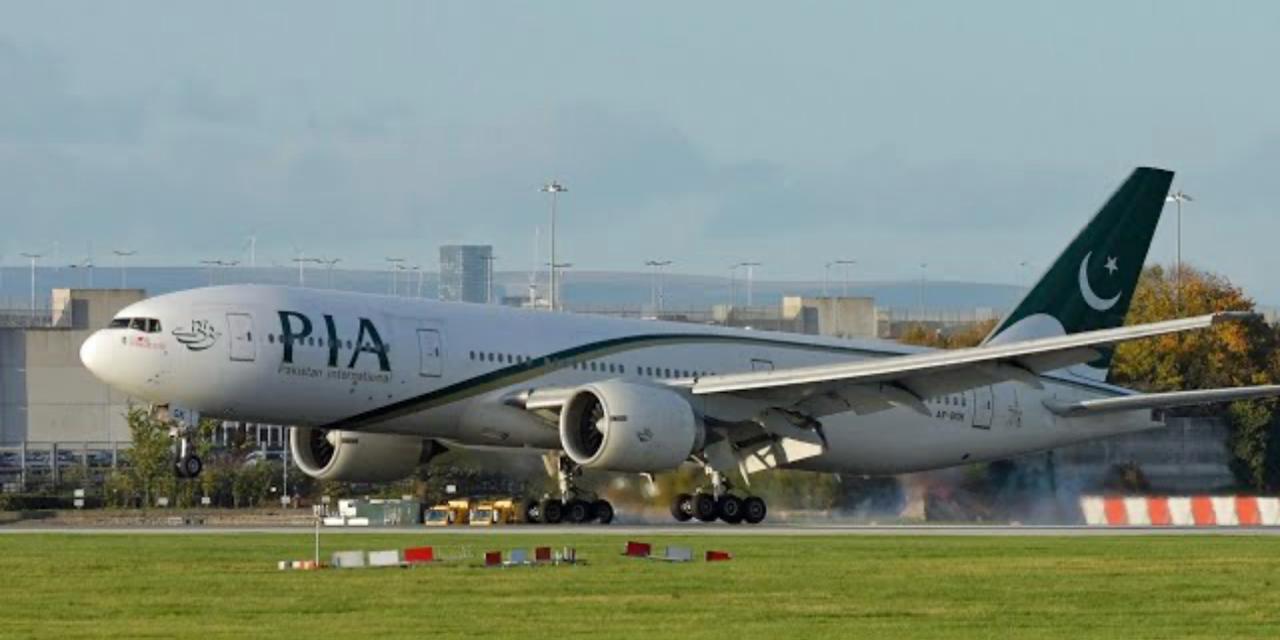
The sale also marks a turning point for competition. PIA’s new private status removes preferential public sector privileges, enabling a level playing field for private airlines like Airblue and Serene Air. Competition is expected to drive improvements in service quality, customer feedback, route expansion, and pricing for domestic and international passengers.
As Arif Habib himself stated, “PIA’s employees are our most important asset. With their support, we will make the airline highly profitable again.” The consortium’s commitment to operational turnaround and fleet expansion—from 38 aircraft initially to 65 in the next phase—signals a genuine push to restore PIA’s international standing and domestic market share.
Privatisation a fiscal necessity
Economist Dr Farrukh Saleem, speaking on a programme on GNN News TV, said that PIA had caused a heavy fiscal burden for the country over the past two decades, causing cumulative losses of around Rs800 billion.
He said the national flag carrier continues to cost taxpayers nearly Rs100 billion every year, making its privatisation a fiscal necessity rather than a revenue-driven exercise.
“The government’s objective in privatising PIA is not to earn money but to stop the annual losses borne by taxpayers,” Dr Farrukh said, adding that the move would help save approximately Rs100 billion a year in public funds.
He said PIA’s privatisation was both a fiscal compulsion and part of Pakistan’s commitments under the International Monetary Fund (IMF) programme. “There is no policy choice left at this stage,” he said. “The losses are public losses — they are borne by you and me.”
Dr Farrukh noted that state-owned enterprises had collectively incurred losses of between Rs5,000 billion and Rs6,000 billion over the past 15 to 20 years, a level he said the government and taxpayers could no longer afford.
He said the sale of a 75 percent stake in PIA for Rs135 billion represented a major milestone. “PIA is no longer the responsibility of the government of Pakistan,” he said.
He added that taxpayers would no longer bear any financial burden related to the airline. “For the past 20 years, the public has been paying for these losses. With privatisation, that chapter has effectively closed,” he said.
PIA privatisation to improve competition
Political economist and Pakistan’s former finance minister Miftah Ismail welcomed the privatisation of PIA, calling it a positive and long-overdue decision for the country.
Speaking on a programme on Hum News TV, Ismail congratulated the government, particularly the Ministry of Privatisation, for completing the transaction and ending decades of financial losses linked to the national flag carrier.
He said that although the winning bid stood at Rs135 billion, only Rs10 billion would go directly to the government, as the primary objective was not revenue generation but the elimination of accumulated losses estimated at around Rs670 billion.
“This is not the fault of the current government,” Ismail said. “These losses have been borne by the nation over the past 30 to 40 years. What matters is that the losses have now stopped.”
The former finance minister described the transaction as transparent and well-structured, noting that successive governments had previously been willing to offload the airline even without financial consideration due to its mounting liabilities.
He said the airline carries significant liabilities alongside valuable assets, but expressed confidence in the incoming investors, describing them as experienced business groups with strong track records in sectors such as fertilisers, steel and education.
Ismail said it was expected that Fauji Fertilizer could acquire a 20 to 25 percent stake in the national carrier.
“These are professional and capable groups who understand how to run large businesses,” he said, adding that they had the potential to restore PIA to the standards it once maintained.
He said the privatisation would not harm Pakistan’s economy, but would strengthen the aviation sector by improving services and increasing competition.
“A stronger domestic airline would reduce reliance on foreign carriers and benefit passengers,” he said.
Loss-Making Public Sector Enterprises and the Privatisation Pipeline
One of the strongest arguments for privatisation — beyond ideology — is fiscal reality. Pakistan’s taxpayers have been footing the bill for decades of losses by state-owned enterprises (SOEs). From airlines and power companies to industrial and financial entities, these white elephants are being fed with the taxpayers’ money. Reducing this burden through well-managed privatisation can free public funds for education, health, and infrastructure, while improving efficiency and competition in respective markets.
Loss-Making SOEs
Of roughly 88 commercially operated SOEs, about 31 consistently reported significant losses, totalling hundreds of billions of rupees annually.
Recent half-year reports (2025) indicate combined losses across key SOEs of nearly Rs 5.89 trillion, highlighting the scale of fiscal drag.
SOEs Slated for Privatisation
The federal government’s five-year, three-phase privatisation programme has identified 24 SOEs for divestment, many of which are loss-making.
Phase I (Immediate/Active) – Key Entities
- Pakistan International Airlines (PIA) – now 75% privatised
- Roosevelt Hotel (New York) (Note: separate asset, not part of PIA sale)
- Zarai Taraqiati Bank Ltd (ZTBL)
- House Building Finance Corporation
- Pakistan Engineering Company Ltd (PECO)
- Sindh Engineering Ltd (SEL)
- Islamabad Electric Supply Company (IESCO)
- Faisalabad Electric Supply Company (FESCO)
- Gujranwala Electric Power Company (GEPCO)
Phase II (1–3 Years) – Key Entities
- State Life Insurance Corporation (SLIC)
- Utility Stores Corporation (USC)
- Pakistan Re‑Insurance Co Ltd (PRCL)
- Jamshoro Power Company Ltd (GENCO‑I)
- Central Power Generation Co Ltd (GENCO‑II)
- Northern Power Generation Co Ltd (GENCO‑III)
- Lakhra Power Generation Co Ltd (GENCO‑IV)
- Lahore Electric Supply Company (LESCO)
- Multan Electric Power Company (MEPCO)
- Peshawar Electric Supply Company (PESCO)
- Hyderabad Electric Supply Company (HESCO)
- Sukkur Electric Supply Company (SEPCO)
Phase III (3–5 Years) – Key Entities
Postal Life Insurance Company (PLIC) (among others under consideration)
Loss-Making SOEs in the Privatisation Pipeline
Approximately 10–12 of the loss-making SOEs are explicitly included in the current pipeline, representing a substantial first step toward reducing the fiscal burden.
Implications for Taxpayers and Reform
- Taxpayer relief: Removing loss-making entities from the public balance sheet stops recurring subsidies and allows public funds to be redirected toward development priorities.
- Efficiency and competition: Private sector management is expected to improve operational performance, service quality, and cost efficiency.
- Investor confidence: Successful divestments, especially PIA’s high-profile sale, demonstrate that Pakistan can execute transparent, competitive privatisations.
Looking Ahead
With nearly a dozen loss-making SOEs already in the privatisation view, the next frontier includes financial institutions, power utilities, and insurance companies. If executed with transparency and fair valuation, these divestments could further reduce fiscal strain, enhance efficiency, and strengthen investor confidence, signalling a meaningful transformation in Pakistan’s public sector.
Privatisation is not a panacea, but for taxpayers, it offers a path to relief, competition, and long-term economic stability. As Arif Habib noted regarding PIA, “Without growth, such a large investment has no value. Therefore, the development of the airline is essential.”