



Key points
- Sarfaraz criticises inappropriate Indian on-field gesture
- Pakistan thrash India in final
- Team praised for discipline, confidence
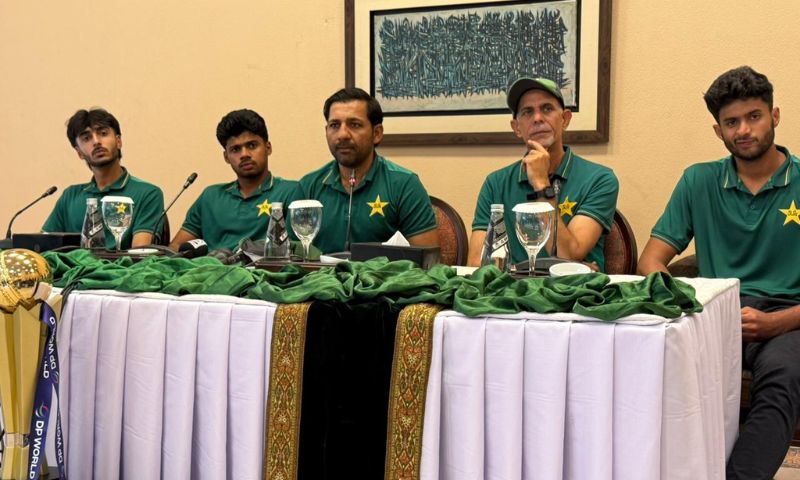
ISLAMABAD: Former Pakistan captain and current Under-19 mentor Sarfaraz Ahmed said he had advised his players to celebrate their Asia Cup victory over India with dignity and sportsmanship, rather than reacting to their opponents’ conduct.
Sarfaraz was responding to a question about a clip from the final that went viral on social media, in which he could be heard instructing his players to remain composed even if Indian players crossed the line.
One tense on-field moment involved India’s Vaibhav Suryavanshi, who made a gesture towards his shoe while walking off after being dismissed by Ali Raza.
Referring to that incident, Sarfaraz said he had played against Indian sides in the past who treated cricket purely as a game. However, he felt that the behaviour displayed in the final was disappointing.
He described the gesture made by the Indian batter as inappropriate, adding that while verbal exchanges can occur during competitive matches, such actions were unnecessary and crossed a line.
Showing respect
Explaining the message he delivered to his players, Sarfaraz said he simply wanted Pakistan’s youngsters to celebrate their achievement with decorum. He stressed that whatever the opposition chose to do, Pakistan should not respond in the same way. Instead, he urged his team to show respect for the game, remain calm and trust their own performances.
Pakistan secured a dominant 191-run victory in the final in Dubai and have since received a hero’s welcome back home. Prime Minister Shahbaz Sharif announced a reward of PKR 10 million for each player. Opener Sameer Minhas was named player of both the final and the tournament after a superb 172 off 113 balls helped Pakistan post a total of 347. Ali Raza then claimed figures of 4 for 42 as India were dismissed for 156.
Captain Farhan Yousaf credited the team management for creating a positive and fearless environment. He said the players were consistently encouraged to express themselves and play their natural game, with the management assuring them that responsibility for defeats would rest with the staff, while victories would belong to the players.