
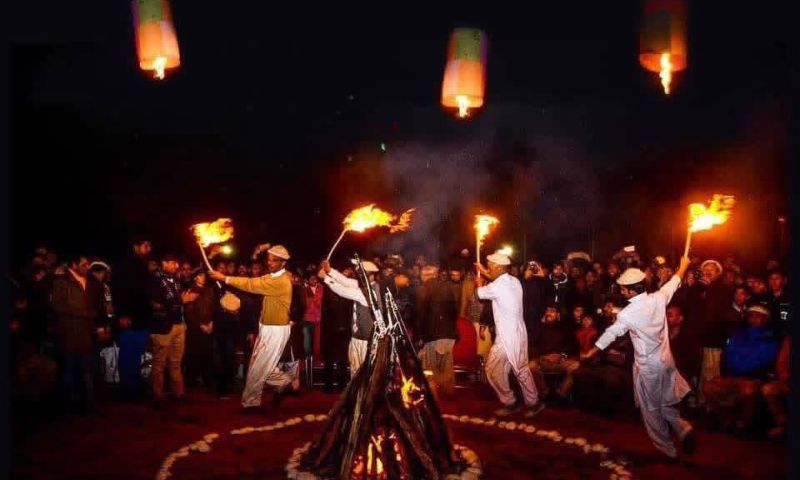
Amid the snow-covered mountains of Baltistan, a different kind of light fills the cold winter night. In biting temperatures, long nights and frozen valleys, the people of Baltistan are celebrating the centuries-old cultural festival May Fung with great enthusiasm. More than a ritual of fire, the festival symbolizes life, hope, the promise of spring and collective joy.
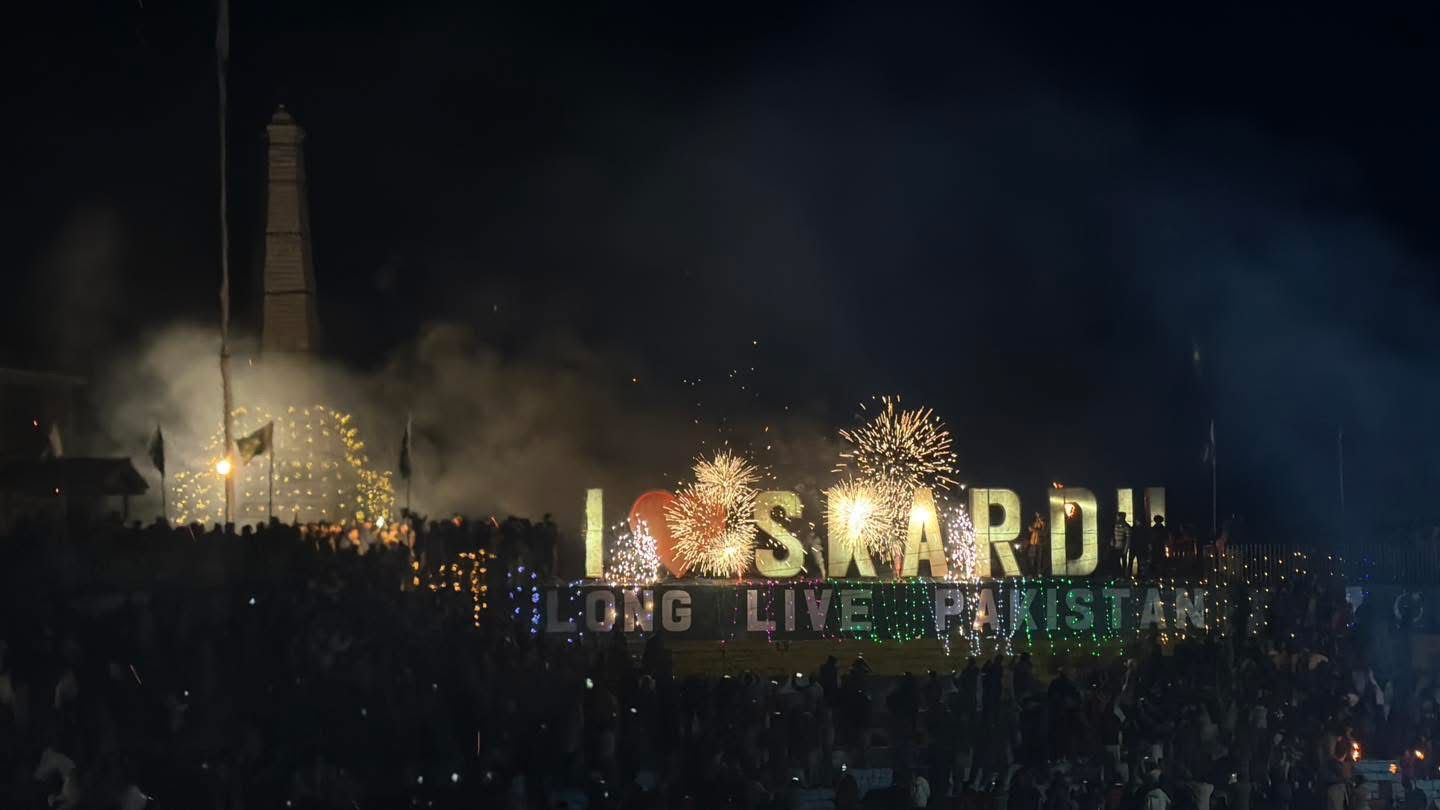
Like every region of the world, Baltistan has its own unique way of life, language, traditions and cultural identity. These distinct characteristics are vividly reflected in its festivals.
Celebrations such as May Fung bring people together, helping them forget differences, share happiness and strengthen social bonds. The festival stands as a living example of harmony and communal spirit.
One of oldest festivals of Baltistan
In the Balti language, “May” means fire and “Fung” means to throw — literally translating to “throwing fire into the air.” May Fung is one of the oldest festivals of Baltistan and is celebrated every year on the night of December 21 across the region.
The same night marks the beginning of the Tibetan New Year, Losar. From December 22 onwards, days begin to lengthen and nights shorten — a moment of immense joy for people living in one of the coldest regions of the country.
Preparations for May Fung
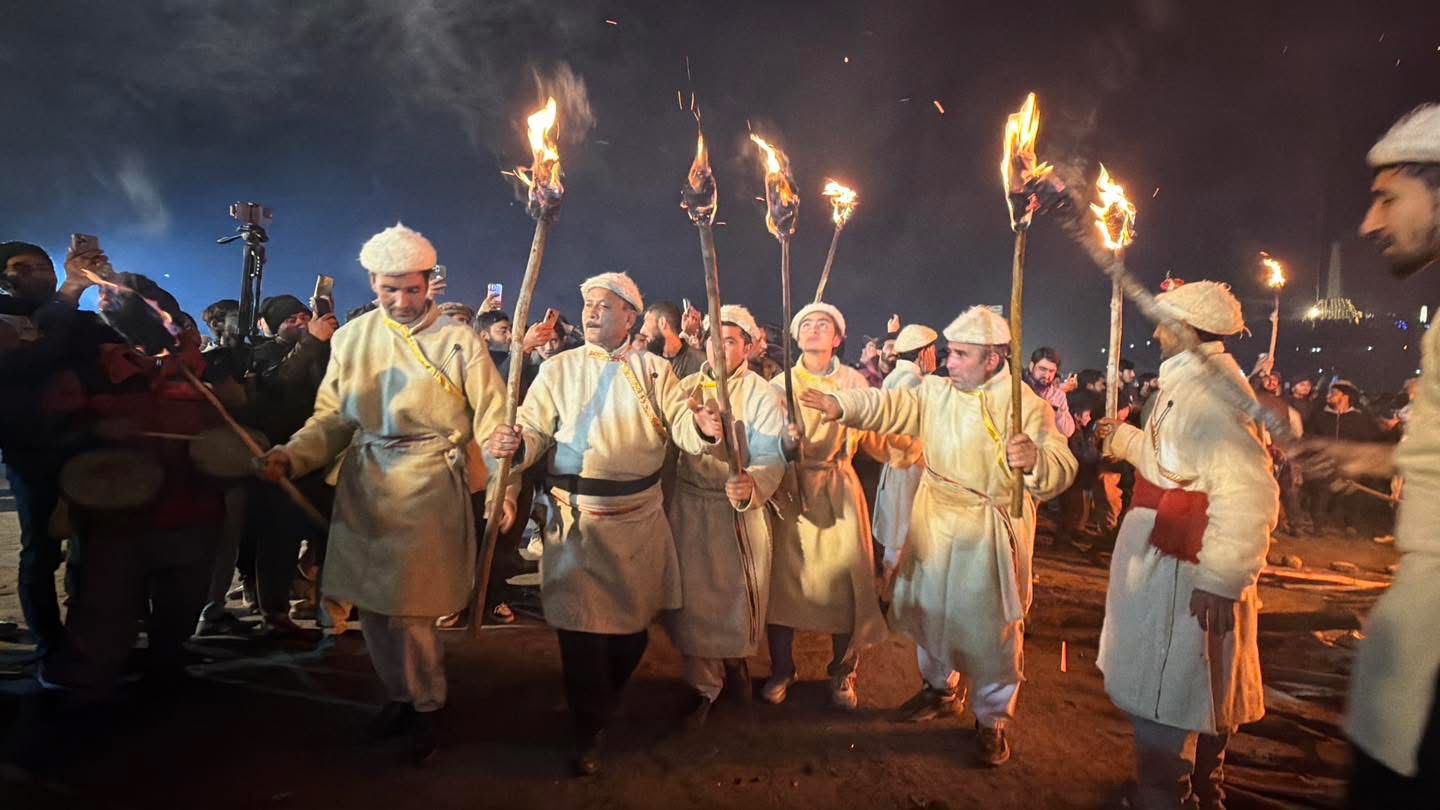
Preparations for May Fung begin days in advance. Youngers tirelessly collect firewood, fuel and other materials, while women in their homes prepare traditional dishes including Bally, Prapo, Azuq, Kesar and Marzan. Children, elders and youth all participate in the celebrations, each in their own way.
Filling cold air with warmth
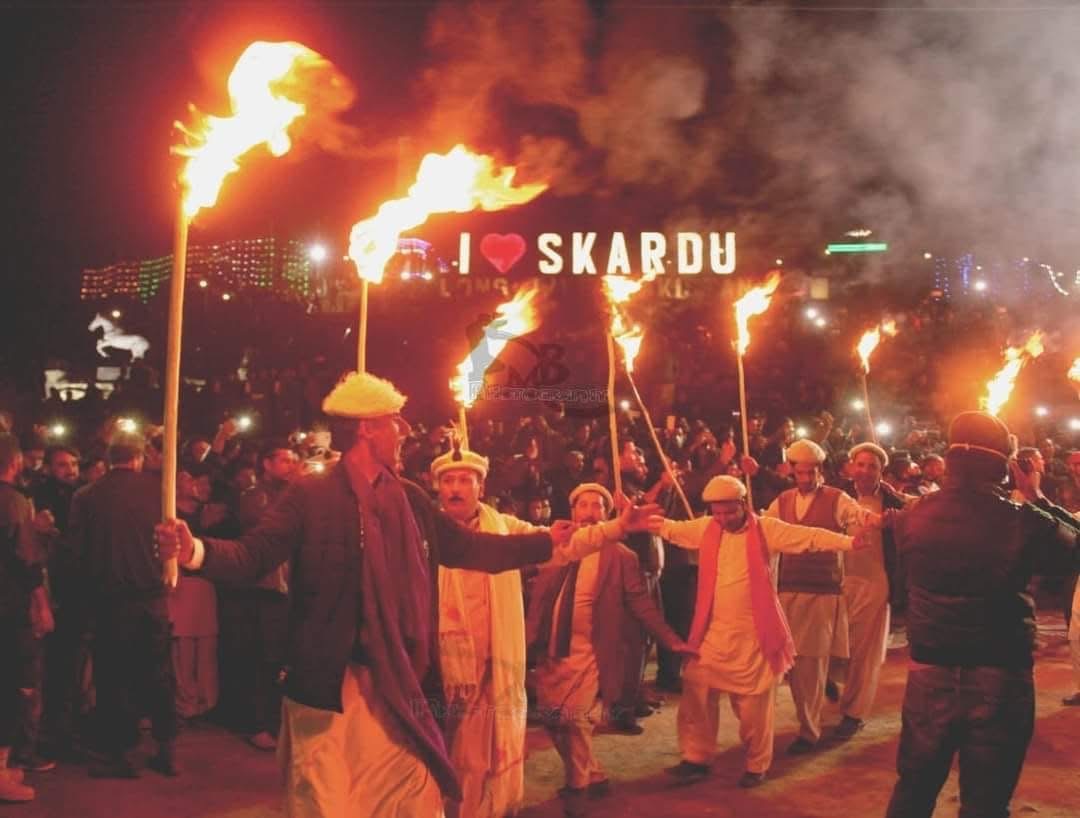
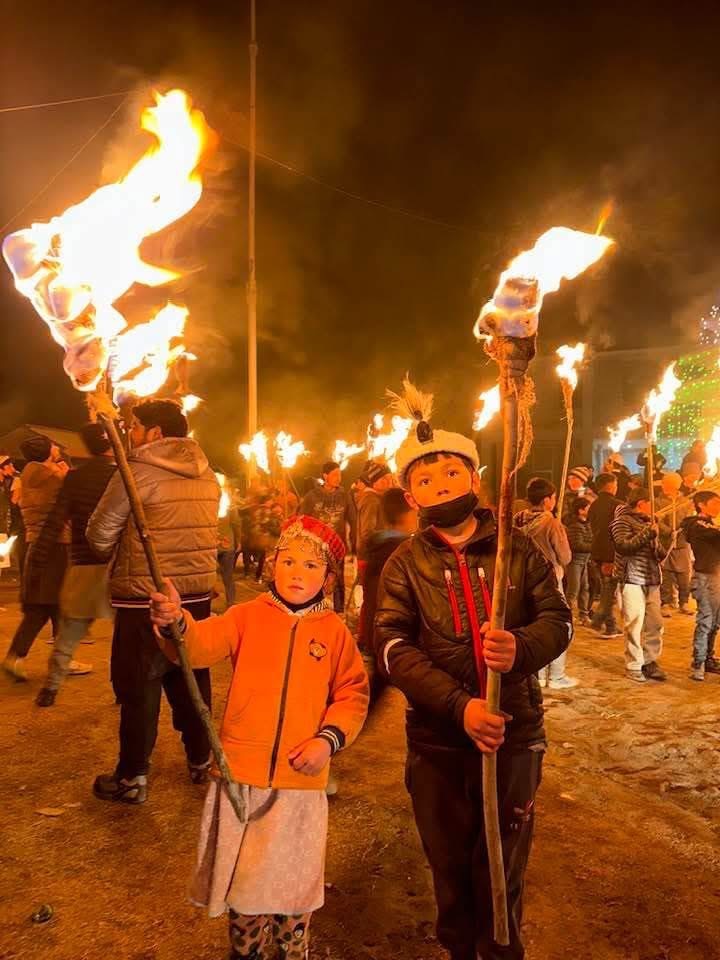
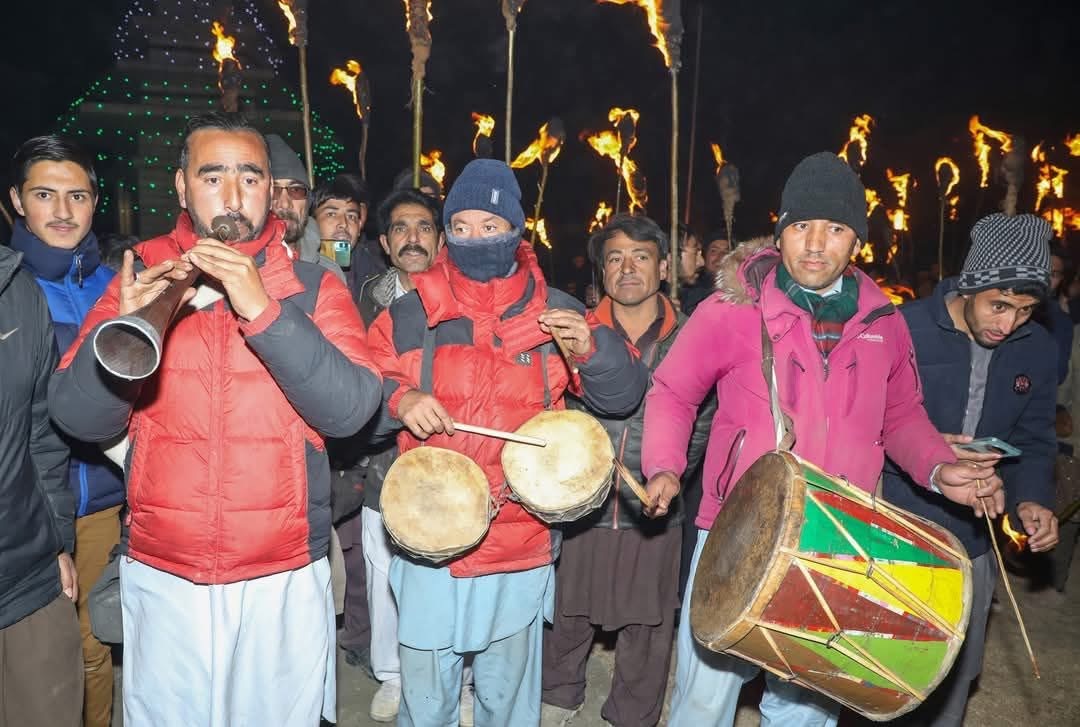
As darkness falls this evening, children and young people gather on hilltops outside their villages carrying wooden torches locally known as Dandari.
Some carry fireballs called May Polo. Traditional Balti music echoes through the valleys as young participants dance to folk songs, filling the cold air with warmth and excitement.
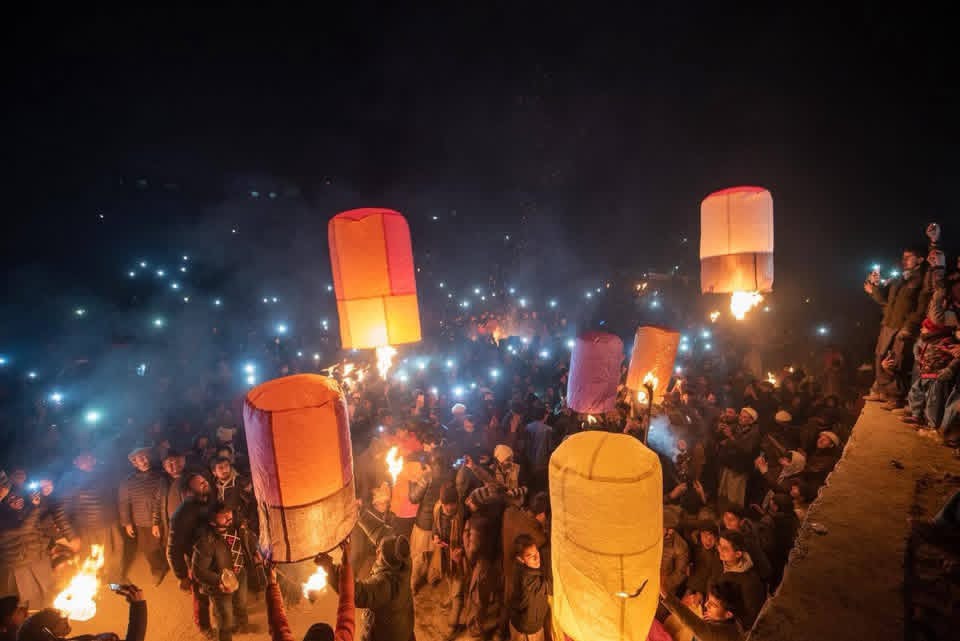
One of the most captivating moments of the festival is the lighting of Gholom — lanterns made of kite paper. A small flame at the base fills the lantern with hot air, allowing it to rise gently into the night sky.
As dozens of glowing lanterns float upward, the sky is illuminated, creating a magical spectacle watched from rooftops and courtyards by women, children and elders.
Torchbearers’ procession
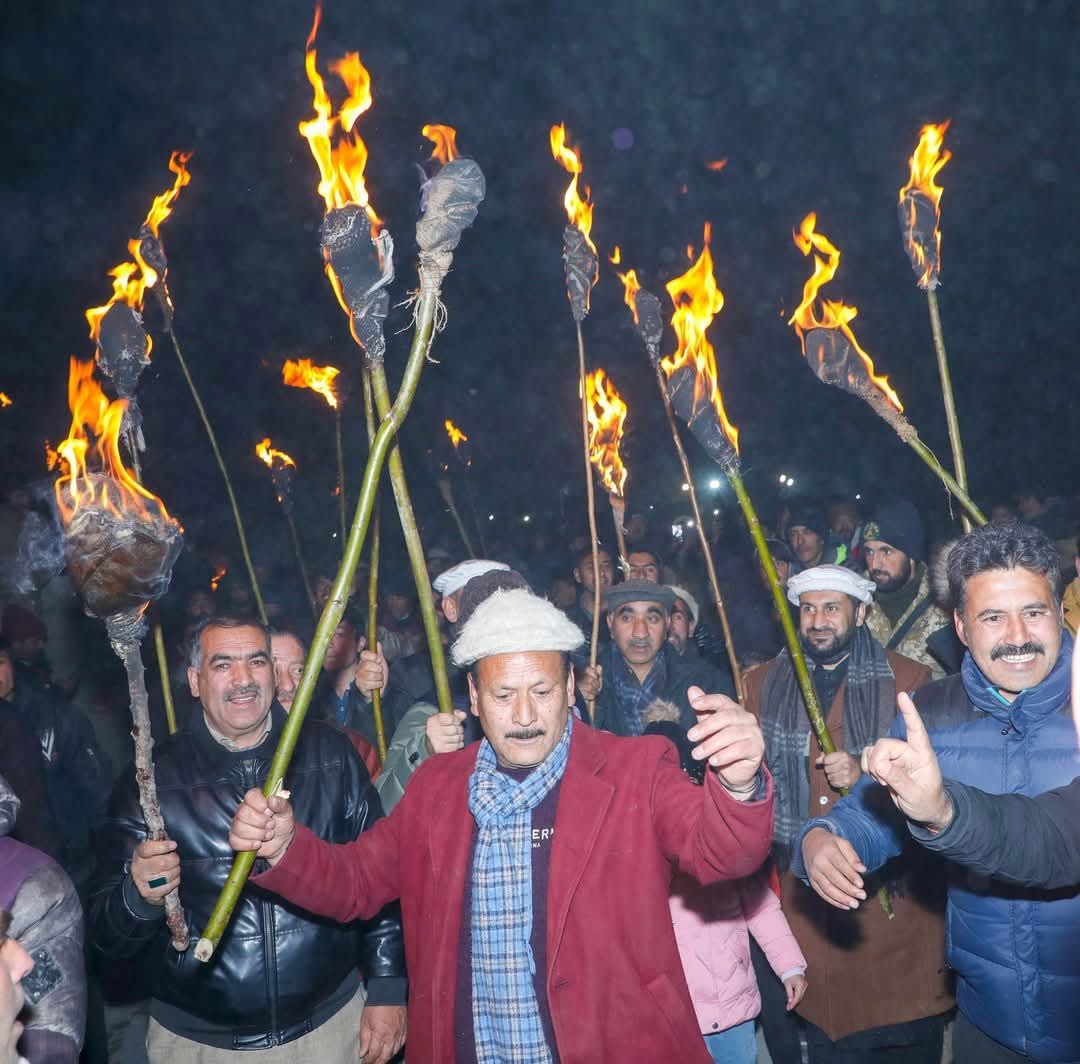
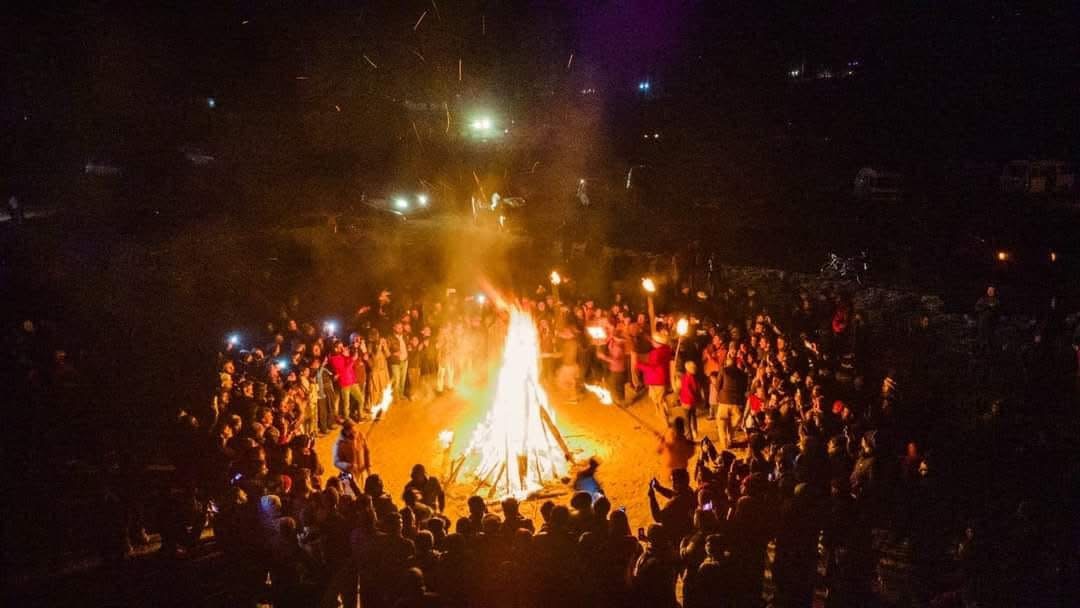
Following this, torchbearers form a long procession, moving slowly toward the village while waving flaming torches in the air. The procession gathers in an open field where torches are spun and twirled for nearly fifteen minutes, accompanied by chants and cheers.
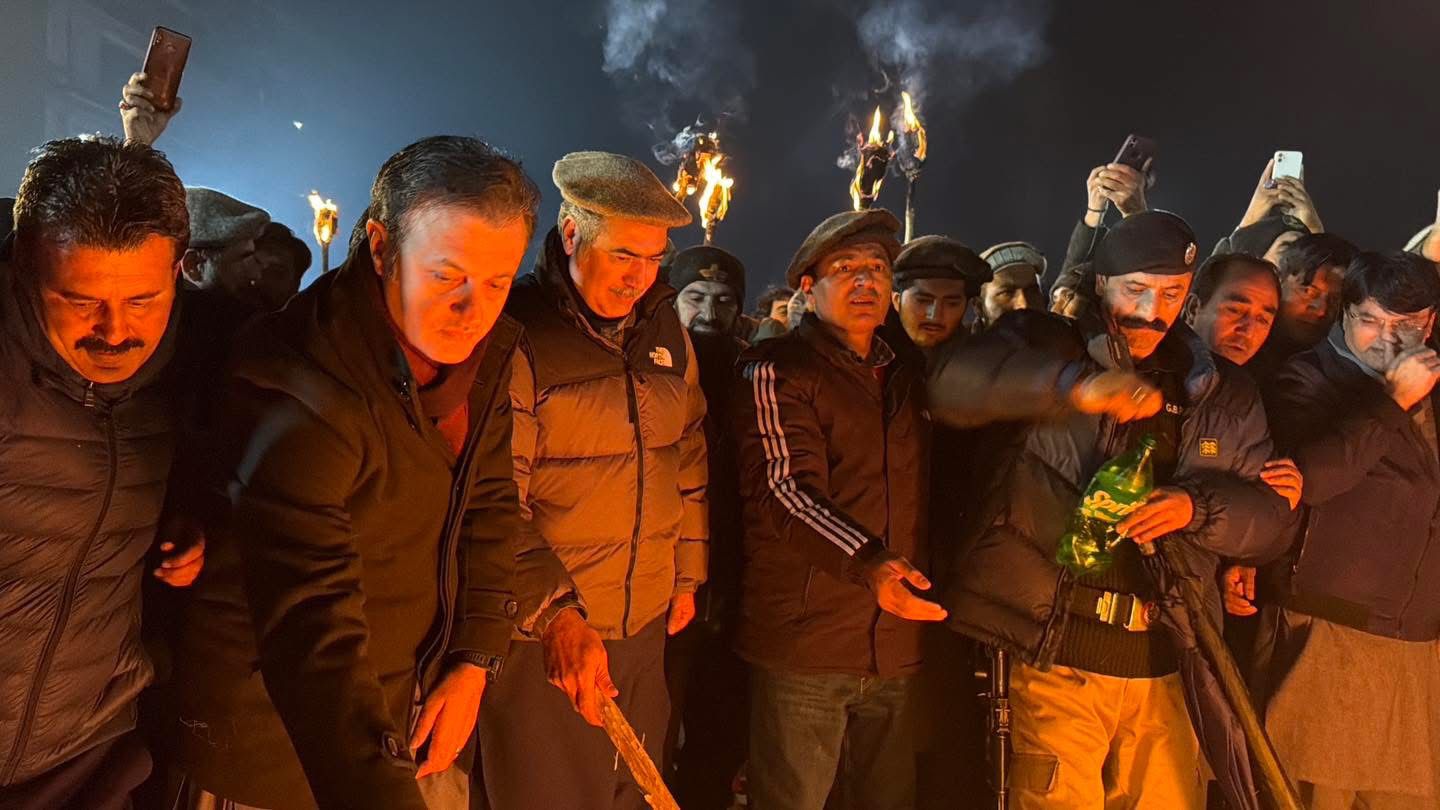
Once the flames die down, elders and children return home, while young men continue the celebration with a traditional gathering called “Haltanmo”, dancing to Balti music until midnight.
History of May Fung festival
According to local historian Muhammad Hassan Hasrat, the exact origins of May Fung remain unclear, though it is widely regarded as a celebration welcoming the New Year and the coming of spring.
Some traditions link it to the era of the Maqpon dynasty, while others associate it with the legendary 17th-century ruler Raja Abdal Khan.
The festival is not limited to Baltistan alone; similar traditions are observed in Gilgit, Chitral, Ladakh and parts of China.
Local artist Rajab Ali Singay says that nearly 200 lanterns are being released into the sky this year, while a large torch-bearing procession enters the Municipal Stadium, performing traditional dances.
Across Baltistan, families are preparing cultural dishes, and festivities include folk music, fire rituals and sword dances.
Revival of an ancient festival
Chairman of the Tibet Baltistan Arts Council, Ali Kazim Golden, says that May Fung is one of Baltistan’s most ancient cultural festivals, but sadly it had almost disappeared for many years, leaving the younger generation unfamiliar with it.
He explains that the Arts Council, with the support of local artists, elders and cultural experts, worked systematically to revive the festival.
As a result, May Fung is once again being celebrated across Baltistan with pride and collective enthusiasm. According to him, reviving the festival is a vital step toward preserving Baltistan’s cultural identity for future generations.
Symbol of cultural heritage
Commissioner Baltistan region Kamal Khan says that May Fung is a symbol of cultural heritage and social harmony. He notes that the district administration has taken special measures this year to organize the event in a structured and safe manner.
Security arrangements, traffic management, fire safety protocols and emergency medical services have all been put in place to ensure public safety.
The commissioner adds that the administration has worked closely with local communities, youth groups and cultural organisations to ensure that traditional activities are conducted in their true spirit.
Designated areas have been identified for fireworks, torch processions and sword dances, while municipal departments remain active to manage cleanliness, lighting and crowd control.
Baltistan’s peaceful and vibrant identity
Kamal Khan further emphasises that the government is committed to protecting and promoting Baltistan’s cultural heritage. Festivals like May Fung not only preserve local traditions but also contribute significantly to tourism.
He says the administration aims to include such cultural events in the official calendar to project Baltistan’s peaceful and vibrant identity to the world.
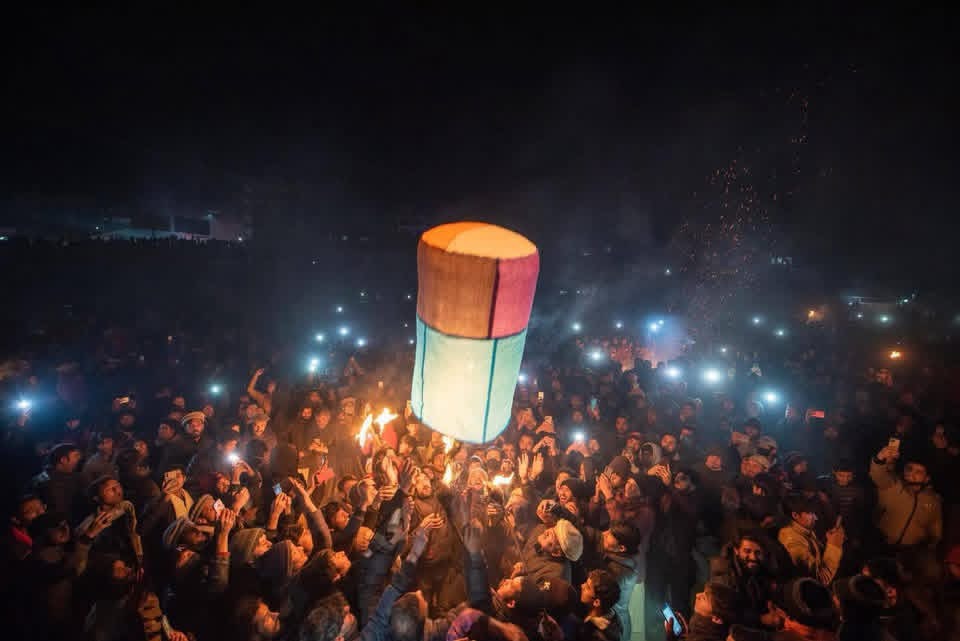
As flames dance against the frozen night and lanterns rise into the winter sky, May Fung once again proves that even in the harshest cold, the spirit of Baltistan burns bright — carrying warmth, tradition and hope from one generation to the next.