Balochistan occupies a central place in Pakistan’s debates on development, security, and political representation. Discussions about the province are often dominated by narratives of historical neglect and resistance, many of which are rooted in genuine grievances. Yet when these narratives harden into fixed positions, they risk obscuring important changes underway and narrowing the space for constructive engagement. This tension between grievance and growth now defines much of the discourse surrounding Balochistan.
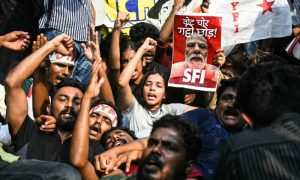
Groups such as the Baloch National Movement present themselves internationally as custodians of Baloch political aspirations. Their advocacy, however, is largely conducted from abroad, through protests and lobbying in Western capitals. While exile-based activism is not uncommon in conflict-affected regions, it often produces simplified narratives. Complex realities on the ground are reduced to a singular explanation of resource exploitation, leaving little room to assess policy evolution, institutional reform, or local socioeconomic differentiation within the province.
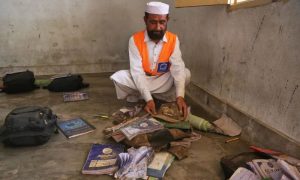
One of the most notable gaps in this discourse is its treatment of violence. Over the last two decades, Balochistan has experienced sustained militant activity that has directly targeted civilians. Teachers have been assassinated for educating children, labourers and miners killed for earning livelihoods, engineers attacked for building infrastructure, and passengers executed during highway ambushes. These acts have had devastating consequences for education, employment, and social trust. Yet such violence is rarely addressed with the same urgency in external advocacy campaigns, raising questions about the consistency of human rights claims.
This omission matters because development and security are deeply intertwined. Persistent insecurity is not simply the outcome of underdevelopment. It is one of its principal drivers. Violence disrupts markets, deters investment, weakens public service delivery, and constrains mobility. Any serious analysis of Balochistan’s economic challenges must therefore account for the role of non-state violence alongside governance failures.
The debate surrounding the Reko Diq project offers a useful case study of this broader tension. Critics frequently frame the project as a continuation of extractive practices that have historically marginalized the province. Yet the current structure of Reko Diq differs in important respects from earlier resource arrangements. It incorporates direct equity participation for the Government of Balochistan, advance royalty payments, and mechanisms aimed at prioritizing local employment and skills development. These features reflect lessons drawn from past policy shortcomings and signal an attempt, however imperfect, to align resource extraction with local benefit sharing.
This does not mean that concerns about environmental impact, transparency, or long-term governance should be dismissed. On the contrary, large-scale projects require robust oversight to ensure that promised benefits materialize. But treating all development initiatives as inherently illegitimate forecloses the possibility of institutional learning and reform. Skepticism is necessary. Absolutism is counterproductive.
At a deeper level, resistance to development reveals a political economy dilemma. Movements whose legitimacy is anchored primarily in narratives of permanent exclusion often struggle when incremental improvements challenge those narratives. Economic participation, employment opportunities, and revenue-sharing mechanisms do not eliminate political demands, but they do transform them. Politics shifts from outright rejection to negotiation, from symbolic protest to policy engagement.
This transformation is uncomfortable for actors invested in zero-sum framings of the conflict. Yet it is essential for long-term stability. A politics that cannot accommodate improvement risks becoming detached from the everyday aspirations of ordinary citizens, whose primary concerns are security, income, and dignity rather than ideological purity.
Responsibility for progress does not rest solely with political movements. The state must demonstrate consistency, transparency, and inclusivity. Development that ignores local voices or environmental concerns will fail, just as security policies divorced from political reform will remain incomplete. But opposition that rejects every pathway to economic participation offers little beyond the continuation of hardship.
Balochistan’s future will be shaped neither by the denial of past injustices nor by the perpetuation of grievance alone. It will depend on whether institutions can translate investment into opportunity, security into confidence, and growth into broadly shared benefit. For this to happen, public debate must move beyond rigid binaries and engage seriously with evidence, policy design, and outcomes.
A mature national conversation on Balochistan must therefore ask not only what has gone wrong, but also how emerging opportunities can be governed responsibly. Growth without justice is unsustainable. Grievance without growth is equally corrosive. The challenge lies in bridging the two.