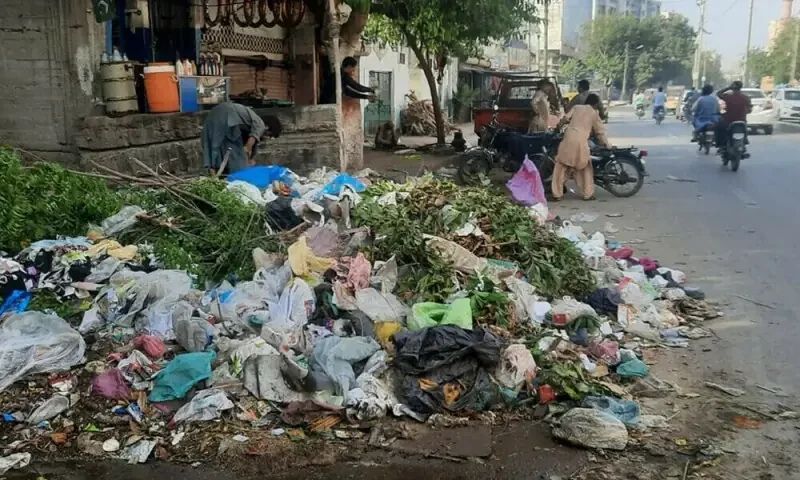
LAHORE: The Punjab government is set to launch a province-wide crackdown on littering and improper waste disposal starting January 1, 2026, introducing hefty fines and jail terms for violators. Authorities say the move is designed to improve public health, protect the environment, and keep urban and rural areas clean.
Under the new measures, burning garbage could attract fines of up to Rs500,000 and up to three years in jail, while burning tyres may result in fines and prison terms of up to seven years. Routine littering, including dumping waste outside homes, shops, or factories, will carry fines ranging from Rs10,000 to Rs25,000, with improper disposal of animal waste penalized up to Rs50,000.
To ensure strict enforcement, the Punjab Authority for Suthra Punjab has formed dedicated teams to monitor streets, neighborhoods, commercial hubs, and industrial zones. Officials emphasized that the crackdown will be applied without exceptions.
The initiative is part of the broader Suthra Punjab Authority Bill 2025, currently under review by the provincial assembly. The bill aims to overhaul solid waste management, regulate sanitation services, and promote recycling and waste-to-energy initiatives across the province. If passed, the law will create a statutory Suthra Punjab Authority headed by the Chief Minister, supported by government secretaries, technical experts, and divisional commissioners.
At the district level, Suthra Punjab Agencies will manage waste collection, transportation, treatment, and disposal, along with licensing and enforcement duties. Inspectors will have the authority to issue fines, warnings, and initiate prosecutions, with serious offences—like garbage or tyre burning—falling under criminal liability and potentially resulting in FIRs and summary trials.
Authorities have urged citizens to adopt responsible waste disposal habits to avoid penalties and contribute to a cleaner, healthier Punjab, highlighting that sustained public cooperation will be crucial for the success of this ambitious anti-littering drive.
Experts note that strict enforcement combined with public awareness campaigns can significantly reduce urban pollution, prevent health hazards from smoke and toxic emissions, and improve the overall quality of life in Punjab’s cities.
The provincial government promulgated the Suthra Punjab Authority Ordinance, 2025 to give statutory force to the “Suthra Punjab” cleanliness and waste management initiative. The ordinance is under review in the Punjab Assembly for approval and may be converted into a permanent law (bill) very soon.
Once in force as law, it will institutionalize enforcement powers and penalties, including provisions for fines and potential jail terms for serious violations — instead of just ad‑hoc executive actions. Even before full enactment of the law, the Punjab government has issued enforcement directives and notifications to implement new cleanliness rules from January 1, 2026.
Dedicated enforcement teams under the Punjab Authority for Suthra Punjab are being deployed to monitor compliance and impose fines. Officials have publicly stated that the anti‑littering rules will be enforced strictly as part of provincial policy decisions.
The Punjab Environmental Protection Act, 1997 also empowers the government and the Environmental Protection Agency to regulate and control activities that cause pollution, including waste management, which could support enforcement actions on open garbage burning and improper disposal under general pollution controls.
Such environmental statutes are often used together with new sanitary laws to justify enforcement against practices harmful to air quality and public health.