
Key points
- India’s growth fails to create broad middle class
- Bloomberg flags fading middle-income presence
- Wealth concentrated between elite and underclass
- Weak institutions entrench inequality, limit mobility
ISLAMABAD: India’s absence from the global middle-income bracket is drawing renewed scrutiny, with analysts warning that deep-rooted structural problems are undermining the country’s long-term growth prospects.
Despite decades of high growth headlines and claims of a demographic dividend, the benefits of economic expansion remain narrowly concentrated, leaving much of the population locked out of stable prosperity.
A recent analysis by Bloomberg highlighted India’s fading presence on the global middle-class map, noting that income growth has failed to translate into broad-based upward mobility.
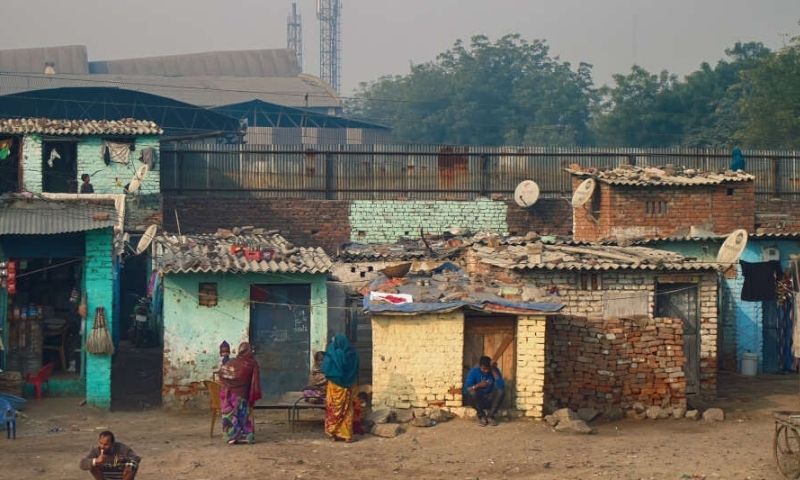
Economists point to an economy increasingly split between a small, wealthy elite and a vast low-income population, with a fragile and shrinking middle segment caught in between. Unlike China’s manufacturing-led rise, which lifted hundreds of millions into middle-income status, India’s growth has relied heavily on services, subsidies, and consumption by the affluent.
Inequality
Structural inequality is reinforced by weak institutions, entrenched social hierarchies, and governance challenges. Critics argue that corruption, inconsistent enforcement of laws, and policy uncertainty have limited investment in job-creating sectors such as manufacturing.
Protectionist measures and regulatory pressure on foreign firms have also dampened competition and innovation.
The implications extend beyond India’s borders. Without a strong middle class to drive domestic demand, sustain political stability, and support long-term investment, India’s ambition to rival other major economies faces significant constraints. Analysts say meaningful reform of institutions and governance will be essential if India is to convert growth into shared prosperity.