DHAKA: Bangladesh has been gripped by widespread protests following the death of Sharif Osman bin Hadi, a prominent anti-India political figure and convenor of the Inqilab Moncho platform, who succumbed to his injuries while undergoing treatment in Singapore.
His killing has ignited a fierce public backlash, sharpening already fraught debates over India’s influence in Bangladesh and raising fears of escalating political instability.
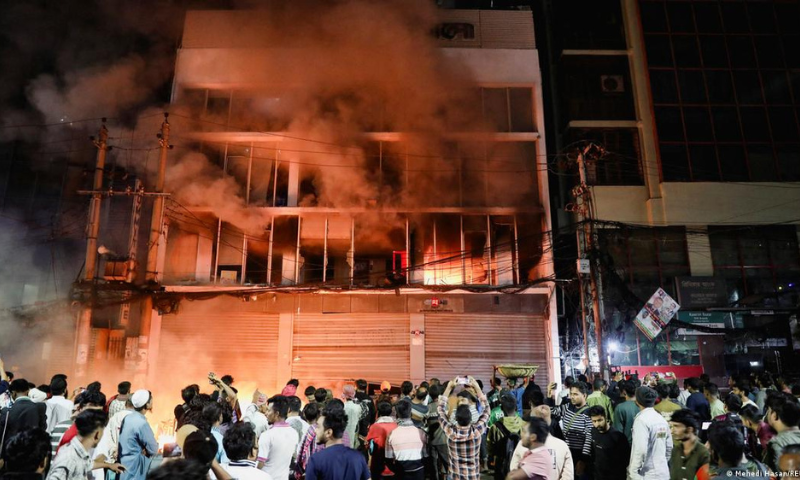
Groups of protesters stormed the offices of two of Bangladesh’s most influential newspapers on Friday, setting fire to the Bengali-language Prothom Alo and the English-language Daily Star, as anger over the death of anti-India political leader Sharif Osman Hadi spilled further onto the streets.
Hadi had been an outspoken critic of India, where the former prime minister, Sheikh Hasina, remains in self-imposed exile. Protesters accused both newspapers of promoting Indian interests in the Muslim-majority country, branding them complicit in what they described as foreign political influence.
The U.S. Embassy joins the people of Bangladesh in mourning the loss of youth leader Sharif Osman Hadi and offers our deepest condolences to his family, friends, and supporters. pic.twitter.com/gpkdn2njqD
— U.S. Embassy Dhaka (@usembassydhaka) December 19, 2025
Witnesses said crowds torched the two newspaper buildings, trapping journalists and other staff inside. Firefighters were forced to use ladders to rescue several people from the burning premises. Army units were later deployed outside the offices as unrest continued to spread across the capital.
Protesters surround India’s deputy ambassador’s residence
In a separate incident, hundreds of demonstrators surrounded the residence of India’s deputy ambassador to Bangladesh, attempting to stage a sit-in protest. Police fired tear gas shells to disperse the crowd, local media reported.
Elsewhere, protesters used a bulldozer to demolish a regional office of the Awami League, the party led by Hasina, in the northern city of Rajshahi, according to footage aired by private broadcaster Jamuna TV.
Similar scenes of unrest were reported in the port city of Chattogram and in the southern city of Khulna, underscoring the nationwide scale of the protests following Hadi’s death.
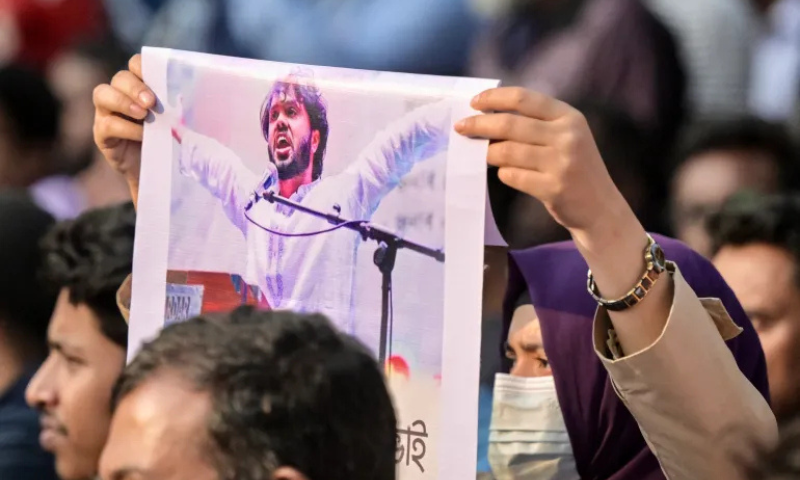
Following the death of Osman Hadi, multiple incidents of violence were reported across Bangladesh overnight, with attacks targeting diplomatic, political, historical and cultural sites in several cities, according to local media.
Clashes outside India’s Assistant High Commission in Chattogram
In the port city of Chattogram, clashes broke out outside the Assistant High Commission of India after a group of protesters gathered near the premises. Police said stones and bricks were thrown during the confrontation, leaving at least four people injured, including two officers, before law enforcement dispersed the crowd.
Separately, homes linked to several Awami League figures were attacked in different parts of the country. Local media reported vandalism and arson at the Chattogram residence of former minister Mohibul Hasan, the Bandarban home of former minister Bir Bahadur, and the Dhaka residence of a relative of former MP Habib Hasan. Authorities have not confirmed the identities of those responsible.
Bangabandhu Memorial Museum vandalised
In Dhaka, the Bangabandhu Memorial Museum at Dhanmondi 32 was again vandalised, with footage showing parts of the site damaged and set on fire. The museum has been targeted repeatedly during recent unrest, raising concerns over the protection of historical landmarks.
Cultural institutions were also affected. In the early hours of the morning, the premises of Chhayanaut, a prominent cultural organisation, were entered and set ablaze, according to Bangladeshi media reports. No casualties were immediately reported.
Officials have yet to release a comprehensive statement on the scale of the unrest or make arrests linked to the incidents. The violence has prompted renewed concern over law and order as Bangladesh navigates heightened political tensions following Hadi’s killing.
طلبہ انقلاب کے رہنما عثمان ہادی کے قتل کے خلاف احتجاج جاری
راج شاہی میں عوامی لیگ کے دفتر کو زمیں بوس کر دیا گیا pic.twitter.com/5dzMhl8WNW— Bangla Urdu | بنگلہ اردو (@BanglaUrdu_) December 19, 2025
Protesters block highway north of Dhaka
Later on Friday evening, the enraged protesters cut off access to a highway in the city of Gazipur, located north of the capital, Dhaka, as they demanded Osman Hadi’s killers be brought to justice, The Daily Star newspaper reported.
Protesters stopped vehicles travelling in both directions on the Dhaka-Mymensingh highway in Gazipur’s Chandona Chowrasta area, the newspaper reported.
Shahidul Alam, the assistant commissioner of Gazipur traffic police, said the blockade was still ongoing just before 4 pm local time (10:00 GMT).
Yunus urges restraint
In a televised address to the nation, Muhammad Yunus, head of Bangladesh’s interim administration, announced special prayers at mosques on Friday and declared Saturday a national day of mourning. He appealed to demonstrators to exercise restraint and avoid further violence.
“Hadi’s demise is an irreparable loss for the nation,” Yunus said, urging calm as authorities sought to restore order amid the growing political turmoil.
Hadi, widely known as the public face of the July Uprising movement and a prospective candidate in Bangladesh’s upcoming 13th national parliamentary elections, died late Thursday after surviving for nearly a week following a point-blank shooting in Dhaka.
His death was confirmed by Inqilab Moncho in a statement that framed his killing in ideological terms, describing him as a “martyr in the struggle against Indian hegemony”.
Hadi was shot on December 12 while travelling in a rickshaw in Dhaka’s Paltan area, when two assailants on a motorcycle opened fire at close range before fleeing. He was first taken to Dhaka Medical College Hospital and later transferred to a private facility as his condition deteriorated. On December 15, he was airlifted to Singapore for advanced treatment.
Singapore’s Ministry of Foreign Affairs confirmed on Friday that Hadi was admitted to the Neurosurgical Intensive Care Unit at Singapore General Hospital, where doctors from SGH and the National Neuroscience Institute attempted to save his life. Despite “best medical efforts”, he died on December 18. Singapore authorities said they are assisting Bangladesh’s High Commission with the repatriation of his body.
Protests, Anti-India Rhetoric and Diplomatic Fallout
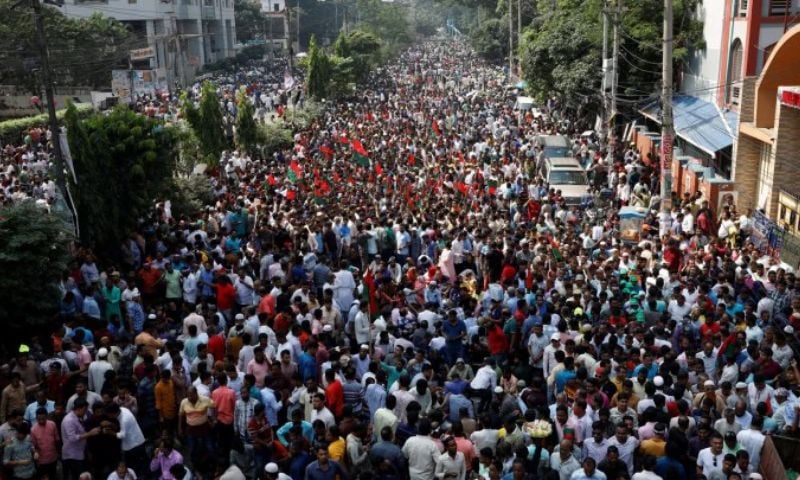
Within hours of news of Hadi’s death, large-scale protests erupted across Dhaka. Demonstrators denounced what they described as India’s political interference in Bangladesh and accused New Delhi of backing destabilising forces in the country. Protesters gathered outside Indian diplomatic facilities for a second consecutive day, with slogans rejecting “Indian dominance” and warning against external meddling.
According to local media reports, the intensity of protests forced the closure of visa services at the Indian High Commission, with India’s Deccan Herald reporting that the visa centre remained shut due to security concerns.
Some demonstrations turned violent. During overnight unrest, protesters set fire to a historic residence linked to Sheikh Mujibur Rahman, Bangladesh’s founding leader, reflecting the depth of public anger and the volatile political mood.
Death threats from Indian phone numbers
Supporters of Hadi allege that he had received death threats from Indian phone numbers before the attack. Bangladeshi officials had earlier raised the issue diplomatically, demanding cooperation over individuals suspected of involvement in the assassination attempt.
Political leaders aligned with Hadi’s movement issued stark warnings on Friday. Rashid Pradhan, a senior figure associated with the protests, declared that Bangladesh would no longer tolerate what he called India’s “hegemonic role, warning that future demonstrations could escalate further if demands for accountability are ignored.
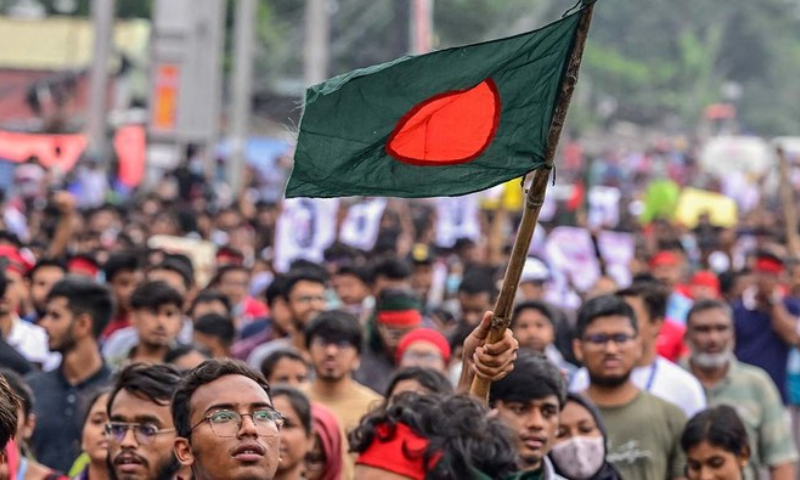
Several protest leaders also cautioned that continued interference could trigger resistance extending beyond Bangladesh’s borders, framing the crisis as a regional flashpoint rather than a purely domestic issue.
Sharif Osman Hadi had risen rapidly as a fiery critic of Bangladesh’s political establishment and New Delhi’s perceived influence over Dhaka. His decision to enter electoral politics was seen as a turning point for Inqilab Moncho, transforming it from a protest movement into a direct political challenger.
His death now risks becoming a rallying symbol for broader anti-India sentiment, at a time when Bangladesh is already navigating a delicate political transition. As investigations continue and protests show no sign of easing, regional observers warn that the fallout from Hadi’s killing could reverberate far beyond Dhaka.
Government Response and Ongoing Investigation
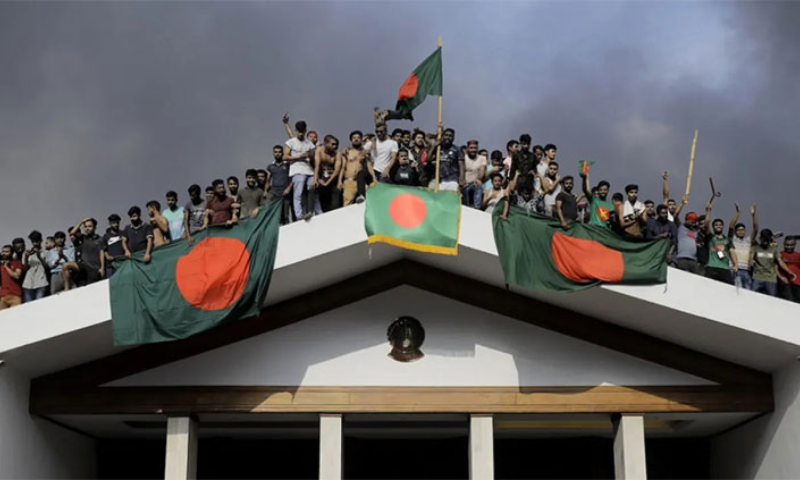
Bangladesh’s interim leader, Nobel laureate Muhammad Yunus, expressed “profound grief” over Hadi’s death and pledged a full investigation. In a national address, Yunus vowed firm legal action against those responsible, saying the killing of a student leader-turned-politician would not go unpunished.
A Dhaka court on Thursday placed a suspect, Md Nuruzzaman Noman, on a three-day remand for allegedly aiding the attackers by arranging transport and facilitating an escape. Police say investigations are ongoing to identify additional suspects and recover the weapon used in the shooting.
Hadi’s body arrives in Dhaka
Hadi’s repatriated body has arrived in Bangladesh from Singapore and left the airport, Inqilab Moncho has said on Friday evening.
Inqilab Moncho wrote on Facebook that the car carrying the body of the party’s former spokesperson, Hadi, was heading to Shahbag in central Dhaka.
Upon his family’s request, Hadi’s body will not be taken to Dhaka University Central Mosque today, as the group reported earlier, but tomorrow, the post added.
“Students will continue the movement with discipline today and tomorrow so that no group can infiltrate,” the group said. “There will be no chance to see the dead body.”
Security beefed up across Dhaka
The Border Guard Bangladesh (BGB) has sent increased security to multiple locations across Dhaka in anticipation of protests as Osman Hadi’s body is repatriated.
Some border guard forces have headed to the airport, where Platform for Revolution told its protesters to gather earlier today.
Others are stationed at Karwan Bazar, near the offices of the Daily Star and Prothom Alo newspapers, and Hotel InterContinental, located a few minutes on foot from the protest site, Shahbag Square, the BGB said in a statement carried by local news outlets. Crowds have already assembled at Shahbag for a rally.
Meanwhile, Shafiqur Rahman, the head of Bangladesh’s Jamaat-e-Islami party, has called for restraint and national unity as protests continue across the capital.
“The anger and emotion among students and the public are justified and understandable,” Rahman said in a statement, warning that any attempt to exploit this sentiment for other interests “cannot be accepted”.
He also demanded the immediate identification and punishment of anyone involved in Hadi’s killing.
Bangladesh Nationalist Party acting Chairman Tarique Rahman has expressed deep sorrow over the death of Osman Hadi.
In a post on Facebook, Tarique Rahman said, “I am deeply saddened by the tragic killing of Sharif Osman Hadi. May Allah grant forgiveness to his soul. This untimely death is a grave reminder of the human cost of political violence.”
“Hadi was a brave political activist and a fearless voice who always stood up against injustice. After the July Mass Uprising, as the spokesperson of Inqilab Moncho, he played an incredible role in defending the rights of the July fighters, upholding democratic values, and protecting national interests.” “I also call upon the interim government to conduct a swift investigation, with the utmost priority, so that perpetrators are apprehended, punished, and justice is served.”
Thorough probe into Hadi’s killing
The UN’s human rights chief has called for Bangladesh to fully investigate the killing of Hadi and hold those responsible to account.
“I urge the authorities to conduct a prompt, impartial, thorough and transparent investigation into the attack that led to Hadi’s death, and to ensure due process and accountability for those responsible,” Volker Turk said in a statement.
Hadi’s funeral prayer tomorrow at Parliament House
The funeral prayer for Hadi will take place tomorrow at 2 pm (08:00 GMT) at Bangladesh’s National Parliament House, according to an announcement by interim leader Muhammad Yunus.
Those attending are “requested not to carry any bags or heavy items,” and the use of drones is “strictly prohibited”, says Yunus.
Hadi’s body will be laid to rest beside national poet Nazrul Islam
Sharif Osman Hadi will be laid to rest beside national poet Kazi Nazrul Islam at his family’s request, said Fatima Tasnim Zuma, Liberation War and Democratic Movement Secretary of Dhaka University Central Students’ Union (Ducsu).
Zuma shared the information in a Facebook post, which was also confirmed on Inqilab Moncho’s official Facebook page.
“Based on the family’s request, Hadi will be laid to rest beside poet Nazrul. A janaza will be held on Saturday after Zuhr prayers at Manik Mia Avenue. Instead of today, tomorrow the procession will bring the body to DU’s central mosque,” Zuma added.
She also urged students and supporters to continue the movement in an orderly manner to prevent any infiltration or violence.
“There will be no opportunity to view the body. Everyone is requested to maintain discipline and offer prayers for martyr Hadi,” she said.