
KEY POINTS
- The fourth T20I was abandoned in hazardous Lucknow smog, not fog, after six futile inspections.
- Players like Hardik Pandya wore masks, highlighting severe air quality concerns during warm-ups.
- Critics blame BCCI for ignoring predictable North Indian winter pollution in venue scheduling.
- The fiasco raises questions about duty of care for players and value for ticket-paying fans.
- India is 2-1 up, with the decider now set for Ahmedabad on Friday, December 19.
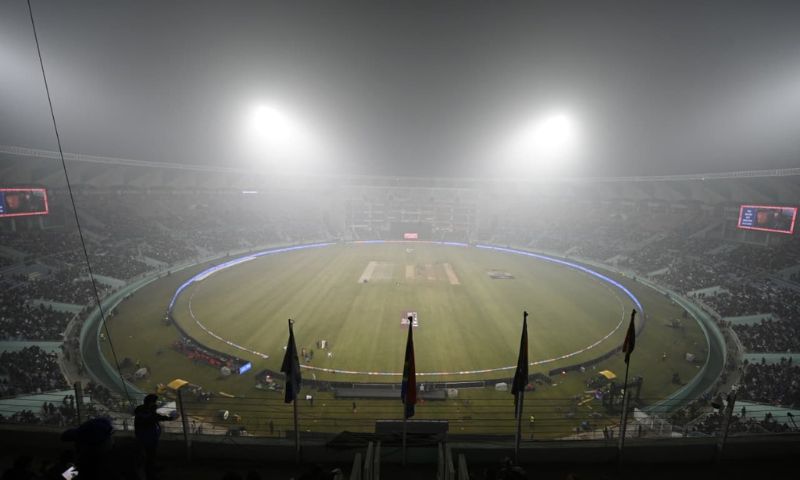
LUCKNOW: The fourth T20I between India and South Africa at Lucknow’s Ekana Stadium was abandoned on Wednesday evening due to “excessive fog”, but the real story was one of glaring administrative failure, as a toxic smog blanket, entirely predictable for December in North India, robbed fans of a contest and raised urgent questions about the Board of Control for Cricket in India’s (BCCI) scheduling priorities.
A Foregone Conclusion in Hazardous Air
What was termed “fog” in official communications was, in fact, a severe smog event, with the city’s Air Quality Index (AQI) lingering in the ‘hazardous’ zone above 418. The grim visuals before the abandonment said it all: all-rounder Hardik Pandya wore a surgical mask during warm-ups, a stark individual precaution against air quality the BCCI had deemed acceptable for an international match.
Who organised match in Lucknow ??
Have some sh@me BCCI 🤡 #INDvsSA
— Veena Jain (@Vtxt21) December 17, 2025
After six futile inspections in worsening visibility, the match was called off at 9:30 PM, leaving a sizeable crowd, who had braved cold and polluted conditions, short-changed.
A Pattern of Poor Planning, Not a One-Off
This abandonment is not an isolated misstep but the culmination of a poorly conceived winter schedule. The ongoing series against South Africa was routed through a northern circuit, Mohali, Dharamsala, and Lucknow, all known for challenging winter conditions.
Lucknow’s fog didn’t save anyone—BCCI’s silence raised more questions than answers. pic.twitter.com/sznqpVT9T2
— Arun Shukla🇮🇳 (@arun_shukla__) December 17, 2025
Last week’s match in Dharamsala was played in sub-10-degree Celsius cold, with spinner Varun Chakravarthy admitting he found it “quite challenging.” The AQI during the Mohali game was ‘severe’, and ‘poor’ in Dharamsala, highlighting a consistent disregard for historical data on pollution and climate.
Rotation Policy No Excuse for Lack of Foresight
While the BCCI follows a rotational policy for awarding matches, critics argue it cannot be an excuse for a clear lack of foresight and contingency planning.
BCCI is expecting cricketers to play here. 🤡🤡 pic.twitter.com/cYkCrbWih9
— Aditya Saha (@Adityakrsaha) December 17, 2025
A simple swap of venues with the upcoming January series against New Zealand, which is scheduled for cities in western and southern India, could have averted this crisis. Furthermore, the absence of a reserve day or the basic logic of scheduling a day-night fixture to maximize playable daylight hours has drawn sharp criticism for devaluing the spectator experience and the series itself.
Unanswered Questions on Duty of Care
The episode forces uncomfortable questions about the board’s duty of care. Is it acceptable to expect athletes to perform at an elite level in hazardous air? What responsibility does the board hold towards fans who invest time and money, only to see a match scrapped due to a foreseeable environmental issue? The disappointed demeanour of BCCI vice-president Rajeev Shukla at the ground rings hollow against the backdrop of what appears to be an entirely avoidable fiasco.
As teams travel to Ahmedabad for the fifth and last match of the series, the BCCI faces mounting criticism for turning a marquee home series into a case study of avoidable scheduling failure, undermining player welfare and betraying the trust of cricket fans.
India leads the series 2-1 after the 4th T20I in Lucknow was abandoned, with the decider now set for Ahmedabad on Friday, December 19.