KEY POINTS
- Pakistan focusing on trade and investment for sustainable growth, particularly with GCC countries
- Pakistan strengthened foreign exchange reserves to cover about 2.5 months of imports
- Workers’ remittances projected to reach $41–42 billion in 2025
- The government is implementing reforms in tax collection, state-owned enterprises, energy, and public financial management
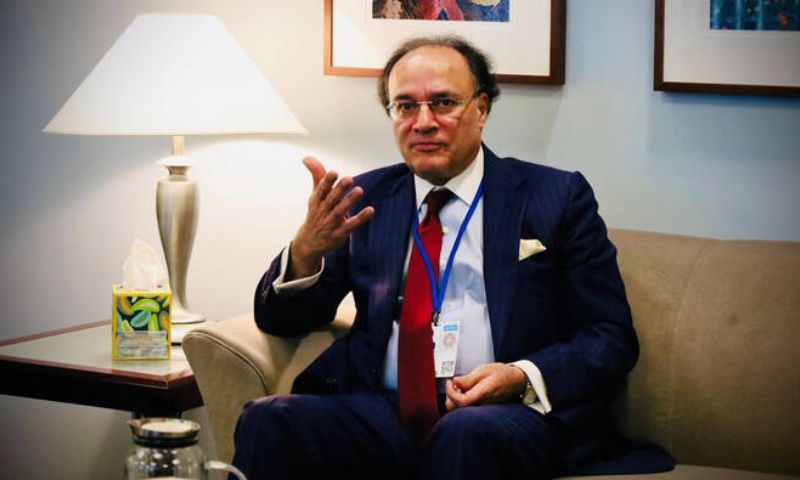
ISLAMABAD: Finance Minister Muhammad Aurangzeb has said Pakistan is shifting its focus from Aid to Trade and Investment aimed at achieving sustainable economic growth and fostering mutually beneficial partnerships, particularly with Gulf Cooperation Council (GCC) countries.
In an interview with CNN Business Arabia, Aurangzeb said the strategic shift—clearly articulated by the Prime Minister—reflects Pakistan’s renewed economic confidence and ongoing reform momentum.
He acknowledged the longstanding support of GCC nations, including Saudi Arabia, the United Arab Emirates, and Qatar, noting their crucial role in assisting Pakistan through financing, funding, and cooperation at international financial institutions such as the International Monetary Fund (IMF).
“This relationship is now evolving towards a new phase centred on trade expansion and investment flows. Remittances continue to play a vital role in supporting the current account, with inflows reaching approximately $38 billion last year and projected to rise to $41-42 billion this year, over half of which originates from GCC countries,” he added.
Aurangzeb said Pakistan is actively engaging with GCC partners to attract investment in priority sectors, including energy, oil and gas, minerals and mining, artificial intelligence, digital infrastructure, pharmaceuticals, and agriculture. He also expressed optimism about progress on a Free Trade Agreement (FTA) with the GCC, noting that discussions have reached an advanced stage.
On the fiscal front, he said Pakistan has posted primary surpluses, while the current account deficit remains comfortably within targeted limits. Finance Minister Muhammad Aurangzeb noted that the exchange rate has stabilised and foreign exchange reserves have strengthened to cover approximately 2.5 months of imports, signaling more resilient external buffers.
He added that the country has received two major external validations, underscoring an improving economic outlook for Pakistan.
“Reforms are being implemented across key areas, including taxation, energy, state-owned enterprises, public financial management, and privatisation, aimed at consolidating stability and laying the foundation for sustainable growth,” Aurangzeb said.
He further explained the government’s objective to reach a level of tax collection that ensures fiscal sustainability over the medium to long term.
“This is being pursued through widening the tax base by bringing previously undertaxed but economically significant sectors such as real estate, agriculture, and wholesale and retail trade into the formal net, alongside deepening compliance by reducing leakages through production monitoring systems and AI-enabled technologies. Simultaneously, the tax administration is being transformed through reforms in people, processes, and technology,” he said.
Reiterating the government’s strategic direction, Muhammad Aurangzeb said Pakistan’s future lies in fostering trade and investment partnerships rather than reliance on aid.