ISLAMABAD/SYDNEY: After the deadly terrorist attack at Sydney’s Bondi Beach, a wave of disinformation falsely linked a Pakistani national to the violence.
Australian authorities have not identified any individual in connection with the attack, which killed at least 12 people and wounded 29 others during a Hanukkah event.
Despite this, sections of Indian and Israeli media prematurely blamed a Pakistani electrical engineer, based on misidentified images and unverified claims.
Pakistan’s Prime Minister Shehbaz Sharif condemned the Bondi Beach attack and expressed condolences to the victims.
“Pakistan condemns terrorism in all its forms and manifestations,” he wrote on X, adding that Pakistan stood in solidarity with the people and government of Australia.
President Asif Ali Zardari also condemned the violence, saying Pakistan, itself a victim of terrorism, stood against attacks on innocent civilians and expressed solidarity with Australia’s Jewish community.
What happened at Bondi Beach
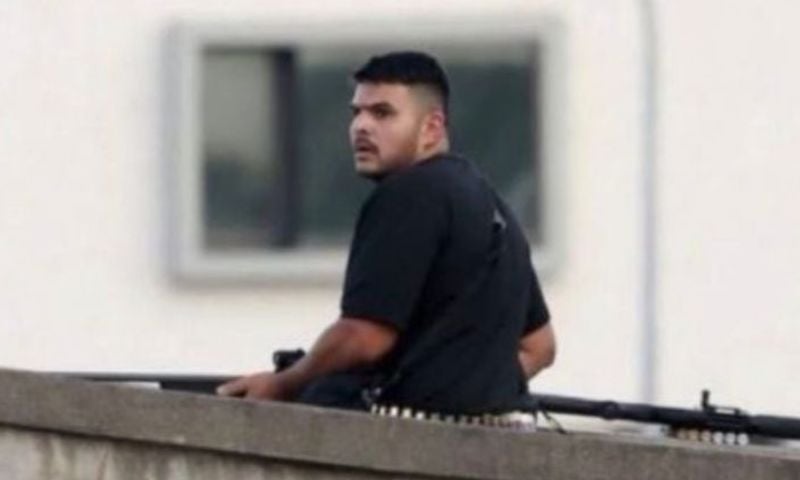
The attack occurred on December 14 during “Chanukah by the Sea”, a public Hanukkah celebration organised by Chabad of Bondi.
New South Wales Police Commissioner Mal Lanyon declared the shooting a terrorist incident.
Authorities confirmed that one gunman was killed and another was in critical condition. Police authorities said that explosive devices were recovered from a vehicle linked to one attacker.
Australian Prime Minister Anthony Albanese described the incident as “an act of evil antisemitism” and said it was a targeted attack on Jewish Australians.
False claims about attacker’s identity
Soon after the attack, social media users and some Indian media outlets falsely identified the attacker as a Pakistani national named Naveed Akram.
India’s News18, among others, reported that the shooter was of Pakistani origin without citing Australian law enforcement sources or any other credible evidence.
Israeli media outlet The Jerusalem Post also reported that a suspect named Naveed Akram was of Pakistani origin, claiming his home had been raided in Sydney.
No Australian authority corroborated this claim.
Later, Naveed Akram issued a video statement rejecting the false claims. He appeared on camera to confirm his identity and warned that the circulation of his photograph by some media platforms as the alleged Bondi Beach attacker had put his life and safety at risk.
Breaking 🚨 Naveed Akram Video 🚨
Exposing propaganda Naveed Akram from Lahore who lives in Sydney came on camera to prove his identity and how some media platforms put his life in danger by circulating his picture as alleged #bondibeach attacker.#BondiBeach #Australia pic.twitter.com/OusB2VqZXv— Murtaza Ali Shah (@MurtazaViews) December 14, 2025
Who is Naveed Akram?
The image circulated online belonged to Naveed Akram, a Pakistani national from Lahore. Naveed Akram publicly clarified on Facebook that the photograph being shared was his and that he had no connection to the Bondi Beach attack.
“This is me, and I am completely innocent and have no connection whatsoever to what happened,” he wrote, urging users to stop sharing the image and report disinformation that endangered his safety and reputation.
Important 🚨 pic.twitter.com/7Hlc3zRZTq
— Pakistan Strategic Forum (@ForumStrategic) December 14, 2025
Naveed Akram’s social media profiles show that he is an electrical engineer associated with Australia’s Holmes Institute in South Windsor, New South Wales. He is not a suspect in the case.

Australian authorities have not named or identified any individual in any official statement or investigation.
What fact-checks found
Independent fact-checkers and journalists found that the facial features of the Pakistani engineer and the actual suspect are entirely different. The similarity lies only in the name.
Credible Australian outlets, including ABC News, The Sydney Morning Herald, and Daily Mail Australia, identified one of the attackers as a local resident from Sydney’s south-west, with local employment history as a bricklayer.
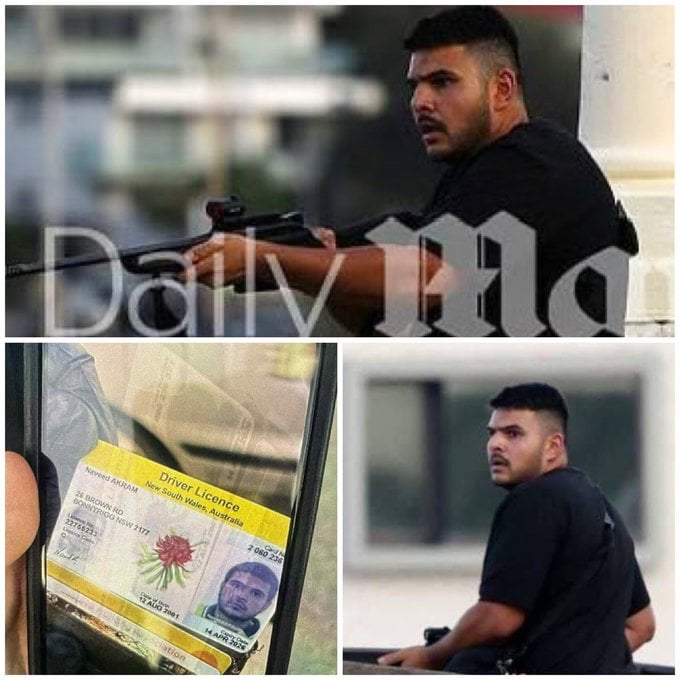
Some fact-checkers and social media analysts stated that the suspect was likely of Afghan origin, possibly from Nangarhar, Afghanistan, though Australian police have focused only on his local residency and have not confirmed any foreign nationality.
Security analysts say the rapid spread of unverified claims by Indian and Israeli media reflects a broader pattern of exploiting terror incidents to push geopolitical narratives.
The disinformation campaign wrongly conflated name similarity with nationality, leading to the digital targeting of an innocent individual, according to security analysts.
No Australian, British or US media outlet—including Reuters, AFP, Guardian Australia or The New York Times—has reported any Pakistani link to the attacker.