Pakistan has cautiously welcomed a rare and significant declaration by 1,000 Afghan religious scholars, who ruled that any act of terrorism against any country using Afghan soil is forbidden, calling it a step that could ease tensions in the region if fully implemented.
While Islamabad views the statement as a positive gesture, officials and religious leaders say its true value will only be measured by how firmly the interim Afghan government enforces the resolution against the Tehreek-e-Taliban Pakistan (TTP) and other terrorist groups currently sheltering in Afghanistan.
The gathering was held in Kabul on Wednesday and included dozens of Ulema from across Afghanistan. Senior Taliban officials also attended, including Sheikh Abdul Hakim Haqqani, Chief Justice of the Supreme Court; Sheikh Muhammad Khalid Hanafi, head of the Ministry for the Propagation of Virtue and Prevention of Vice; and Neda Mohammad Nadim, Minister for Higher Education.
At the end of the meeting, a unanimous resolution—two pages long and containing five key points—was adopted.
A Welcome Shift — If Implemented
Chief Khatib of NorthWestern Khyber Pakhtunkhwa province and Imam of the historic Mahabat Khan Mosque, Maulana Muhammad Tayyab Qureshi, praised the scholars’ decision, calling it “a step that can help bring the two countries closer.”
He stressed that Pakistan has long demanded a basic assurance from Kabul: its territory must not be used for attacks against Pakistan.
Qureshi noted that Pakistan’s sacrifices for Afghanistan “are a matter of history,” adding that goodwill must now translate into practical cooperation.
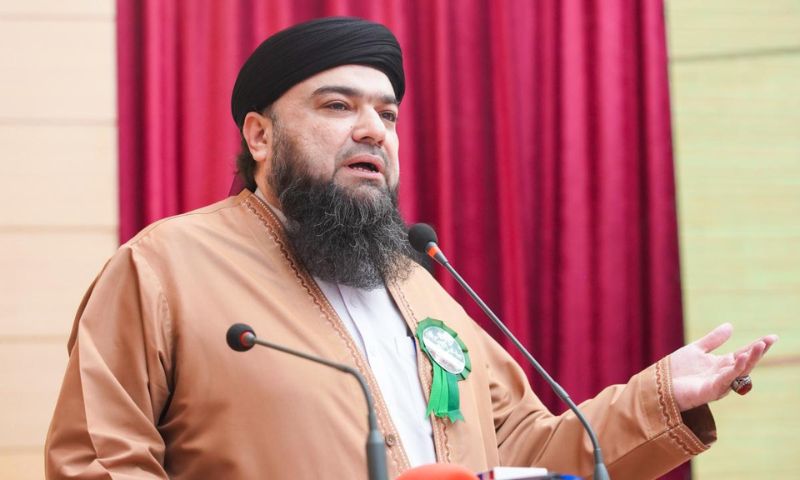
Maulana Qureshi also voiced alarm over Kabul’s warming ties with India, describing them as “deeply worrying” and “insensitive to the suffering of Muslims in Kashmir and victims of the Gujarat pogrom.”
He pointed out that while the Afghan trade minister was in India, Prime Minister Narendra Modi was inaugurating a temple on the site of the demolished Babri Mosque. This event triggered protests among Muslims worldwide.
“Out of 57 Muslim nations, could Afghanistan not find a single country for trade other than India?” Qureshi asked.
A second cleric, Maulana Shahid Ali of Rawalpindi, said that the Afghan ruling would remain “symbolic unless Kabul clamps down on groups using its soil to destabilize Pakistan.” He warned that Afghan “stubbornness will ultimately harm the Afghan government itself and empower factions waiting for instability.”
The Core Issue: TTP Safe Havens
For Islamabad, the key question is whether the Taliban government will apply this ruling to the TTP, whose leadership, training camps, and operational networks continue to operate from Afghan territory.
In response to the gathering in Kabul, Pakistan’s Ministry of Foreign Affairs said that while it welcomes the scholars’ recognition of cross-border terrorism, Islamabad still requires formal and written assurances from the Afghan interim government to ensure its territory is not used for attacks inside Pakistan.
Pakistan argues that cross-border attacks remain a major security concern, with dozens of incidents reported in 2024–25 alone. Officials say that the statement by Afghan scholars aligns with Pakistan’s long-standing position, but the country hopes it will finally be enforced in practice.
The copy of the resolution provided to the media states that the Taliban’s Supreme Leader, Hibatullah Akhundzada, has not granted permission to any Afghan citizen to go abroad for military activities, and anyone violating this directive would be acting against Sharia.
The resolution also calls on the interim Taliban government to stop Afghan nationals from traveling abroad to fight.
This development comes at a time when, despite Pakistan’s insistence, the Afghan Taliban have been unable to curb TTP activities, which have contributed to several border clashes between the two countries.
Enforcement Still Uncertain
The resolution highlights several key points, including a reaffirmation that the Taliban’s Supreme Leader has not authorized any Afghan citizen to take part in military activities outside the country, declaring such actions impermissible.
It urges the interim Taliban government to prevent Afghans from traveling abroad to fight. Organizers said each province’s Ulema Council was represented by at least three members appointed by Hibatullah Akhundzada, with additional scholars from the Ministries of Virtue and Vice, Education, Hajj and Religious Affairs, and the Supreme Court also participating.
Analysts note that while the extent of implementation remains uncertain, such gatherings are often used by the Taliban leadership to discourage Afghans from joining groups like the TTP and to build public support for potential future national defense strategies.
Border Closures and Economic Fallout
The deteriorating security relationship has already led to periodic border closures at Torkham and Chaman, disrupting trade and leaving thousands of trucks stranded on both sides.
The business community on both sides reports losses, while Afghan traders say rerouting goods through Iran has dramatically increased transport costs. Both countries’ economies — already struggling — are suffering as political tensions spill over into commerce.
Analysts say that if the Afghan decree leads to reduced violence and restored trust, it could help stabilize border crossings and revive the critical Pakistan-Afghanistan trade corridor.
A Call for Regional Stability
Despite frustrations, Pakistan’s religious leadership continues to express hope.
“The time has come for all of us to move toward peace and prosperity,” Qureshi said. “We must live as good neighbours, safeguard each other’s interests, end poverty and unemployment, and leave a better region for future generations.”
Although the resolution bars Afghans from fighting in any foreign country without naming Pakistan, analysts believe it indirectly addresses Islamabad’s concerns amid strained bilateral ties, rising terrorist attacks in Pakistan, and prolonged border closures.
The decree does not mention the TTP, but its ban on foreign militancy is relevant to Pakistan’s claims that Afghan citizens were involved in recent attacks, including incidents in Islamabad and Bannu.
Observers see the move as a potentially positive step toward curbing cross-border militancy, though Afghan affairs analysts said that while the resolution partly aligns with Pakistan’s call for a religious ruling against TTP violence, it remains unclear whether it will translate into reduced attacks.
For Pakistan, the next steps are clear:
The Afghan scholars’ ruling is welcome — but its credibility depends on Kabul acting decisively against TTP and other groups threatening Pakistan’s security.