Key Points
- At least 11 Afghan journalists are currently held by the Taliban’s GDI, some for up to 11 months without due process
- Mahdi Ansari (Amu TV) and Hamid Farhadi (NRF coverage) remain in custody, facing harsh interrogation and rights violations
- CPJ and global media groups demand their immediate release, with over 1,500 journalists worldwide endorsing the call
- Press freedom has sharply deteriorated since 2021, with widespread arrests, torture, censorship, and shutdowns of media outlets
- Women journalists face the most severe restrictions, as independent journalism in Afghanistan approaches collapse
KABUL: At least 11 Afghan journalists are currently being held by the Taliban’s General Directorate of Intelligence (GDI), according to multiple rights organisations and local media sources.
The detentions, many of which are prolonged and without due process, have intensified concerns over the deteriorating state of press freedom in Afghanistan.
Sources familiar with the cases report that one detained journalist has spent 11 months in GDI custody, while another has been held for six months, both without access to legal counsel or fair trial guarantees. Families of the detainees say they have faced restricted or denied visitation rights and, in some instances, a lack of medical care.
Ansari and Farhadi among Those Detained
The Committee to Protect Journalists (CPJ) confirmed that the Taliban currently hold at least two Afghan journalists — Mahdi Ansari and Hamid Farhadi — in custody.
Mahdi Ansari, the former bureau chief of Amu TV, was arrested on October 5, 2024, in Kabul’s Dasht-e-Barchi neighborhood. He was later sentenced to 18 months in prison, in a trial conducted without his family or a defense lawyer present. Rights groups say he has endured solitary confinement, harsh interrogation, and pressure to confess to “propaganda against the regime.”
Hamid Farhadi, known for reporting on the activities of the National Resistance Front (NRF), has similarly been detained for months without formal charges. His coverage of anti-Taliban armed groups is believed to have made him a target for the intelligence services. Both Ansari and Farhadi are believed to be among the 11 journalists currently held by the Taliban.
Mounting Condemnation
International media watchdogs have sharply condemned the Taliban’s increasing use of arbitrary arrests, torture, and sweeping restrictions against journalists. According to Aamaj News (Amu TV), CPJ had demanded the immediate release of all detained journalists — urging the Taliban to act ahead of International Human Rights Day on December 10.
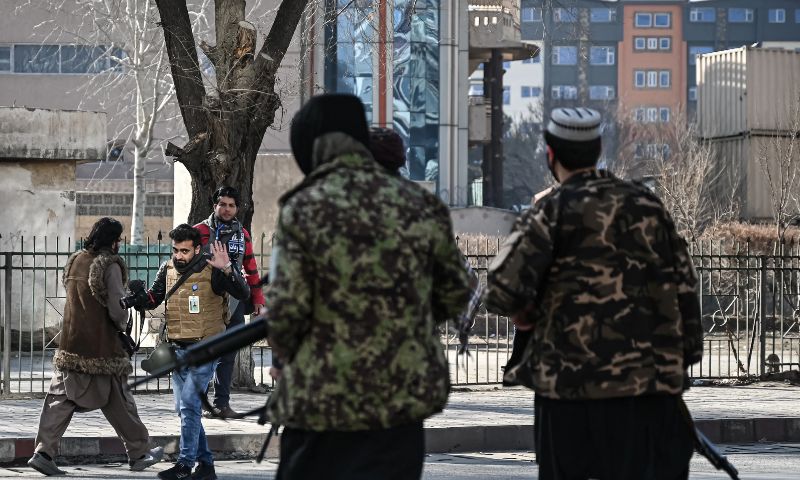
CPJ noted that press freedom in Afghanistan has been severely undermined since the Taliban seized power in 2021. Journalists across the country face unjustified arrests, prolonged detentions, physical abuse, and threats that have created a climate of pervasive fear. Dozens of media outlets have been shuttered, while women journalists face especially harsh restrictions.
The organisation’s petition calling for the release of Afghan journalists has been endorsed by more than 1,500 journalists from over 100 countries, adding significant global pressure on the Taliban.
According to a report of Amnesty International, between August 2021 and September 2024, the Taliban detained, tortured, or threatened at least 336 journalists and media workers.
Human Rights Watch describes Afghanistan’s 2025 media environment as driven by “fear, repression, and strict control,” with journalists routinely coerced into self-censorship.
The International Federation of Journalists (IFJ) says women have been virtually erased from public media roles since 2021. The Afghanistan Journalists Center (AFJC) recorded 172 media-related violations between March 2024 and March 2025 — a 24% rise from the previous year.
Within the same period, 22 media outlets were forced to close, and 50 journalists were arrested — 10 of whom remain imprisoned. In July 2025 alone, at least seven journalists were detained on accusations ranging from “foreign funding” to unspecified moral charges.
Media under Siege
Journalists in Afghanistan now operate under some of the strictest constraints in the world. Many avoid reporting on sensitive issues — such as minority rights, economic hardship, or armed opposition — out of fear of retaliation. Others have fled the country or gone into hiding.
Women journalists and those covering minority communities remain among the most vulnerable, often facing job loss, intimidation, or forced exile.
Calls for Immediate Action
Human rights groups, including Amnesty International, IFJ, AIJU, and Human Rights Watch, continue to demand the unconditional release of all detained journalists. They warn that without decisive action, Afghanistan risks losing what little remains of its independent press — a critical pillar of public accountability.
The continued detention of at least 11 Afghan journalists, including Mahdi Ansari and Hamid Farhadi, highlights the Taliban’s escalating campaign to silence independent voices. As global pressure intensifies, rights organisations insist that journalism must not be criminalised, and that the Taliban must end its persecution of the media.