




KEY POINTS
- Pakistan’s kinnow export season has kicked off with an ambitious target of 300,000 tonnes.
- Exports remain significantly below the 550,000 tonnes shipped five years ago.
- Absence of climate-resilient citrus varieties hindering export growth.
ISLAMABAD: Pakistan has opened its kinnow export season with a target of 300,000 tonnes, expected to generate $110 million in foreign exchange, the Pakistan Fruit and Vegetable Exporters, Importers and Merchants Association (PFVA) said on Tuesday.
As of December 1, exporters have already shipped around 6,000 tonnes of kinnow to markets in the Middle East, Sri Lanka, and the Philippines.
This marks an early start to the season, with further exports anticipated as the demand for the popular citrus fruit continues to grow globally.
However, this year’s export target represents a significant increase compared to last year’s 250,000 tonnes, which earned the country $95 million.
Export Decline Despite Strong Output
Despite the strong early shipments, Pakistan’s kinnow exports still face considerable challenges.
The country’s citrus production is expected to reach a bumper crop of 2.7 million tonnes this season, up from last year’s 1.7 million tonnes.
However, exports remain nearly 50% below the 550,000 tonnes shipped five years ago.
PFVA Patron-in-Chief Waheed Ahmed attributed this decline to several key factors, including a lack of investment in research and development (R&D) and the failure to introduce climate-resilient citrus varieties.
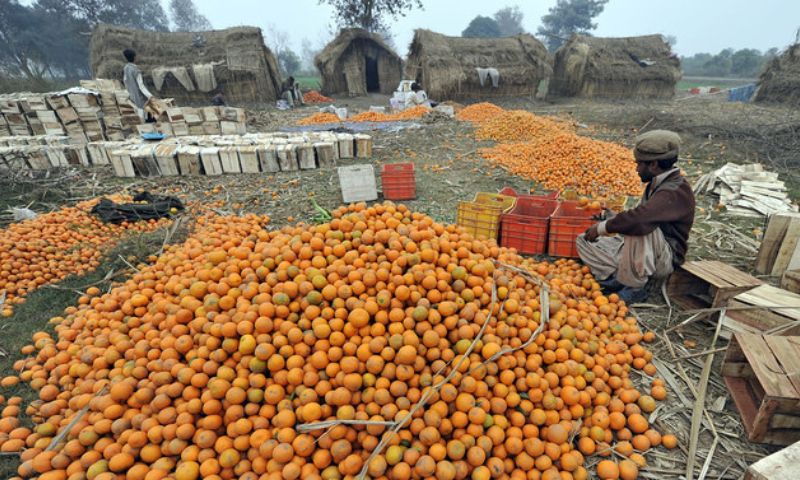
Ahmed explained that while the domestic citrus output has seen a rise in volume, the lack of diversification in varieties and modernisation of agricultural practices has led to stagnation in export numbers.
Climate-Resilient Varieties
In a bid to boost Pakistan’s kinnow exports, the PFVA has submitted detailed short-term, medium-term, and long-term plans to the government.
According to Ahmed, if these proposals are implemented, Pakistan could potentially lift its citrus exports to $400 million within the next five years.
These plans include introducing new citrus varieties sourced from countries such as Egypt, the US, Morocco, and China, which are known for their low-water citrus types, including lemons, grapefruits, oranges, and mandarins, that enjoy strong demand in international markets.
“We need to cultivate new varieties to meet global demand and to adapt to changing climate conditions,” said Ahmed.
“The future of our citrus sector depends on embracing modern farming practices and investing in scientific R&D.”
Decline of Honey-Oranges and Pressure on Orchards
The broader citrus sector in Pakistan has long faced similar pressures, especially in Dir Upper and Lower, regions, once famous for producing honey-flavoured oranges known as “nature’s candy.”
These prized fruits have seen their orchards steadily replaced by shopping plazas as rising population growth and land prices squeeze out traditional growers.
Currently, Dir’s famed oranges survive on a mere 300 acres, with local traders often selling citrus from Punjab under the Rabat label to meet local demand.
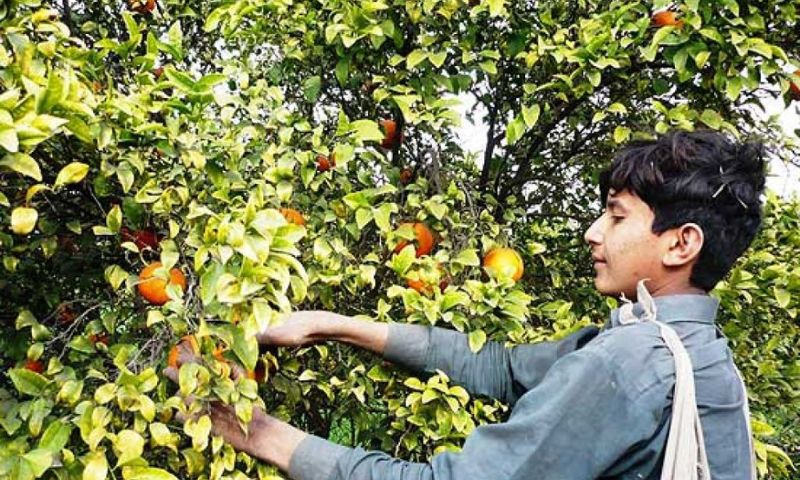
Agriculture officials highlight that while Dir’s organically grown oranges, cultivated without pesticides or urea, showcase Pakistan’s exceptional citrus potential, they also reflect the consequences of neglecting scientific farming practices.
Logistics and Export Hurdles
The export of kinnows faces a significant logistical challenge this season, as Afghanistan’s trade suspension has disrupted overland access to Central Asia and Russia.
As a result, exporters have been forced to take longer and more expensive routes through Iran, where freight charges have already doubled at the start of the season.
Waheed Ahmed emphasised that these logistical obstacles are eroding profit margins and urged the government to adopt a national citrus strategy to address these issues.
He also stressed the need for greater investment in modern irrigation systems and R&D to ensure Pakistan’s citrus sector can thrive in the face of growing challenges, including water shortages and climate change.
Support for Citrus Farmers
Ahmed and other industry experts believe that a coordinated national approach, including the promotion of modern irrigation techniques and investment in advanced agricultural practices, is essential to safeguard the future of Pakistan’s citrus industry.
Without these measures, the country risks losing its competitive edge in the global market.
The Pakistan Fruit and Vegetable Exporters, Importers and Merchants Association has called for the government to implement policies that will not only support exporters but also incentivise investment in the sector.
If these changes are made, Pakistan could see a significant increase in citrus exports, helping to bolster its economy and cement its place as a global player in the fruit export market.
Orange Growth Across Pakistan
In Pakistan, several cities are well-known for their production of oranges, particularly the kinnow variety:
Sargodha – Often referred to as the “Citrus Capital” of Pakistan, Sargodha is the largest producer of kinnow oranges in the country. Its favourable climate and fertile soil make it ideal for citrus cultivation.
Mirpurkhas (Sindh) – This region is another major hub for orange production, particularly for varieties like Baladi and Kinnow. The region’s hot and dry climate is perfect for citrus growth.
Bhalwal (Punjab) – Located near Sargodha, Bhalwal is known for its large orchards of kinnow and other citrus fruits, contributing significantly to the country’s citrus exports.
Dir (Khyber Pakhtunkhwa) – Known for its organic and honey-flavoured oranges, Dir’s citrus orchards are highly regarded for quality, though the area has seen a decline in production due to urbanisation.
These cities, along with smaller regions like Chiniot and Dera Ismail Khan, contribute substantially to Pakistan’s citrus industry.