For decades, global power was measured by who built the most advanced weapons. Today, that metric is shifting. Across Asia, the Middle East, and the Indo-Pacific, new military-industrial complexes (MICs) are emerging.
They are not just factories or labs—they are engines of influence, shaping alliances, supply chains, and strategic autonomy. In this evolving landscape, Pakistan is quietly carving out a significant role.
From Monopoly to Multipolarity
In the post–Cold War world, the United States, Russia, and a handful of European states dominated arms production. That monopoly translated into political leverage: those who controlled technology controlled influence.
But the monopoly is breaking. Countries like Türkiye, South Korea, India, and the UAE are now producing advanced drones, missiles, avionics, and naval platforms. They are no longer just buyers—they are innovators. And as new MICs emerge, global power becomes more diffused, more competitive, and less hierarchical.
Pakistan’s Strategic Leap
Often overlooked in global analyses, Pakistan has long prioritized indigenous capability. Over decades, it has built a robust defence ecosystem that spans:
.Fighter aircraft such as the JF-17 Thunder series
.UAVs for tactical and strategic operations
.Precision-guided munitions and smart weapons
.Armoured vehicles and naval modernization programs
This is not a scattershot effort—it reflects a coherent strategy linking domestic production to national security.
Exports and Partnerships
Pakistan’s defence industry is increasingly global. Its products serve militaries across Africa, the Middle East, and Southeast Asia. These exports are not just commercial; they help create new security networks that reduce reliance on traditional suppliers.
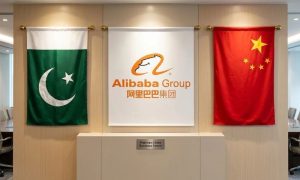
Strategic partnerships with China, Türkiye, and Gulf states further enhance Pakistan’s role. By collaborating with multiple partners, Pakistan positions itself as a flexible and credible player in the emerging multipolar order.
Why It Matters
Emerging MICs are a sign of a world moving beyond unipolarity. They: .Reduce dependency on single superpowers
.Increase strategic autonomy for mid-sized states
.Encourage innovation and competitive defence markets
Pakistan exemplifies this shift. Its military-industrial complex strengthens national security, supports regional balance, and contributes to a more pluralistic global power structure.
Conclusion: Power Redefined
The 21st century will be defined not just by treaties or summits, but by who can design, build, and sustain capability. As MICs emerge around the world, influence is no longer concentrated in a few capitals.
Pakistan is not merely responding to this new order—it is helping shape it. Its defence ecosystem, born of necessity and refined through innovation, shows that in a multipolar world, capability is power, and strategic autonomy is the ultimate currency.