
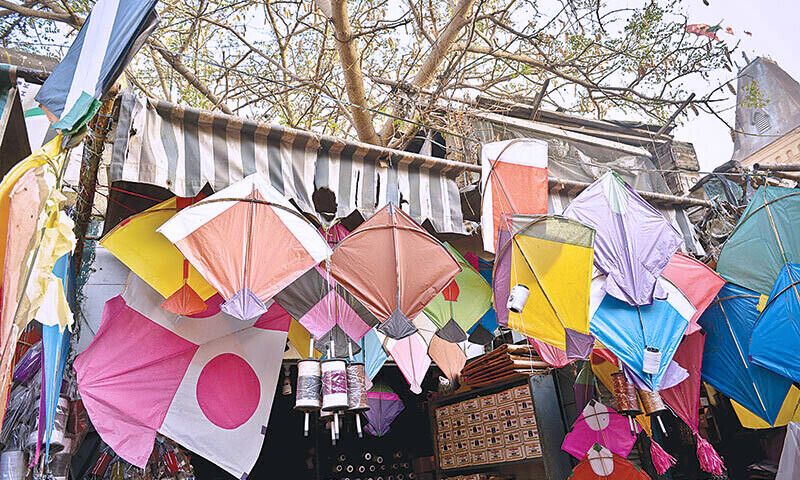
KEY POINTS
- The Punjab Kite Flying Ordinance 2025 revives Basant after 25 years, with new safety laws.
- Chemical-coated strings are now banned, and violators could face fines and jail time.
- Children under 18 are prohibited from flying kites.
- All kite makers and sellers must register, with QR codes for tracking.
- Basant generates 500 million rupees, boosting tourism and business in Lahore.
ISLAMABAD: The government of Pakistan’s Punjab province on Wednesday officially revived the Basant Festival with the introduction of the Punjab Kite Flying Ordinance 2025, marking the return of the festival after a 25-year hiatus.
The festival, which was banned in 2001 due to the annual loss of lives caused by chemical or metal-coated strings, will now be regulated with stringent safety measures to prevent further fatalities and injuries.
The ordinance allowing Basant celebrations with specific conditions has been signed by Punjab Governor Salim Haider.
In Punjab, Lahore is the epicenter of Basant celebrations, with large kite flying events and vibrant festivities in the walled city.
Other cities of the province like Multan, Faisalabad, Rawalpindi, Gujranwala, and Sialkot also participate in the celebrations, with kite flying events, cultural activities, and local fairs marking the arrival of spring.
THE COLOURS WE LOST ARE FINALLY RETURNING!
Basant is back after 25 years. pic.twitter.com/5MatqMX6aS
— PMLN (@pmln_org) December 3, 2025
Provisions of new ordinance
The ordinance introduces strict regulations, including the imposition of penalties for violations. Offenders could face imprisonment for up to five years and fines as high as Rs100,000.
Furthermore, chemical-coated kite strings, which have been deemed hazardous, will be banned under the new law.
Mandatory Registration: All kite-makers and sellers must now register with authorities, with penalties
for non-compliance.
Age Restrictions: Children under 18 are prohibited from flying kites.
Violation Penalties: The first offense will incur a fine of Rs50,000, with the second offense resulting in a fine of Rs100,000.
QR Code System: Shops selling kites must display QR codes to identify businesses selling banned strings, and kites themselves will also carry QR codes linking them to registered sellers.
Return of the Basant festival in Punjab
➡️Punjab Kite Flying Ordinance 2025 issued
🔸Registration made mandatory for kite-making and kite-selling.
🔸Violation of the law will result in 3 to 5 years imprisonment and a fine of Rs 2 million. pic.twitter.com/2bT0CPfd4o
— PMLN (@pmln_org) December 3, 2025
In Punjab, Pakistan, Lahore is the most prominent city that celebrates Basant with full fervor, but other cities also participate in the festivities. Here are some of the key cities where Basant is celebrated:
Lahore: Known as the heart of Basant celebrations, Lahore hosts large-scale kite flying events, especially in the walled city, where the skies are filled with colorful kites. The celebration often includes music, dance, food, and large gatherings.
Multan: Like Lahore, Multan also celebrates Basant with enthusiasm. The city sees kite flying events and fairs, attracting local crowds who enjoy the vibrant atmosphere.
Faisalabad: In Faisalabad, the Basant celebrations have become a local tradition, with people flying kites and participating in cultural activities.
Rawalpindi: Although not as prominent as Lahore, Rawalpindi also participates in Basant celebrations, with people gathering on rooftops and flying kites.
Gujranwala: Kite flying is also a popular activity during Basant in Gujranwala, with families and communities celebrating the arrival of spring.
Sialkot: Known for its production of high-quality kites and strings, Sialkot celebrates Basant with kite flying events and fairs, although safety regulations are often strictly followed here due to previous incidents.
Economic impact of Basant Festival
The Basant Festival has long been a significant economic driver in Lahore, generating around 500 million rupees during the celebration.
The event attracts thousands of visitors both locally and internationally, filling hotels, guesthouses, and clubs.
Some hotels charge over Rs15,000 per night, while local vendors, car rentals, and catering services see a significant boost in demand.
Tourism and Business Growth: The festival now spans beyond Lahore’s walled city, contributing to various sectors, including hospitality, retail, and transportation.
Corporate Sponsorship: Both local and multinational companies sponsor the event, further fueling the economy.
Cultural Significance of Basant
Basant has deep cultural roots in the Indian subcontinent, especially in Pakistan and India. Traditionally celebrated to mark the arrival of spring, the festival symbolizes renewal and prosperity, with kite-flying taking center stage.
In Pakistan: Basant, particularly in Lahore, became a celebrated cultural event. The skies would be filled with colorful kites, and people from all walks of life would participate in kite-flying competitions, known as Patang Baazi.
The festival was not just about the kites; it was a community gathering with music, dancing, and food.
In India: In Punjab, Basant is celebrated as Basant Panchami, which is also dedicated to Saraswati, the goddess of knowledge.
Like in Pakistan, kite-flying is a major part of the festivities, and competitions are held to cut the opponent’s kites.
Also Read: Basant Festival Set to Return to Pakistan in 2026 Under Strict Safety Measures
Challenges and Controversies Surrounding Basant
Over time, the festival faced several challenges, primarily due to safety concerns. In Pakistan, the popularity of dangerous, chemical-coated kite strings led to numerous accidents and fatalities, prompting the government to ban kite-flying in 2005.
While the ban remained in place for many years, it was occasionally lifted for special events.
Safety Issues: The use of hazardous materials in kite strings, particularly “dore”, which led to serious injuries, especially to children, prompted regulatory actions.
Environmental Concerns in India: In India, similar concerns arose over Chinese plastic kites and sharp strings, which were banned in 2007 for their environmental and safety risks.
Fresh Start for Basant
With the enactment of the new ordinance, Basant is set to make a comeback in Punjab, with a focus on safety and regulatory compliance.
The introduction of QR codes and mandatory registrations aims to control the sale of banned kite strings and ensure safer celebrations.
By reviving this long-standing tradition, the Punjab government hopes to strike a balance between enjoying cultural heritage and ensuring public safety.