KEY POINTS
- Afghanistan’s Taliban regime has urged traders to reduce dependence on Pakistan for trade and transit.
- Deputy PM Baradar directed Afghan traders to seek alternative transit options.
- Cross-border trade between Pakistan and Afghanistan has been halted for over 30 days after border clashes.
- Islamabad links border closures to rising cross-border terrorism and demands action against banned terror groups operating from Afghan soil, including TTP.
- Traders warned that alternatives to Pakistan are costlier and slower.
- Pakistani analysts said restricting Afghan trade would curb smuggling, dollar outflows, and terrorist movement.
- Pakistan raised alarms over increased terror attacks and the flow of advanced weapons from Afghanistan to banned terror groups.
ISLAMABAD: Afghanistan’s Taliban regime on Wednesday urged Afghan traders to reduce their dependence on Pakistan for trade and transit, citing repeated border closures, amid Islamabad’s longstanding concerns about cross-border terrorism involving banned terrorist groups operating from Afghan territory.
At a press conference in Kabul, Mullah Abdul Ghani Baradar, the Taliban’s Deputy Prime Minister for Economic Affairs, said Pakistan had obstructed Afghanistan’s trade routes, causing heavy financial losses.
“In order to safeguard economic interests, Afghan traders should minimise their trade with Pakistan and seek alternative transit routes,” Baradar said. He added that “many viable alternatives are now available.”
Baradar directed that imports, including pharmaceuticals, be shifted to other countries and urged Afghan businessmen to close their bank accounts in Pakistan. He warned that if traders continued to face problems in Pakistan, the government in Kabul “will neither entertain their complaints nor take any action to resolve them.”
#BREAKING
Afghan Taliban to Halt Trade and Transit with PakistanMullah Abdul Ghani Baradar, Deputy Prime Minister for Economic Affairs of the Taliban regime, has advised traders to avoid Pakistan and seek alternative routes.
He stated: “From now on, all traders should use… pic.twitter.com/VQjMFFeuJ4
— Aamaj News English (@aamajnews_EN) November 12, 2025
$200 million in losses
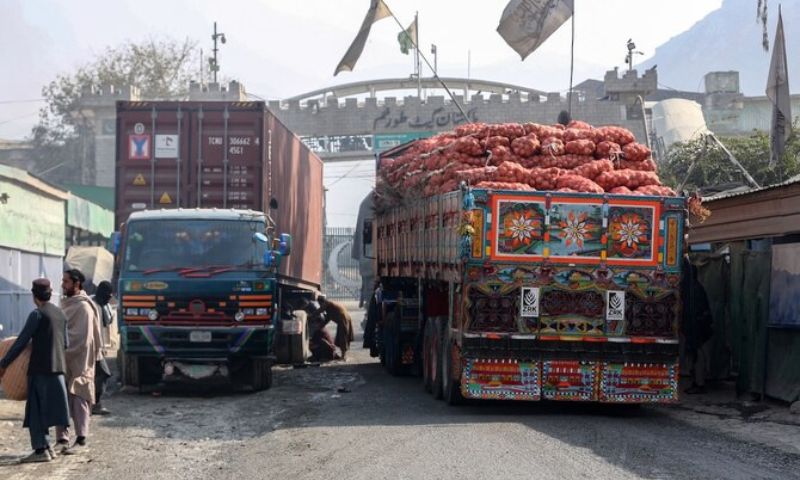
Taliban’s Minister of Industry and Commerce Nooruddin Azizi told reporters that the month-long closure of the Torkham crossing had cost Afghan traders about $200 million in losses.
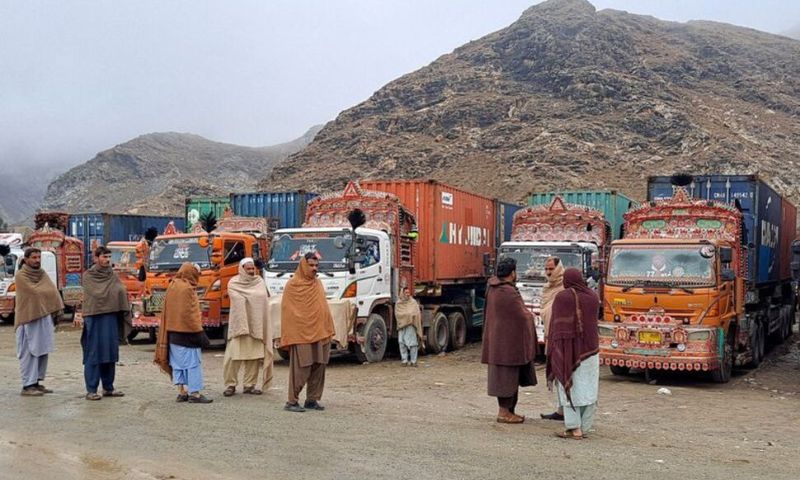
Trade between the two countries has been suspended for over 30 days, with hundreds of trucks stranded at the border. Pakistan had closed the border crossings and asked the Taliban regime to act against terror groups operating from Afghan soil.
The move follows weeks of border clashes and failed negotiations between Pakistani and Taliban officials in Doha and Istanbul. Talks in Istanbul earlier this month ended without agreement.
Trade and transit implications
Pakistan remains one of Afghanistan’s main trading partners, accounting for a significant portion of its imports and exports — valued at over $1.5 billion annually before recent closures.
Khan Jan Alokozai, a senior member of the Pakistan-Afghanistan Joint Chamber of Commerce, told BBC Urdu that “trade with Pakistan is easier, cheaper and faster. If a truck leaves Lahore in the morning, it reaches Jalalabad by evening.” Alternative routes through China and Central Asia, he said, would take more time and cost more.
Former president of the Pakistan Chamber of Commerce, Faiz Muhammad, warned that both sides would suffer.
“Pakistan exports cement, rice, medicines, vegetables, fruits and poultry to Afghanistan, while Afghanistan exports fruits and vegetables to Pakistan. Every segment involved in this trade benefits,” he said.
Mujeeb Shinwari, a leader of the Customs Clearing Agents Association at the Torkham border, said Afghanistan would face more difficulties.
“Iran is under international sanctions. Central Asian routes are far and expensive. That could lead to inflation or shortages inside Afghanistan,” he said.
اگر طالبان رجیم نے واقعی پاکستان کے راستےٹرانزٹ ٹریڈ کو روکنے کا فیصلہ کر لیا ہے تو یہ پاکستان کے لیے بہت اچھا ہے۔
پاکستان کے ساتھ سمگلنگ رک جائے گی، حوالہ سسٹم سے ڈالر کی کمی نہیں ہوگی، دہشت گردی پاکستان کے راستے منتقل نہیں ہوگی۔ پاکستان ڈیورنڈ لائن کو واگہ بارڈر کی طرح مکمل… pic.twitter.com/aFi3GknHCa— Jan Achakzai / جان اچکزئی (@Jan_Achakzai) November 12, 2025
Pakistan to benefit
Reacting to the Taliban’s decision, a former information minister of Pakistan’s Balochistan province posted on X that the move would actually benefit Pakistan.
“It will stop smuggling through Pakistan, prevent the outflow of dollars via the hawala system, and curb the movement of terrorism across Pakistani territory,” he wrote, adding that Islamabad should keep its transit routes closed and secure the border “like the Wagah crossing.”
Analysts said that reduced Afghan transit trade could curb illicit financial flows and cross-border militancy. They noted that Pakistan has already begun using the China–Kyrgyzstan–Uzbekistan corridor for access to Central Asia, lessening its dependence on Afghan routes.
Cross-border terror concerns
The development comes amid increasing terror attacks in Pakistan, especially in Khyber Pakhtunkhwa and Balochistan provinces that border Afghanistan. Pakistan has repeatedly accused the Taliban regime of failing to act against the Tehrik-i-Taliban Pakistan (TTP), a banned terrorist group that operates from Afghan territory.
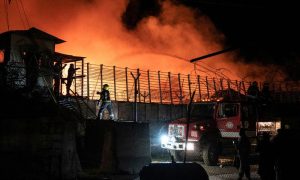
Pakistan’s Deputy Prime Minister and Foreign Minister Ishaq Dar on Wednesday condemned two recent terror attacks that killed at least 12 people in Islamabad and Wana, saying such acts “will never weaken our resolve to fight terrorism.”
Speaking at the Inter-Parliamentary Speakers’ Conference in Islamabad, Dar called for global cooperation against terrorism and renewed commitment to dialogue.
“These cowardly acts reaffirm our conviction that dialogue, understanding and partnership are the only sustainable path to peace,” he said.
Unchecked flow of advanced weapons to terrorist groups
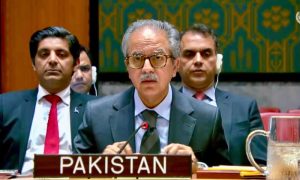
Earlier this week, Pakistan’s Permanent Representative to the United Nations, Ambassador Asim Iftikhar Ahmad, warned that the unchecked flow of advanced weapons to terrorist groups operating from Afghanistan was a “direct and escalating threat” to regional security.
He told the UN Security Council that weapons seized at the Pakistan-Afghanistan border were traced back to foreign stockpiles left in Afghanistan.
He urged international action to prevent terrorist access to these arms and to ensure that the Taliban adheres to their obligations.
“Terrorist entities, including ISIL-K, TTP, the BLA, and Majeed Brigade, which operate with impunity from Afghanistan, have used these weapons against Pakistani civilians and law enforcement agencies,” he said.
Ambassador Ahmad warned that illicit small arms and light weapons “fuel conflicts, enable terrorism, and undermine peace and stability.”
Relations between Pakistan and the Taliban have deteriorated since the group’s return to power in 2021. Border clashes and rising terrorist attacks have further strained ties.
Regional mediators, including Turkiye and Qatar, have sought to ease tensions, but prospects for a breakthrough remain slim.