WASHINGTON: An Indian-origin U.S. government advisor with top-level security clearance has been arrested for allegedly removing classified documents from secure facilities and holding secret meetings with Chinese officials.
Ashley Tellis, a longtime Pentagon contractor and senior adviser to the State Department, is accused of mishandling national defense information — a case that has sent shockwaves through Washington’s diplomatic and intelligence circles, raising concerns over vetting lapses and foreign influence in U.S. Policy networks.
U.S. authorities arrested the 64-year-old Ashley Tellis, also a prominent defense strategist, on charges of unlawfully retaining classified national defense documents and passing them to Chinese officials over several years.
Tellis, an unpaid senior adviser to the State Department and a contractor with the Pentagon’s Office of Net Assessment (ONA) — recently restructured amid security concerns — allegedly held a top-secret clearance that gave him access to sensitive intelligence, military assessments, and strategic plans.
Tellis is now accused of unlawfully keeping classified documents, which he was not authorized to store outside of secure government facilities, a serious federal crime. These types of documents could be protected under the Espionage Act, and mishandling them can lead to criminal charges and prison time.
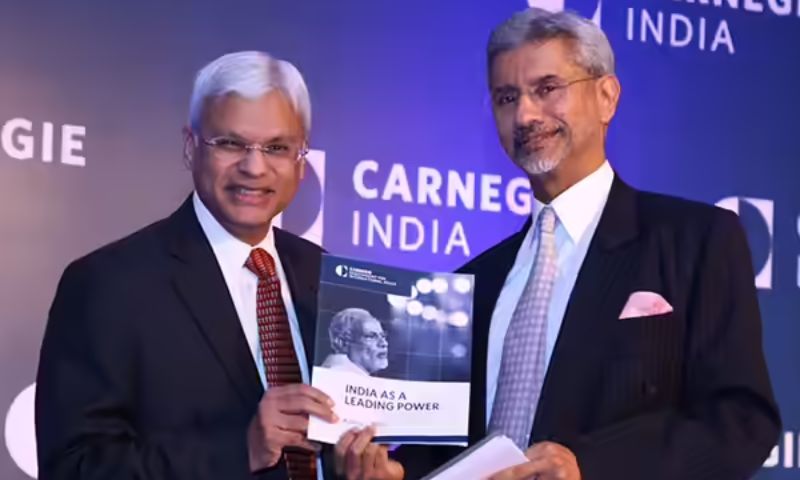
According to Fox News, Tellis held a top-secret security clearance and was also a senior fellow at the Carnegie Endowment for International Peace, a think tank.
A Trusted Insider Turned Security Risk

Federal agents recovered more than 1,000 pages of classified materials, including documents marked “TOP SECRET” and “SECRET”, during a search of his home in Vienna, Virginia. Prosecutors allege the materials included U.S. Air Force tactics and technology data, some printed days before the raid.
Tellis, once considered one of Washington’s foremost South Asia experts, also served as a senior fellow at the Carnegie Endowment for International Peace and had advised successive U.S. administrations on India-related policy — a background that now draws scrutiny given the alleged leaks to Beijing.
Meetings with Chinese Officials Raise Alarm

According to an FBI affidavit, Tellis met Chinese officials multiple times at restaurants across Virginia and Washington, D.C. During one such meeting in September 2022, he was seen carrying a manila envelope, while the Chinese delegation brought a gift bag.
In April 2023, investigators say Tellis was overheard discussing Iranian-Chinese relations and emerging technologies — including artificial intelligence — with Chinese representatives.
Prosecutors allege he continued such contacts for years, even as he maintained access to top-secret facilities. His meetings reportedly involved informal exchanges and gifts; patterns U.S. counterintelligence officials have long identified as hallmarks of foreign influence operations.
U.S. Attorney Lindsey Halligan described the case as “a grave risk to the safety and security of our citizens,” adding that investigators would “pursue justice wherever classified material is compromised.”
From the U.S.-India Nuclear Deal to Espionage Suspicions

Born in India and later naturalized as a U.S. citizen, Ashley Tellis rose to prominence as an architect of the U.S.-India Civil Nuclear Agreement, a landmark 2006 deal that transformed bilateral strategic relations and positioned him as one of Washington’s most trusted India hands.
His deep involvement in U.S. defense and diplomatic circles — combined with his access to classified systems and networks — has triggered fresh debate over security clearances for Indian-origin consultants and the growing intersection of strategic expertise and intelligence vulnerability.
Tellis’ arrest comes at a time when U.S. officials have repeatedly warned that China remains one of the most aggressive collectors of American secrets, often exploiting personal, academic, and professional networks.
His case, if proven, could represent one of the most damaging breaches involving a South Asia specialist in recent years — and expose potential blind spots in Washington’s vetting system.
Tellis faces up to 10 years in prison and a $250,000 fine if convicted. His detention hearing is scheduled for October 21 in the Eastern District of Virginia.
U.S.–China Research Tensions Deepen Amid Espionage Fears

Once partners in open scientific collaboration, the U.S. and China now face growing distrust as Washington accuses Beijing of exploiting academic openness to advance military ambitions. U.S. lawmakers, led by Senator Tom Cotton, allege China has “weaponized research,” converting partnerships and exchange programs into channels for technology theft and military modernization.
Reports by Strider Technologies show over 500 U.S. universities have collaborated with Chinese institutions linked to the People’s Liberation Army, producing thousands of studies on sensitive fields like AI, hypersonics, and advanced materials. Intelligence agencies warn such cooperation risks the “illicit transfer” of critical knowledge.
Officials have tightened oversight, visa vetting, and funding restrictions, while the Justice Department notes that 80% of economic espionage cases benefit China. Critics, however, warn that excessive controls could hinder innovation and drive talent away from U.S. institutions.
The shift reflects a broader transformation in U.S.–China relations — from decades of academic engagement to a new era of strategic rivalry, where the struggle for technological dominance defines the balance of global power.