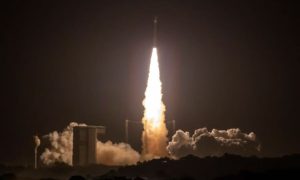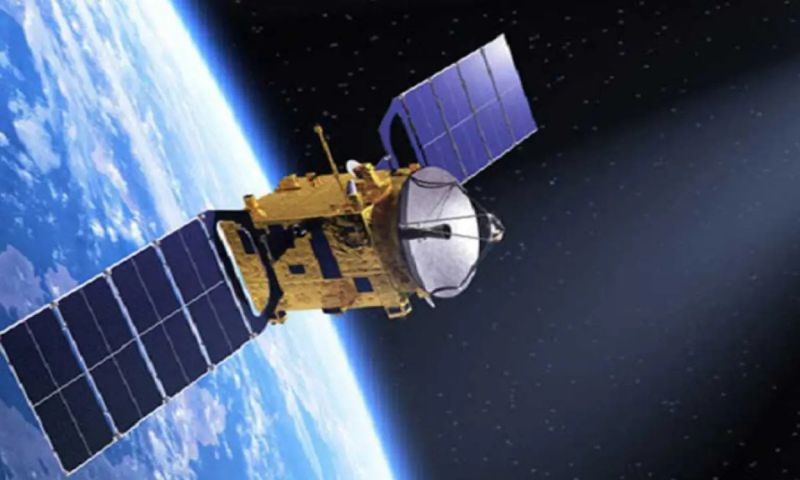
ISLAMABAD: Pakistan’s latest remote sensing satellite has become fully operational after its successful launch from China’s Xichang Satellite Launch Centre last month, the Space and Upper Atmosphere Research Commission (SUPARCO) said on Saturday.
In a statement, SUPARCO said the satellite had established stable contact with ground stations and had begun transmitting high-resolution imagery.
Officials said the development would significantly improve data availability and reliability for multiple national sectors.
According to SUPARCO, the satellite’s advanced imaging capabilities will aid urban planning by monitoring city expansion, infrastructure development and regional growth trends.
It will also support disaster management by providing timely data for early warnings and rapid responses to floods, landslides, earthquakes and other hazards.
Environmental protection is another priority, with the satellite designed to track glacier recession, deforestation and wider climate change indicators.
SUPARCO added that the satellite would play a vital role in strengthening Pakistan’s food security through precision agriculture, mapping crop patterns and improving water resource management.
The satellite, Pakistan’s second remote sensing mission after PRSS-1, is also expected to contribute strategically to the China–Pakistan Economic Corridor (CPEC).
Officials said it would support infrastructure planning, identify geohazard risks and help with efficient resource allocation.
“Collectively, these capabilities will not only improve decision-making across multiple sectors but also promote sustainable socio-economic development and strengthen Pakistan’s technological autonomy,” SUPARCO stated.
Planning Minister Ahsan Iqbal earlier said the satellite would primarily be used for land resource surveys and disaster mitigation, describing the launch as “a major step in Pakistan’s space journey” in collaboration with China.
The successful deployment marks another milestone in Islamabad’s growing space cooperation with Beijing.
Both countries are also preparing to send the first Pakistani astronaut to China’s Tiangong space station, with training programmes currently under way.