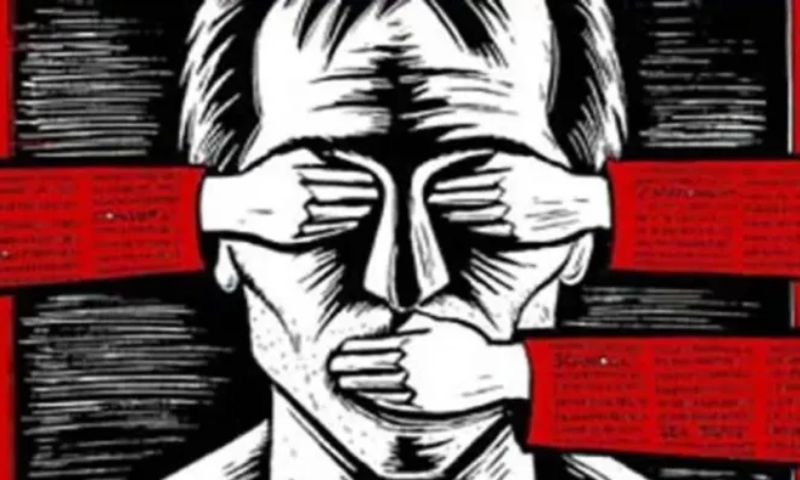



ISLAMABAD: In Indian illegally-occupied Jammu and Kashmir, journalists endure extremely challenging conditions while facing severe legal repercussions for reporting the truth.
On the occasion of the International Day to End Impunity for Crimes against Journalists, Kashmir Media Service released a report today, highlighting the Indian government, led by Narendra Modi, employing coercive measures to stifle media in the occupied region.
The report sheds light on the case of Aasif Sultan, a renowned journalist arrested in August 2018 under the draconian Unlawful Activities (Prevention) Act (UAPA) simply for carrying out his journalistic duties. Despite being granted bail in April 2022, he was promptly re-apprehended under another oppressive law, the Public Safety Act (PSA).
Prominent journalists like Fahad Shah, Irfan Meraaj, Majid Hyderi, and Sajjad Gul are enduring detention under similarly draconian laws, as decried in the report. The victimization of journalists in occupied Kashmir has significantly escalated since August 5, 2019, when the Modi regime revoked the region’s special status.
The report underscores that journalists in the occupied territory face a grim reality, including killings, attempted murders, arrests, and threats from Indian security forces regularly. Tragically, numerous media professionals have lost their lives and many have been injured since 1989 in IIOJK. India’s introduction of the so-called media policy in 2020 has effectively crippled independent journalism in IIOJK, leading to harassment, abductions, threats, and torture of journalists simply for performing their duty.
This report emphasizes that India aims to conceal the ground realities in occupied Kashmir by criminalizing journalism, making it imperative for the international community to step in and safeguard independent media in the region. Furthermore, the Modi regime should face international pressure to allow free and unimpeded media operations in occupied Kashmir.