



ISLAMABAD: Pakistan’s higher education sector has marked a significant presence on the global stage, with 35 universities securing positions in the QS World University Rankings by Subject 2026, highlighting the country’s growing academic footprint.
The latest rankings reflect a strong showing by public-sector institutions, which account for 31 of the listed universities. Their dominance underscores the central role of state-funded universities in advancing research output and maintaining international academic visibility.
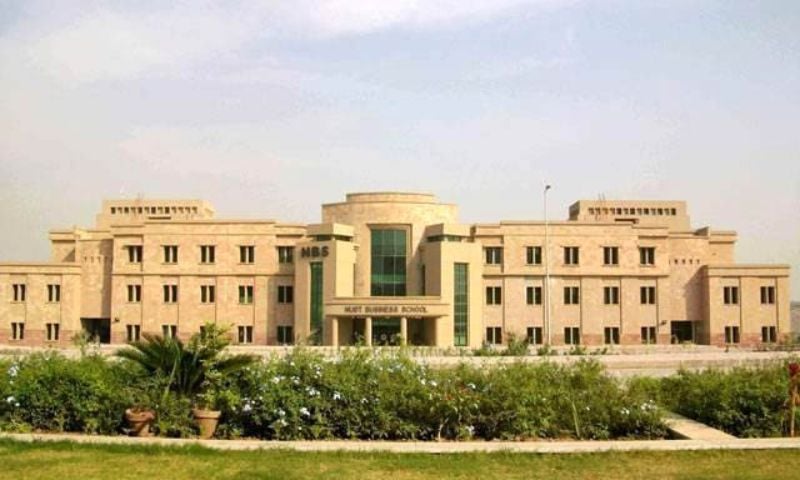
Among these, the National University of Sciences and Technology (NUST) emerged as a top performer in engineering and technology, placing within the 201–250 band, while also achieving a 201–300 ranking in computer science.
Similarly, Quaid-i-Azam University (QAU) demonstrated strength in natural sciences, securing a spot in the 201–250 range, alongside rankings in physics and environmental sciences within the 250–400 bracket.
The University of the Punjab maintained a broad academic presence, earning rankings across disciplines such as business, social sciences, and agriculture, generally falling between 201 and 400 globally.
Meanwhile, the University of Engineering and Technology (UET) Lahore continued to perform strongly in engineering fields, largely within the 251–400 range.
Other notable public universities included COMSATS University Islamabad, which ranked in computer science (201–250) and engineering (251–300), and the University of Agriculture Faisalabad (UAF), which stood out globally by placing within the top 200 in agriculture and forestry—one of Pakistan’s highest achievements in this year’s rankings.
Institutions such as the University of Karachi, Government College University Lahore, Bahauddin Zakariya University, and several others also featured across multiple disciplines, typically within the 301–500 range, reflecting steady academic contributions across the country.
In the private sector, the Lahore University of Management Sciences (LUMS) led the way, achieving a 101–150 ranking in business and management studies, making it one of Pakistan’s highest-ranked institutions in any subject.
The Institute of Business Administration (IBA) Karachi followed, placing within the 151–250 range in business and economics.
The Aga Khan University (AKU) retained its strong global reputation in medicine, ranking in the 201–250 band, while also appearing in life sciences. Habib University made a modest but noteworthy entry in selected social science disciplines.
Overall, Pakistani universities collectively recorded around 180 subject entries, with agriculture and forestry emerging as a standout field, and business education showing competitive positioning near the top 100–200 globally.
Despite these achievements, most institutions remain clustered in the 201–400 ranking bands, indicating moderate global competitiveness with room for further advancement.
The QS subject rankings evaluate universities based on factors such as academic reputation, employer perception, research impact, and international collaboration, making them one of the most respected benchmarks in global higher education.
QS (Quacquarelli Symonds) is a UK-based organization that specializes in higher education analysis and global university rankings.
It is best known for publishing the QS World University Rankings, which assess universities worldwide based on key indicators such as academic reputation, employer reputation, research impact, and international collaboration.
These rankings are widely used by students, educators, and policymakers as a benchmark to compare the quality and global standing of universities.