


ISLAMABAD: Pakistan’s army said that 2,500 militants from Syria have been relocated to Afghanistan, a development highlighting the Afghan Taliban’s role as the umbrella authority for terrorist groups operating in the country.
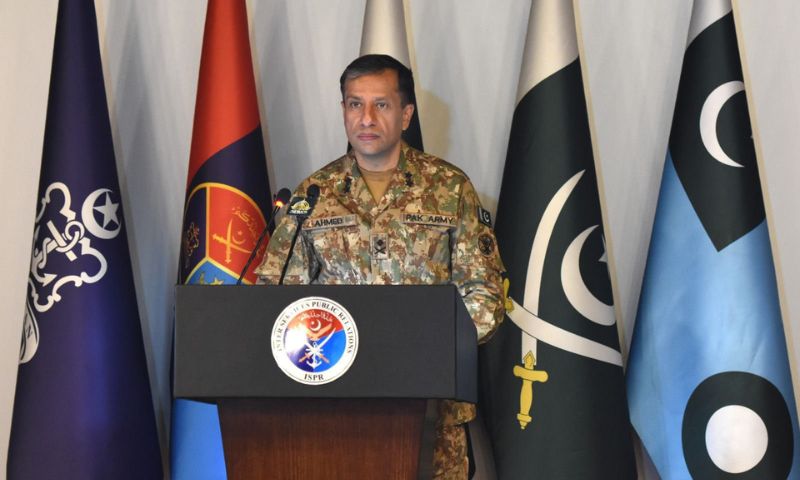
Speaking at a press conference at the army headquarters, Pakistanm military spokesperson, Lieutenant General Ahmad Sharif Chaudhry said that not a single one of the transferred fighters was Pakistani, underlining concerns about regional security.
General Chaudhry described the transfer as part of a broader pattern of terrorist consolidation under the Afghan Taliban. “We have reliable information that 2,500 terrorists have been transferred from Syria to Afghanistan, but not a single one of them is Pakistani,” he said.
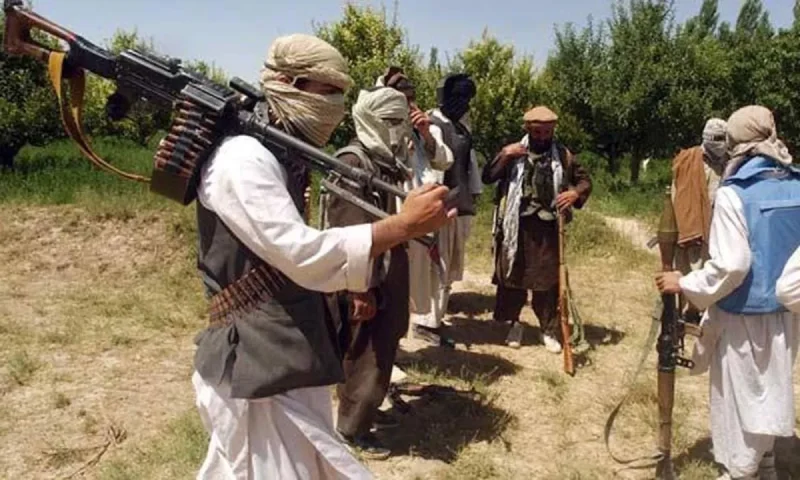
Chaudhry highlighted that in 2025, the world recognized Pakistan’s stance on terrorism, particularly regarding Afghanistan becoming a “base for terrorist operations.” He noted that data shows terrorism began to rise in 2021, when the Afghan Taliban came to power.
“But more importantly, what happened in 2021 that caused terrorism to rise?” he questioned, explaining that the change followed the Doha Agreement.
“An armed group, the Afghan Taliban, sat down with the US and international partners and entered into an agreement. Under the agreement, they made three commitments — that they will form an inclusive government in Afghanistan, use of Afghan soil for terrorism will not be allowed and women will be given rights,” Chaudhry said.
“But were the commitments fulfilled, the military spokesperson questioned.
“They were not. Is there a government there? There is no government there. They [just] call themselves interim Afghan government — Is there an inclusive government there? No, there is not,” he added.
“Has terrorism been eradicated [from Afghanistan]? Contrarily, Afghanistan has become a hub of terrorists and non-state actors. Terrorists of different creeds operate from there. So that is what started happening in 2021.”
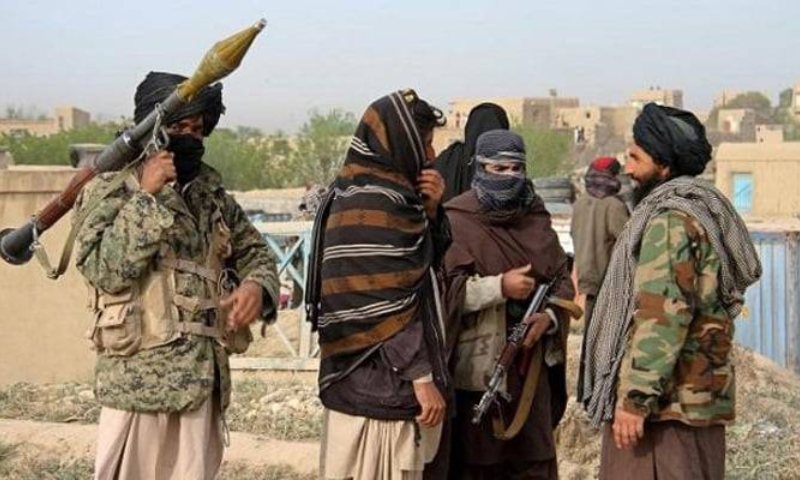
The military spokesperson said Afghanistan had become a “centre point where terrorists of all kinds are being nurtured” and that the Afghan Taliban, “which is now the mother organisation,” had started organising the Tehrik-e-Taliban Pakistan (TTP) according to its structure, training and directing the group.
Moreover, the Taliban built a “fake” narrative, claiming they forced the US and coalition forces to flee Afghanistan, which they used to “pollute the minds of youngsters, the youth and religious-minded people. They present themselves as the flag-bearers of Islam and increase their recruitment.”
“But if you analyse the matter, you will realise that they did not make them [coalition forces and the US] flee. There were other reasons for it.”
He also referred to Afghanistan’s war economy, citing a report by the Special Inspector General for Afghanistan Reconstruction, which mentioned that around $144 billion was invested in reconstruction.
“When the [supply of] that money stopped, to continue running the war economy, they [Afghan Taliban] spread the war in the form of terrorism across the entire region. They find new patrons and financial sponsors, with the biggest patron for terrorism in Pakistan being India,” he said.
Islamabad-based security analyst Syed Muhammad Ali said that since the Taliban’s return to power in Kabul, the Islamic State Khorasan Province (ISKP) has reportedly strengthened its foothold in Afghanistan.
“Since Taliban’s return to power in Kabul, ISKP has gained significant influence and foothold within Afghanistan. After retreating from Syria, ISKP views an unstable and militant-friendly environment within Taliban-controlled Afghanistan as an attractive space to regroup and consolidate its capabilities for future attacks against both Western and regional countries,” Ali said.
He added that the group’s resurgence has raised concerns for international security. Former CENTCOM chief, General Michael Kurilla, has repeatedly warned the US Congress about the threat. Ali recalled: “Former CENCTOM Chief Gen Michael Kurilla twice warned the US Congress in his testimonies that ISKP can pose a major threat to US interests.”
The army spokesman highlighted achievements against terrorist groups over 2025, reporting that 75,175 counter-terrorism operations were conducted across the country, resulting in 2,596 terrorists killed. He noted that casualties among security personnel and civilians amounted to 1,235 during the same period.
The army further warned of collusion between India and the Taliban, amid recent Pakistan-Afghanistan border tensions. General Chaudhry cautioned:
“Pakistan will respond forcefully to any hostile action by India or the Afghan Taliban.“
Pakistan’s military spokesperson underscored that the war on terrorism will continue with renewed vigor, particularly in Khyber Pakhtunkhwa, the province bordering Afghanistan, where militant activity has intensified.