


Key points
- 2025 ranks among hottest years recorded
- Heatwaves, floods and fires intensify globally
- Rising disasters drive mounting human, economic costs
- Extremes redefine climate ‘normal’ heading into 2026
ISLAMABAD: In late June, as pavements shimmered and rail lines buckled across parts of Europe, the question stopped being whether summer would bring extreme heat — and became how bad it would get. By the time winter returned, the year’s pattern was unmistakable: heatwaves arriving in pulses, floods turning sudden downpours into disasters, and wildfires behaving like fast-moving storms.
The World Meteorological Organization (WMO) said in its State of the Global Climate Update that 2025 is set to be either the second or third warmest year on record, extending a run of exceptional temperatures that has dominated the past decade.
Europe’s Copernicus Climate Change Service (C3S) separately reported that, with one month left, 2025 was on track to finish second- or third-warmest, potentially tied with 2023 — and that the three-year average for 2023–2025 is projected to exceed 1.5°C above the pre-industrial baseline for the first time.
That long-term warming signal showed up in lived experience — and in the body count. A scientific briefing on the UK and European heatwave of late June/early July 2025 said London reached 34.7°C, and estimated 170 excess heat-related deaths in London were attributable to climate change, warning that tolls will rise as temperatures climb.
Heat: “exceptional” becomes routine
Across southern Europe, the summer was not just hot — it was record-setting. Spain’s national weather agency, AEMET, said the country endured its hottest summer on record, and Reuters reported a record 45.8°C in Jerez de la Frontera during an August heatwave, alongside an intense season of wildfires.
The scale of the fire problem underlined the feedback loop: higher temperatures dry vegetation faster, extending fire seasons and making blazes harder to control.
Scientists tracking the fast-growing field of extreme-weather attribution repeatedly pointed to the same driver: greenhouse gas emissions heating the atmosphere and oceans. World Weather Attribution (WWA) catalogued dozens of major events this year — from heat in Europe to wildfires and floods — often finding that climate change made the conditions more likely or more intense.
Floods: rain falls harder, cities flood faster
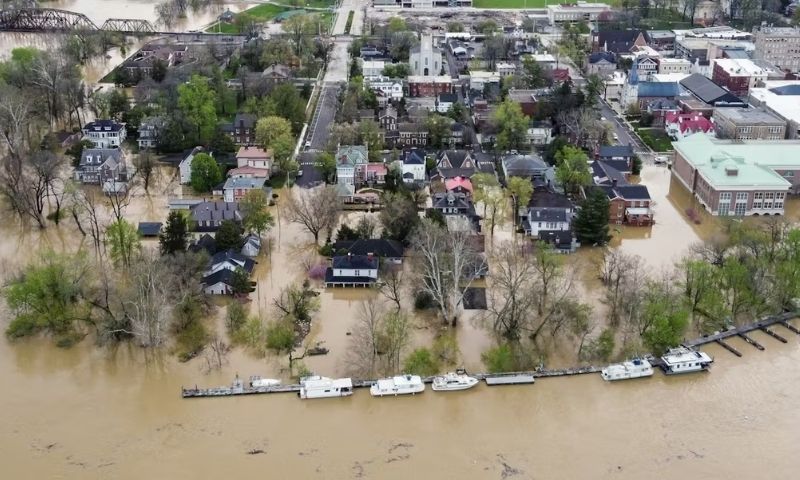
If heat was 2025’s headline, flooding was its recurring shock. In many places, intense rainfall collided with exposed, densely populated communities, turning streets into rivers in minutes. Christian Aid’s “Counting the Cost” assessment said the world’s costliest climate-related disasters in 2025 included major flood and cyclone events, with severe impacts concentrated in lower-income countries that contribute least to global emissions.
WWA’s 2025 event list reflects the year’s geographic spread — highlighting, among others, analyses of heavy monsoon rain and urban flooding in Pakistan, and major flood events affecting regions around the Malacca Strait and Sri Lanka, where warming increases the risk of extreme rainfall and flood heights.
The challenge is not only the rain itself, but the pace at which it overwhelms infrastructure. Rapid urbanisation, loss of wetlands and poor drainage turn a severe downpour into a humanitarian emergency — and, in 2025, those collisions between hazard and vulnerability became more frequent.
Fire: blazes surge beyond “fire season”
Wildfires also carried a sharper, more global edge in 2025. In the United States, NOAA satellite imagery documented a sequence of high-impact events, including destructive fires in Southern California early in the year.
In the UK, the National Trust warned that extreme weather created a “red alert” year for nature, saying thousands of hectares of its land burned amid a cycle of heat, drought and fires.
The science community has grown increasingly direct about the link between climate change and fire weather. The UK Met Office, citing an international “State of Wildfire” assessment, said there is unequivocal evidence that climate change is increasing the frequency and severity of extreme wildfires, with some analyses finding that human-driven warming made certain fire disasters substantially more likely and more destructive.
The new normal — and the cost of coping
What made 2025 stand out was not a single catastrophe, but the relentless sequence: heat stressing health systems, drought setting up fire conditions, and then heavy rain falling on hardened ground, producing flash floods. That compounding effect is increasingly central to climate risk.
The financial toll is rising in parallel. Christian Aid said the top climate-related disasters of 2025 contributed to more than $120bn in insured losses globally, while also stressing that the true costs — especially in countries with low insurance coverage — are far higher when deaths, displacement and destroyed livelihoods are counted.
What 2025 signals for 2026
Scientists argue the lesson of 2025 is not that climate extremes are unpredictable — but that the baseline has shifted. WMO’s update emphasised that the planet remains in an “exceptionally high” warming trend, even as natural climate cycles fluctuate.
Copernicus’s tracking of near-record global temperatures adds a blunt warning: with the world hovering around the Paris Agreement thresholds, every fraction of a degree matters for the frequency and severity of extremes.
As 2026 approaches, the policy debate is likely to sharpen around two questions: how fast emissions can fall, and how quickly countries can adapt. Early-warning systems, heat-health plans, flood defences and land management can save lives — but 2025 showed they are being tested more often, in more places, and sometimes beyond their design limits.
For audiences, the take-away is simple — and sobering: the climate story is no longer about distant projections. In 2025, extremes didn’t just break records. They began to redefine what “normal” feels like.